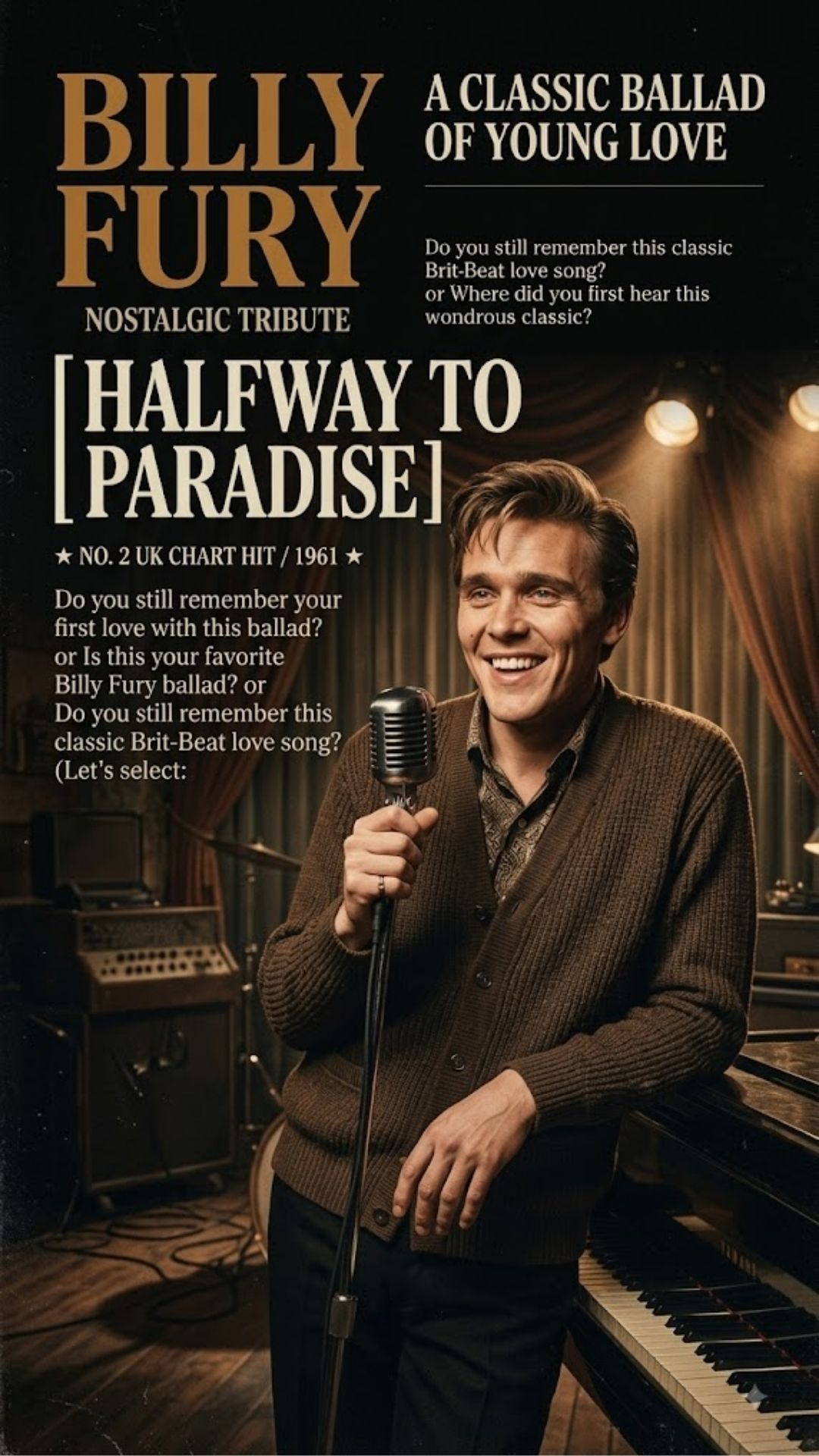
Few melodies capture the sweet ache of young heartbreak quite like this timeless ballad. When Billy Fury released Halfway to Paradise in May 1961, his soaring vocal vulnerability redefined British pop romance forever. Do you remember the very first time this unforgettable classic stirred your soul?
INTRODUCTION
Inside London’s legendary Decca Studios in early 1961, sound engineers adjusted the microphones for a session that would reshape British pop history. Billy Fury stood ready to tackle a brilliant American composition by Gerry Goffin and Carole King. But how did this brooding Liverpool singer transform an overseas pop demo into one of the most poignant teen anthems of all time?
THE DETAILED STORY
By the spring of 1961, transatlantic pop music was undergoing a golden renaissance as New York’s famed Brill Building produced remarkably sophisticated romantic compositions. Among these defining masterworks was Halfway to Paradise, written by the formidable songwriting partnership of Gerry Goffin and Carole King. Although teenage singer Tony Orlando had recorded an initial American version, British recording manager Jack Baverstock recognized immediately that the song’s melancholic poetry, sweeping changes, and soaring dynamic tension offered the ideal creative showcase for the charismatic vocal gifts of Billy Fury.
Entering London’s recording studios with visionary arranger Ivor Raymonde, Fury embarked on creating an enduring landmark of British pop production. Raymonde envisioned a sweeping, operatic soundscape that seamlessly combined dramatic rock and roll rhythm with lush symphonic sophistication. Built around a pounding piano figure, majestic rising strings, cascading orchestral accents, and ethereal female backing vocals from The Breakaways, the arrangement possessed an overwhelming emotional weight. The opulent instrumentation deliberately elevated the song far beyond standard teen novelty, crafting a grand theatrical backdrop that underscored every ounce of romantic longing.
At the center of this majestic wall of sound was Fury’s deeply moving vocal interpretation. Having suffered severe heart damage from childhood rheumatic fever, Fury lived under the shadow of constant physical fragility that imbued his singing with extraordinary, authentic tenderness. While many of his contemporary teen idols relied on polished cheerfulness, Fury poured raw melancholy and trembling vulnerability into every single syllable. His desperate vocal climb during the dramatic chorus encapsulated the profound anguish of physical closeness paired with emotional distance, translating teenage heartache into universal artistic brilliance.
Officially issued by Decca Records in May 1961, the single achieved sensational commercial acclaim, surging to number 3 on the prestigious UK Singles Chart and maintaining a continuous presence for an extraordinary twenty-three weeks. This phenomenal chart run solidified Fury’s status as Britain’s most compelling solo balladeer, proving conclusively that homegrown British talent could rival the greatest American Brill Building productions. Decades later, Halfway to Paradise remains revered as Fury’s ultimate signature masterpiece, encapsulating the passionate spirit, bittersweet heartbreak, and timeless orchestral grandeur of early British rock and roll history.