INTRODUCTION
On the crisp evening of October 16, 1954, a nineteen-year-old former truck driver stood backstage at the Municipal Memorial Auditorium in Shreveport, Louisiana, clutching an acoustic guitar with trembling hands. Outside, thousands of country music purists packed the arena for the Louisiana Hayride, a legendary radio show broadcast across twenty-eight states on KWKH. Up to that night, traditional crooners and fiddle players dominated the airwaves, leaving little room for experimental rhythms. Yet, when host Horace Logan introduced the shy teenager from Memphis, the atmosphere shifted instantly. Backed by guitarist Scotty Moore and bassist Bill Black, the young artist launched into a kinetic, genre-bending rendition of “That’s All Right,” sending shockwaves through the audience. How did a single midnight broadcast transform an unknown youth into a national phenomenon?
THE DETAILED STORY
Following that explosive debut, the show’s visionary producer, Horace Logan, recognized a monumental cultural shift in the making. He immediately signed a $30 weekly radio contract for fifty-two Saturday night appearances. Over the next two years, the weekly broadcast served as the ultimate incubator for rock and roll. While television was still finding its national footing, KWKH radio reached millions of listeners across twenty-eight American states. The Shreveport venue provided a supportive, high-energy environment where the band refined their revolutionary sound—a vibrant fusion of rhythm, blues, and country music that instantly captivated youth culture across the nation.
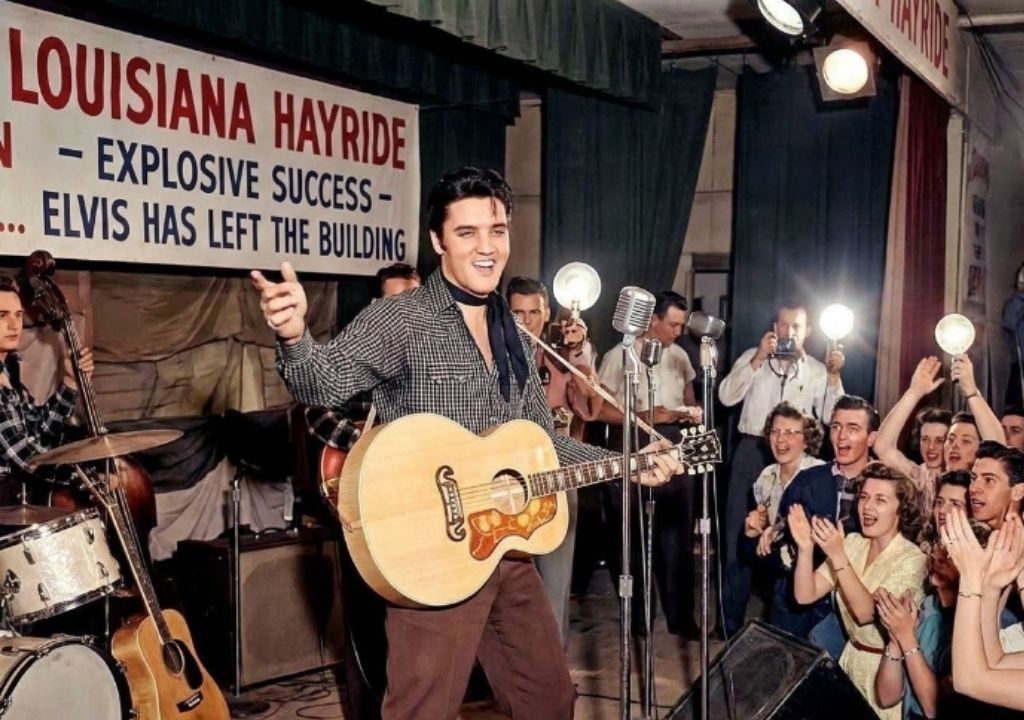
By December 15, 1956, the singer’s trajectory had exploded into global superstardom. Having achieved national television stardom and multiple chart-topping records, he returned to Louisiana for his final contractually obligated performance at the Hirsch Memorial Coliseum. Over 10,000 screaming fans packed the venue, creating an uproar so overwhelming that subsequent artists on the evening bill could barely be heard. As security officers escorted the young superstar offstage toward a waiting limousine, thousands of bewildered fans remained glued to their seats, passionately refusing to leave in hopes of an encore.
To restore order and allow the remaining musicians to complete the broadcast, Logan stepped to the microphone and announced to the packed arena: “All right, Elvis has left the building”. That spontaneous statement, intended simply to quiet a passionate crowd, unexpectedly coined an iconic pop culture phrase. What began as a practical managerial announcement by a radio host quickly evolved into entertainment history’s most famous closing signature, symbolizing the pinnacle of live performance glory.
The historic Louisiana residency demonstrated how authentic artistic innovation could transcend traditional regional boundaries. It established an enduring blueprint for talent discovery, proving that a dedicated radio stage could shape the global soundscape. Decades later, those historic Shreveport performances remain a brilliant testament to artistic passion, celebrating the exact moment when rock and roll captured the world’s imagination.