INTRODUCTION
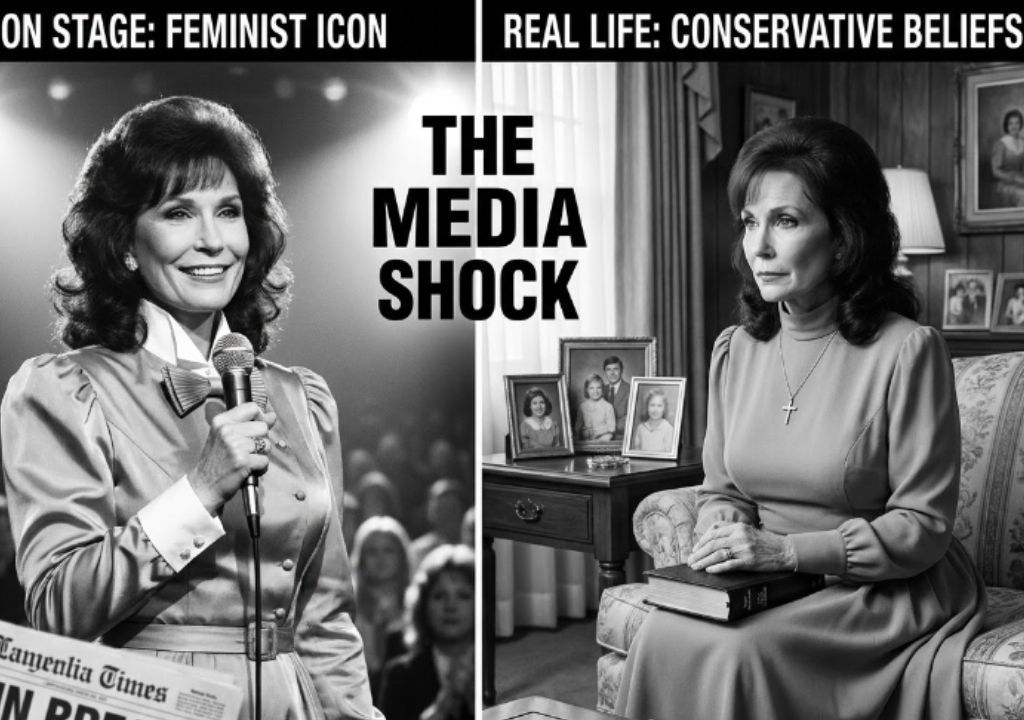
In 1975, radio programmers across rural America made a quiet decision that sparked an unprecedented media storm: they pulled Loretta Lynn’s controversial track, “The Pill,” from their broadcast playlists. The song candidly celebrated reproductive freedom, delivering a bold message that shocked conservative listeners while thrilling millions of women who saw their daily struggles reflected in mainstream country music. Yet, when journalists descended upon her Tennessee ranch expecting to interview a radical figure of second-wave feminism, they encountered a deeply religious matriarch who openly disavowed political labels, supported conservative candidates, and emphasized traditional domestic roles. This sharp divergence between her electrifying stage presence and her private philosophy confounded the national press. How did a rural singer effortlessly bridge the divide between progressive social disruption and traditional cultural values?
THE DETAILED STORY
Throughout the 1960s and 1970s, Loretta Lynn forged an unprecedented path in American popular culture by giving voice to working-class women facing marital strain, economic hardship, and systemic inequality. Anthems like “Don’t Come Home A-Drinkin'” and “Rated X” confronted double standards with unvarnished honesty, earning her widespread admiration from commentators in major publications like Billboard and Variety. Media outlets hailed her as a vanguard of feminist liberation, interpreting her plainspoken lyrics as intentional political manifestos.
However, this media narrative frequently clashed with Lynn’s authentic self-perception. Born in Butcher Hollow, Kentucky, she viewed her songwriting not as ideological activism, but as pragmatism grounded in real-world experience. When questioned by national reporters about her alignment with the feminist movement, Lynn repeatedly clarified that she did not consider herself a feminist, expressing skepticism toward coastal political movements and urban rhetoric. She maintained a steadfast devotion to her faith, family, and conservative principles, even endorsing political figures who opposed the very social agendas critics assumed she represented.
This tension created a fascinating phenomenon in media journalism. Instead of alienating listeners, Lynn’s dual identity expanded her authority across cultural divides. Her conservative fanbase respected her traditional roots and devotion to her home life, while progressive listeners celebrated her courage in articulating complex female realities. By refusing to conform to simplified political boxes, she exposed the limitations of media narratives that insisted on categorizing artists through binary ideological lenses.
Ultimately, Lynn demonstrated that narrative power lies in lived experience rather than ideological dogma. Her artistic legacy proved that an individual could empower millions of women nationwide without adopting formal political doctrine. By maintaining her authentic voice, Lynn altered the landscape of country music, asserting that working-class women contained complex, multidimensional truths that defied conventional media categories. Her enduring triumph remains a testament to the power of raw, unmediated storytelling in American culture.