INTRODUCTION
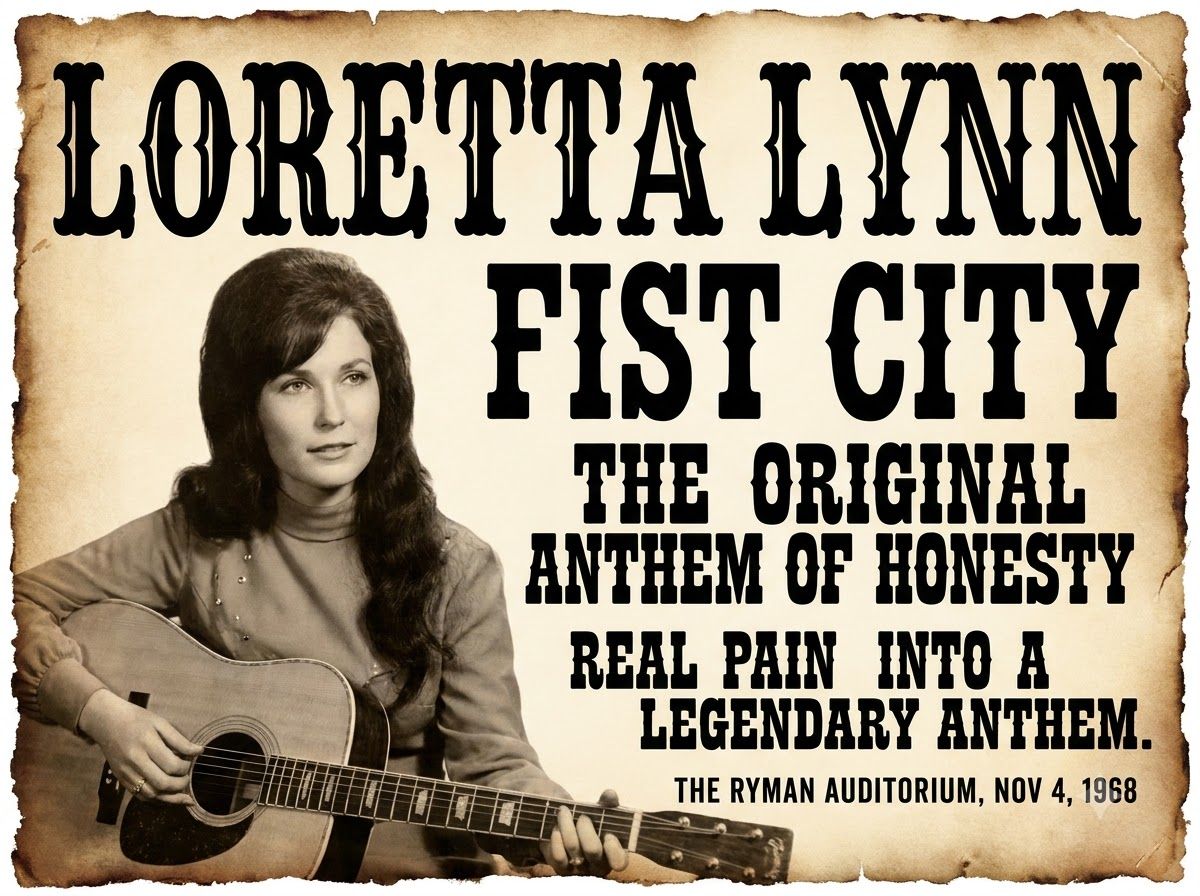
In October 1967, Loretta Lynn walked into Bradley’s Barn studio with a handwritten piece of paper that held no polite metaphors. Outraged by a local woman pursuing her husband while she was working on the road, she poured pure steel into every stanza. But how did a blunt personal warning transform into a historic anthem that redefined country music for generations to come?
THE DETAILED STORY
During the late 1960s, mainstream country music was dominated by polished studio arrangements and conservative lyrical themes that frequently portrayed women as passive, suffering figures. Loretta Lynn shattered that tradition with unapologetic authenticity and sharp wit. The real-life inspiration behind Fist City stemmed directly from her volatile personal life in rural Tennessee. While traveling extensively on tour to perform and support her young family, Loretta Lynn discovered that a local woman was repeatedly attempting to make romantic advances toward her husband, Oliver “Doolittle” Lynn. Rather than hiding her anger behind closed doors or submitting to quiet heartbreak, she confronted the situation head-on with her pen.
The lyricism of Fist City was remarkably bold and revolutionary for its era. It offered no sanitized euphemisms or polite apologies; instead, it delivered an uncompromising, razor-sharp warning wrapped in an infectious country rhythm. When Loretta Lynn recorded the track at Bradley’s Barn under the guidance of legendary producer Owen Bradley, the musical arrangement combined crisp acoustic guitars, sharp electric guitar licks, and a driving rhythm section that perfectly complemented the urgency of her message. Her vocal delivery was confident, conversational, and packed with a fiery grit that instantly commanded listeners’ attention across the airwaves.
Upon its official release by Decca Records, public reaction to the single was immediate and overwhelmingly enthusiastic. Listeners everywhere connected with the sheer conviction and relatable honesty of her message, rapidly propelling the record up the national sales charts until it reached the number one spot on the Billboard Hot Country Singles chart in April 1968. The track marked her second country chart-topper, firmly establishing her as an unstoppable creative powerhouse in American roots music. Beyond its massive commercial achievements, Fist City marked a monumental cultural shift, providing a fearless voice to working-class women who demanded respect, self-reliance, and direct accountability in their relationships.
Decades after its original release, the legacy of Fist City remains a masterclass in songwriting. It demonstrated that commercial radio tracks could be deeply personal, social, and fiercely empowering without losing mainstream appeal. By transforming a private conflict into a timeless musical statement, Loretta Lynn redefined the possibilities of Nashville music forever.