Introduction
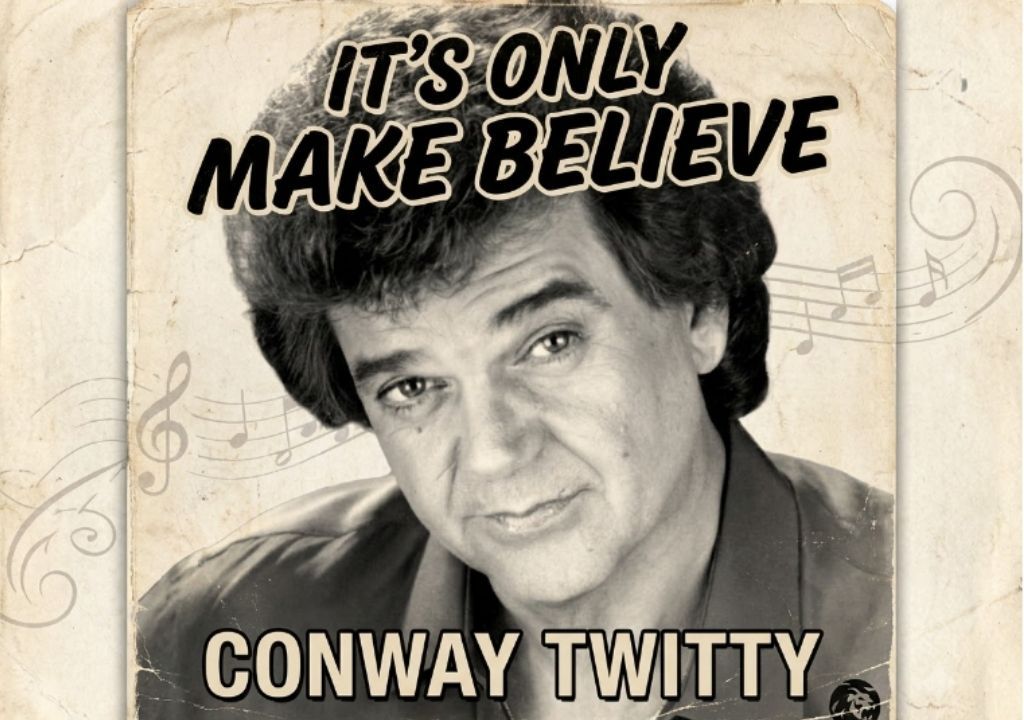
There are songs that simply play in the background of life, and then there are compositions that completely reshape the air in the room the moment the needle hits the vinyl. Released in the late autumn of 1958, “It’s Only Make Believe” by Conway Twitty is unmistakably one of those rare, timeless masterpieces. It stands as a monument to the golden age of American popular music, a period when raw emotion collided with the burgeoning energy of early rock and roll, country, and pop crossover styles. From the very first echoing notes and that hypnotic, shimmering guitar intro, the song creates an immediate atmosphere of profound solitude and desperate, unrequited longing. It is a sonic landscape painted in shades of midnight blue and amber tavern lights, transporting the listener straight back to a smoke-filled room where time slows down and every heartbreak feels agonizingly real.
Conway Twitty possessed one of the most distinctive and magnetic voices in the history of recorded music. Long before he became the undisputed King of Country Music with a legendary string of chart-topping hits, a young Twitty crafted this very tune alongside his drummer Jack Nance in a hotel room in Ontario, Canada. Inspired by a fictional movie plot and fueled by the raw intensity of youthful passion, Twitty poured his entire soul into the lyrics. When he steps up to the microphone, his delivery is a masterclass in controlled vulnerability. His voice shifts effortlessly from a deep, velvety purr to a soaring, impassioned plea that breaks right at the edge of endurance. He does not merely sing the words; he inhabits them entirely, embodying the persona of a man trapped in a dream world, trying desperately to convince himself that the warmth of his lost love was nothing more than an illusion.
The musical arrangement of “It’s Only Make Believe” captures the quintessential transitional spirit of the late 1950s. It bridges the gap between the rebellious, swinging pulse of rockabilly and the sweeping, dramatic orchestration of classic pop balladeering. The subtle use of backing vocals adds a spectral, haunting dimension, echoing the protagonist’s inner turmoil like ghosts of a happier past. Every element of the production is meticulously designed to elevate the emotional stakes, building up from a quiet, confessional whisper into a thunderous, cathartic crescendo of sound and feeling. It captures the unique romanticism of an era when teenagers gathered around jukeboxes at local diners, holding hands and losing themselves in melodies that spoke directly to their most tender vulnerabilities.
Listening to this track today is akin to opening an old, leather-bound photo album filled with faded polaroids and dried roses. It evokes a powerful sense of nostalgia for a simpler yet deeply passionate world, reminding us of the universal ache of longing that transcends generations. Conway Twitty’s timeless performance remains an enduring testament to the power of music to articulate the unspoken depths of the human heart, lingering in the air long after the final chord fades away into silence.