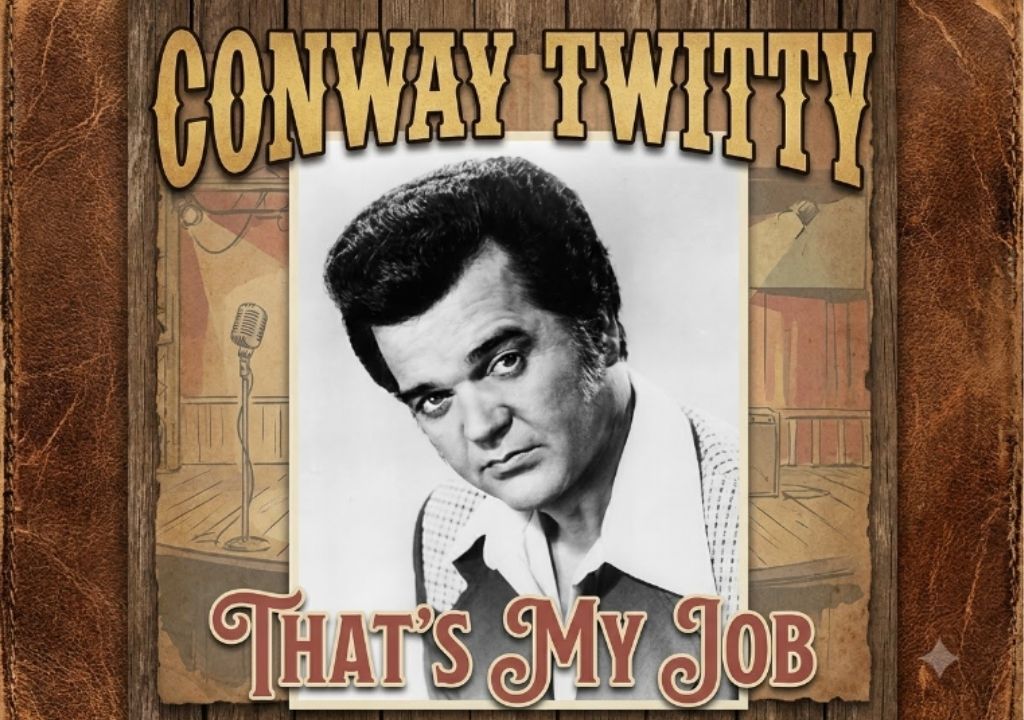
Introduction
There is a quiet, profound grace in the songs that do not merely entertain us, but gently reach into the delicate tapestry of our memories and pull back the curtain on who we are. When Conway Twitty released “That’s My Job” in late 1987 on his album Borderline, country music was undergoing a noticeable shift toward sleeker, modern production. Yet, amidst the evolving soundscapes of Nashville, this song stood out like an oil lamp burning in a dark window—warm, honest, and filled with an unforgettable human truth. Written by songwriter Gary Burr, the track delivers one of the most poignant, lump-in-the-throat narratives ever set to tape, detailing the quiet, unconditional devotion of a father through the loving eyes of his growing son.
Conway Twitty, affectionately known throughout his storied career as “The High Priest of Country Music,” possessed a rare vocal magnetism. While he had made his legendary reputation with sultry romantic ballads and dramatic tales of heart-stirring passion, “That’s My Job” revealed a tender, deeply vulnerable dimension of his artistry. The story unfolds across three distinct vignettes in the narrator’s life. It begins in the soft shadows of a childhood bedroom, where a young boy wakes up terrified from a nightmare, calling out for his father in the dark. The dad enters, sits at his bedside, and offers comfort not with grandiose speeches, but with simple, enduring words: to keep his family safe, to help them grow, and to beat back the shadows. That central chorus becomes the emotional anchor of the entire record, a sacred pledge repeated through the changing seasons of life.
As the narrative moves forward, we watch the boy transition into a headstrong young man seeking his own path, occasionally clashing with the old man’s weathered wisdom. Yet, even in moments of tension and newfound independence, the father’s grounding presence never wavers. The true masterstroke of the song arrives in its final stanza, where time inevitably catches up with the older generation. The narrator stands beside his aging father’s bedside, realizing that the physical roles have reversed, yet the spiritual legacy remains unbroken. Twitty’s vocal delivery in this emotional climax is a masterclass in restraint. His rich, gravelly baritone aches with love, reverence, and the gentle sorrow of passing time. He does not lean into theatrical grief; instead, he sings with the hushed dignity of a son who has finally understood the full magnitude of a father’s silent sacrifices.
Musically, the understated arrangement stays respectfully out of the way of the storytelling. The gentle acoustic guitar strums, subtle piano chords, and weeping pedal steel create a cozy, nostalgic atmosphere that feels as comforting as an old woolen blanket on a chilly evening. It reminds us of an era when country songwriting was firmly rooted in genuine human experience and narrative integrity. Decades after its release, “That’s My Job” continues to hold a sacred space in the hearts of listeners across generations. It stands as a timeless anthem for every father who worked quietly in the background, and for every child who looks back and realizes that love is often measured in the promises kept when no one else was watching.