Introduction
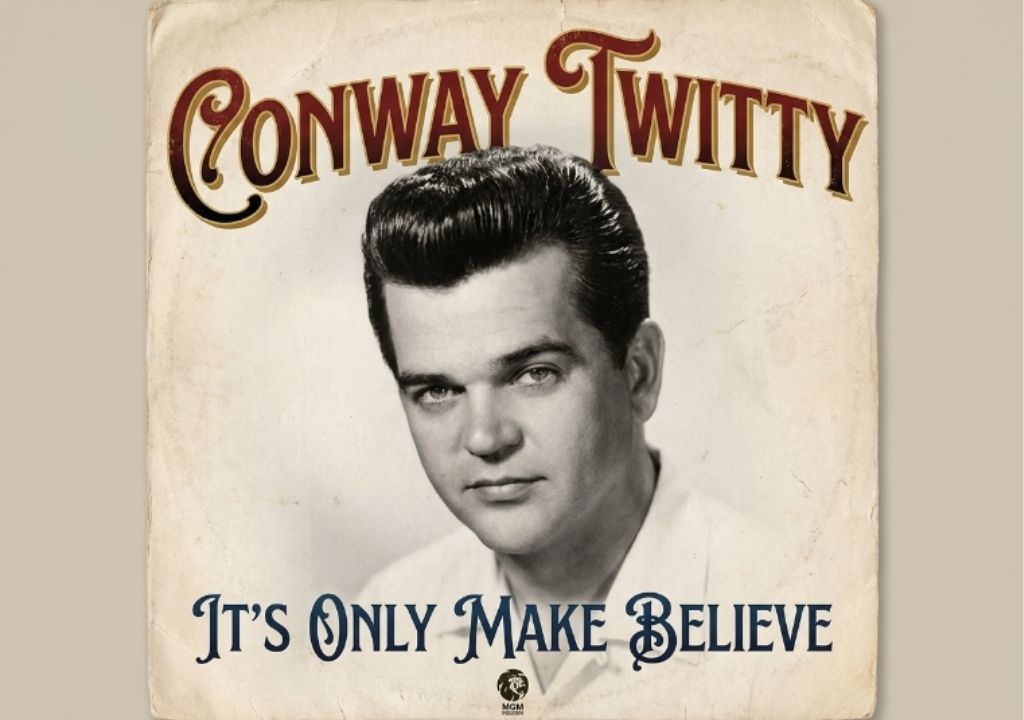
There is a specific kind of late-night loneliness that belongs entirely to the vinyl era. It is the sound of a needle finding the groove in a dimly lit room, carrying the weight of secrets we only dare confess to the shadows. In 1958, the musical landscape was trembling with the electric energy of rockabilly, but amidst the frantic tempos and rebellious shouts, a single record arrived that slowed time down to the agonizing pace of a heartbeat. That record was “Its Only Make Believe,” and the man behind that haunting, gravel-laced croon was Harold Jenkins, known to the world as Conway Twitty. Long before he became a pillar of traditional country music, Twitty delivered a masterclass in dramatic rock ‘n’ roll angst that remains one of the most powerful vocal performances ever captured on tape.
The song begins with a deceptive stillness—a simple, rhythmic strumming of acoustic guitars and a gentle, rolling bassline that mimics the steady tick of a clock. But the moment Conway opens his mouth, the atmosphere shifts completely. His voice possesses a rich, baritone weight, heavy with a profound sense of resignation. He isn’t just singing lyrics; he is inhabiting a psychological space where reality and illusion blur. The premise of the song is devastatingly simple yet universally understood: loving someone completely while knowing that their affection is merely a figment of your own imagination. It is the ultimate anthem of unrequited love, wrapped in a sonic texture that feels like a classic film noir.
As the track progresses, the arrangement begins to swell, mirroring the rising tide of internal desperation. The background vocalists provide a ghostly, ethereal cushion, amplifying the isolation of the lead singer. What makes this performance so legendary is Conway’s unmatched ability to build tension. He doesn’t start at a ten; he coaxes the listener into his sorrow, word by word, until the dam finally breaks. When he reaches the bridge and shifts into that iconic, soaring crescendo, his voice takes on a raspy, almost feral intensity. The transition from a quiet whisper to a full-throated, desperate cry is nothing short of breathtaking. It was a vocal vulnerability so intense that, upon its initial release, many listeners mistook the record for a new single by Elvis Presley. Yet, Conway brought a distinct, brooding darkness that was uniquely his own.
Co-written by Conway and Jack Nance while sitting in a hotel room in Ontario, Canada, the song became a massive global phenomenon, topping the charts in both the United States and the United Kingdom. It proved that audiences were hungry for emotional authenticity, for songs that dared to explore the fragile, painful corners of the human condition. Decades later, the song has lost none of its devastating power. It stands as a monumental bridge between the raw edge of early rock and the deeply emotional storytelling of country music. Listening to it today is a reminder of an era when artists relied entirely on the sheer power of their vocal cords and the honesty of their delivery to move millions. Conway Twitty gave us a timeless monument to heartbreak, proving that even when love is just make-believe, the pain is undeniably real.