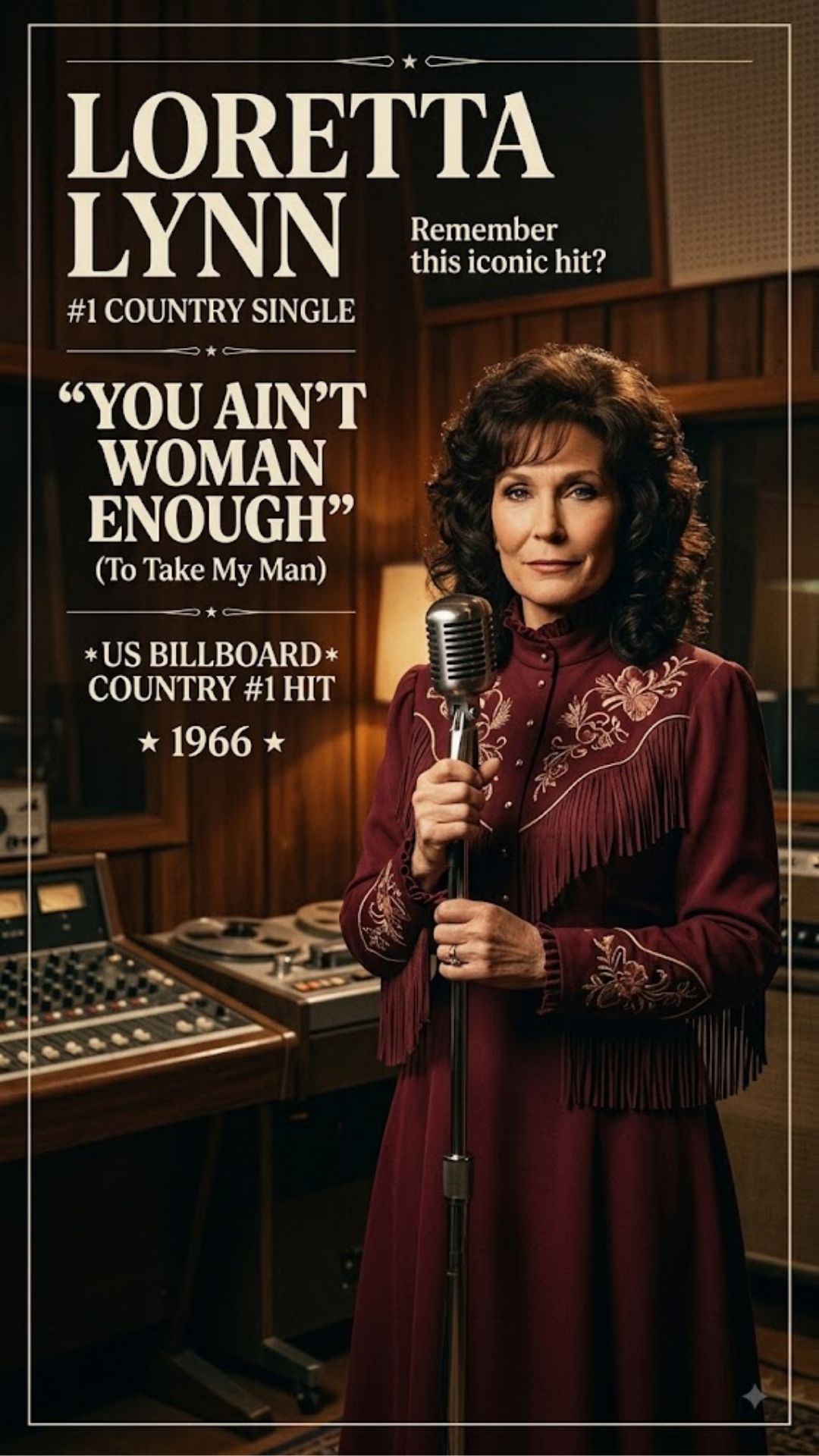
Long before country music embraced raw honesty, Loretta Lynn turned a backstage whisper into an iconic masterpiece. When a heartbroken fan faced a rival, a fierce anthem of defiance was born. Do you remember the very first time this unapologetic country classic sent shivers down your spine?
INTRODUCTION
Backstage at a venue in 1965, a tearful young woman confided in Loretta Lynn that a rival was trying to steal her husband. Moved by her distress, the singer locked herself in a dressing room and penned a fiery classic in just ten minutes. But how did this spontaneous moment of solidarity forever alter the landscape of American roots music?
THE DETAILED STORY
During the mid-1960s, Nashville was dominated by polished production styles and softened lyrical themes. Female country artists were rarely encouraged to write their own material, let alone voice direct confrontation. Loretta Lynn shattered that delicate mold when she released You Ain’t Woman Enough (To Take My Man) under Decca Records in May 1966. Produced by the legendary Owen Bradley, the track abandoned polite subtlety for raw grit, blending traditional honky-tonk instrumentation with an aggressive, driving rhythm that echoed the singer’s working-class Kentucky roots.
The genius of the composition lies in its bold simplicity and emotional authority. Driven by ringing steel guitar fills, sharp acoustic strumming, and a steady rhythm section, the musical arrangement creates an immediate feeling of tension. Rather than leaning into despair, fear, or self-pity, the song showcases a woman standing her ground with unyielding confidence. The lyrics cut straight to the bone, delivering a fierce warning that felt entirely revolutionary for its era. It marked a pivotal shift where female artists were no longer portrayed merely as passive victims of heartbreak, but as powerful defenders of their own lives and dignity.
When the single climbed the country music charts, eventually reaching number two on Billboard, it sent shockwaves through the entire recording industry. Listeners across rural and urban America connected instantly with the track’s authentic grit and unfiltered bravado. Radio programmers quickly recognized that a revolutionary new voice had arrived—one that spoke directly to the everyday triumphs, heartaches, and struggles of working-class women. Over the decades, the track expanded far beyond its initial release on the landmark You Ain’t Woman Enough album, becoming an indispensable cornerstone of American cultural history and inspiring generations of artists, ranging from Tanya Tucker to The White Stripes.
Beyond its massive commercial success and radio legacy, this signature masterpiece permanently solidified the singer’s reputation as a fearless, groundbreaking songwriter who dared to articulate uncomfortable truths. Her rare ability to translate a brief backstage encounter into a timeless anthem demonstrated an extraordinary gift for narrative storytelling. Today, the legendary recording stands as an enduring monument of country music heritage, proving that raw human vulnerability combined with unyielding strength will always transcend time and continue to captivate listeners worldwide.