INTRODUCTION
On a frigid dawn in the rolling hills of the British countryside, a solitary figure crouched behind a hedgerow, holding a bottle of citronella spray and an authentic huntsman’s horn. To millions of screaming record buyers across the United Kingdom, he was Ronald Wycherley—the smoldering heartthrob known professionally as Billy Fury, whose 24 chart hits rivaled the commercial dominance of the Beatles. Yet here, far removed from the screaming arenas and television soundstages, the singer was executing a meticulous clandestine mission: misleading packs of hounds and sabotaging equestrian hunting parties to rescue fleeing foxes and hares. His frail physical condition, weakened by childhood rheumatic fever, made every sprint across the uneven terrain an immense medical risk. What drove a multimillion-selling musical titan to risk his health, fortune, and reputation for the sake of voiceless wildlife?
THE DETAILED STORY
The roots of Billy Fury’s environmental devotion long predated his rapid ascent to British pop royalty. Growing up in working-class Dingle, Liverpool, the young artist developed an intimate reverence for the natural world, spending solitary hours observing migratory birds along the River Mersey. When chart-topping fame arrived with anthems like “Halfway to Paradise,” the commercial machinery of show business never eclipsed his core values. By the early 1970s, weary of industry commercialism and managing severe rheumatic heart disease, Fury established a secluded farm retreat in the Welsh countryside. The property quickly evolved into an expansive sanctuary housing dozens of neglected horses, rescued dogs, and wounded wild birds.
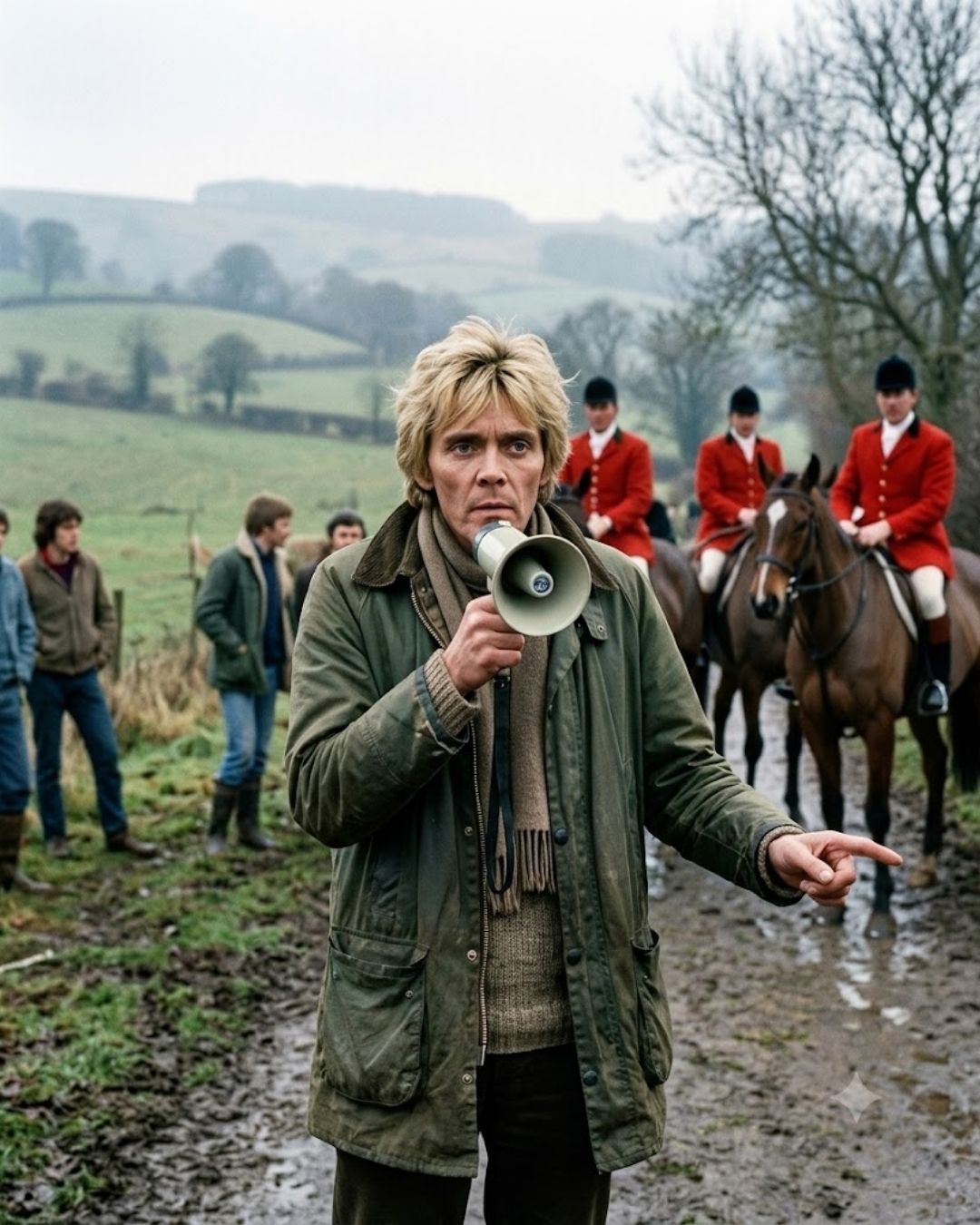
Yet passive care proved insufficient for an icon who viewed traditional blood sports as an intolerable ethical failure. Aligning with grassroots field activists from the Hunt Saboteurs Association, Fury committed his time, money, and personal presence to direct frontline resistance. Armed with precise regional topography maps and acoustic knowledge, he regularly traversed treacherous terrain to lay deceptive aniseed and citronella scent lines, effectively blinding foxhound packs to fleeing quarry. He expertly replicated traditional hunting horn calls, disorienting hunt masters and leading packs away from vulnerable foxes and hares, often standing his ground amid hostile confrontations in remote fields.
Fury financed wildlife operations quietly from his personal earnings, deliberately shielding his operations from industry publicists who feared public backlash. His countryside resistance was neither a promotional gimmick nor a passing leisure interest; it was a profound personal mission sustained under perilous physical health. Decades before animal protection legislation gained legislative traction in the United Kingdom, Fury proved that creative icons could leverage their agency to defend the defenseless. In trading the velvet glare of the stage for the raw mud of the woodlands, he elevated his legacy into an enduring testament of moral courage.