INTRODUCTION
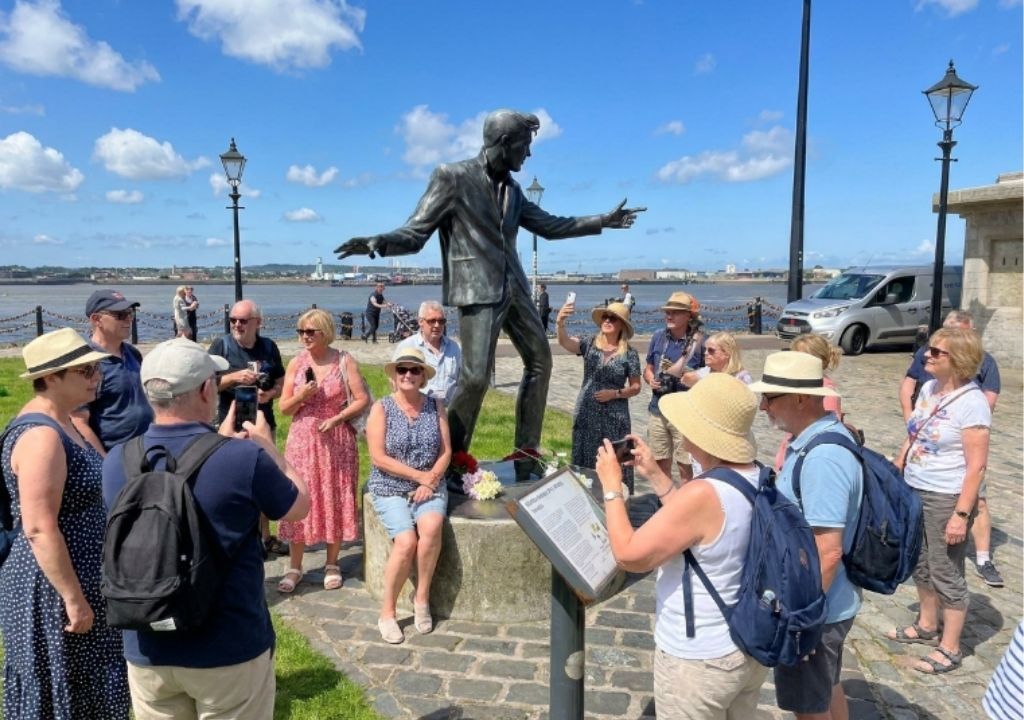
A brisk, 50-degree Fahrenheit wind regularly sweeps across the historic waters of the River Mersey, carrying with it the centuries-old echoes of maritime ambition and artistic rebirth. For thousands of nostalgic visitors arriving at Liverpool’s Royal Albert Dock daily, the journey inevitably leads to a silent pause before a striking, larger-than-life figure rendered in solid bronze. Unveiled on 04/19/2003, this magnificent masterpiece does not merely depict a mid-century pop idol; it serves as a permanent anchor for the city’s profound cultural soul. Crafted by the celebrated sculptor Tom Murphy, the monument captures a poised, swaggering stance that directly commands the waterfront. It stands as a physical testament to a time when raw passion defied societal limitations, bridging the gap between a grueling maritime existence and the blinding glare of international show business.
THE DETAILED STORY
Before he was crowned Billy Fury—the fiercely charismatic force who would challenge the dominance of American rock and roll icons on the British charts—he was simply Ronald Wycherley. He was a sensitive, intensely driven Liverpool youth navigating a severe childhood illness that left him with a permanently weakened heart. Long before his records generated thousands of USD in royalties and secured top-tier positions on the music charts, Wycherley earned his living on the unforgiving decks of the River Mersey. Working as a humble deckhand on the historic tugboat The Formby, he internalized the rhythm of the tides and the stoic resilience of the northern docks. This foundational chapter of labor and longing is precisely what Tom Murphy immortalized in his acclaimed 2003 bronze sculpture.
The artwork does not merely celebrate a polished pop star; it actively honors the raw, working-class origins that fueled Fury’s artistic fire. Standing elegantly at the Royal Albert Dock, the statue portrays Fury with his gaze fixed resolutely upon the horizon, a direct nod to his formative years on the water before rock stardom beckoned. When Larry Parnes discovered him in 1958, transforming him overnight into a national sensation, Fury brought the untamed energy of the Liverpool docks to the theatrical stages of London. His leather-clad performances and smoldering vulnerability redefined the landscape of British entertainment, laying the groundwork for the Merseybeat explosion that would follow.
Yet, despite achieving monumental fame, Fury never truly disconnected from his maritime roots. The bronze monument at the Albert Dock ensures that his physical presence remains permanently intertwined with the very waters that shaped his youth. For millions of retro music enthusiasts, the statue represents a triumphant homecoming. It stands as an enduring beacon of inspiration, proving that a local boy from the docks could conquer the cultural world while retaining his authentic soul, long before his untimely passing in 1983.