INTRODUCTION
Decades before the name ABBA became synonymous with global pop supremacy and unparalleled chart domination, a quiet, introspective musical foundation was being laid in the scenic municipality of Jönköping, Sweden. Born into a modest household on April 5, 1950, Agnetha Fältskog possessed an innate, almost spiritual connection to melody long before she ever encountered the glare of public flashbulbs or the roar of stadium crowds. Her childhood, spent navigating the structured expectations of working-class Scandinavian life, was defined by a distinct sense of emotional sensitivity and artistic solitude. Behind the velvet curtains of her early youth lay a profoundly intuitive mind—one that sought refuge not in ordinary childhood distractions, but in the tactile keys of an acoustic piano, where she began decoding the language of music entirely on her own terms.
THE DETAILED STORY
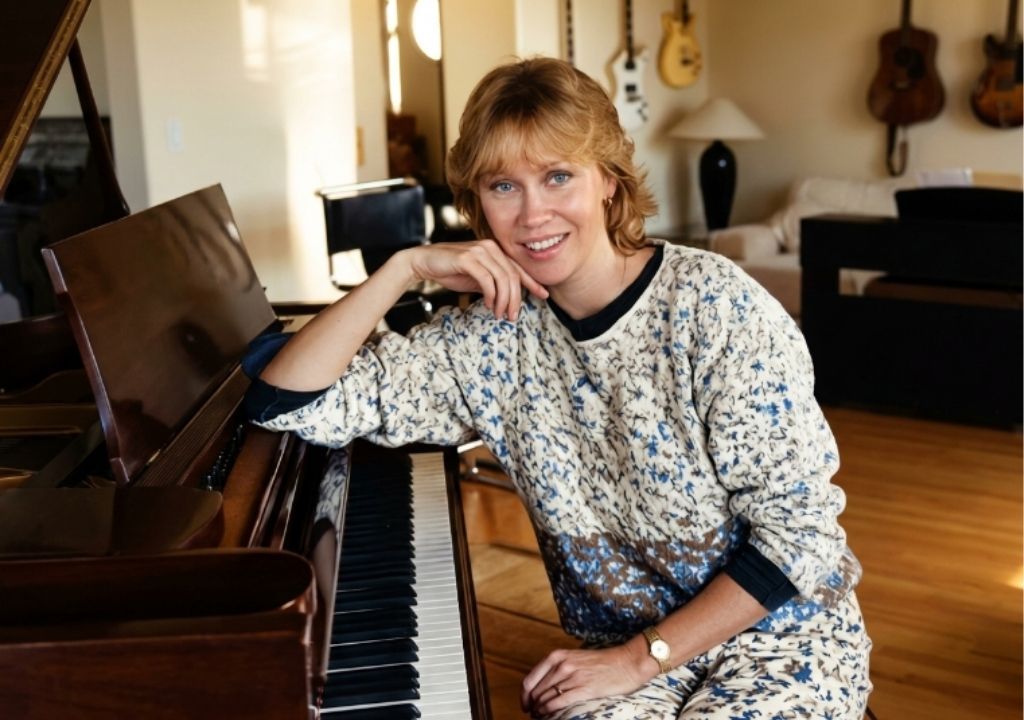
The true genesis of Fältskog’s legendary career occurred when she was just five years old, a pivotal moment that biographers view as the structural blueprint for her later songwriting genius. Sitting at a mechanical acoustic piano, the young prodigy independently experimented with chord structures and melodic progressions, ultimately composing her very first original song, titled “Två små troll” (Two Little Trolls). This minimalist composition was not merely a child’s random experimentation; it possessed a surprisingly sophisticated melodic framework that demonstrated a natural grasp of rhythm and narrative pacing. This early creation revealed a free-spirited identity and an advanced, intuitive understanding of emotional resonance that would eventually become the hallmark of her multi-platinum discography.
However, this early brilliance stood in stark contrast to the hardships of her formative adolescent years. As Fältskog grew, her deep-seated passion for musical expression frequently clashed with the pragmatic realities of her environment. By the time she reached her mid-teens, she was balancing the exhausting demands of performing with a local dance band, the Bernt Enghardt Orchestra, alongside her daytime employment as a telephonist. The relentless schedule took a heavy physical and emotional toll on the young artist, leading to a period of intense exhaustion.
Yet, it was precisely this crucible of teenage struggle that sharpened her resolve. Her breakthrough came when a demo tape intended for the band caught the attention of record executives, who were instantly transfixed not just by her pure soprano vocals, but by her self-penned romantic ballads. The melancholic undertones that defined her early Jönköping compositions seamlessly transitioned into her professional work, proving that the five-year-old child at the piano had already mastered the bittersweet emotional depth that would eventually captivate hundreds of millions worldwide.