INTRODUCTION
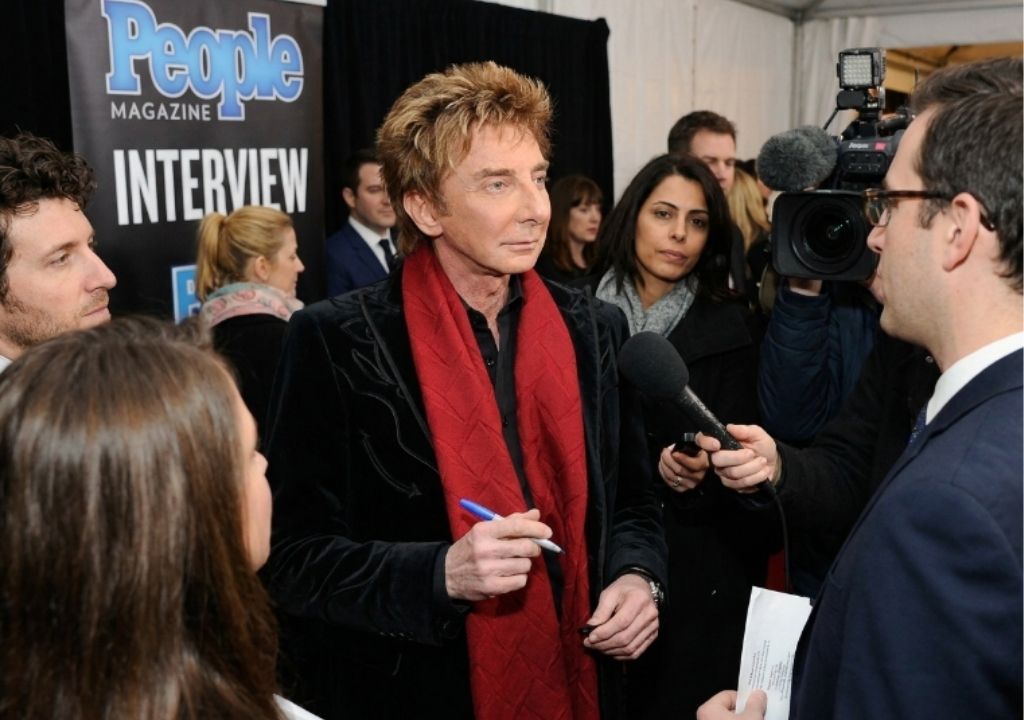
In April 2017, Barry Manilow made the historic decision to officially come out as a gay man in a cover story for People magazine, confirming his nearly four-decade relationship with husband Garry Kief. While the broader public and his massive, mainstream fanbase reacted with overwhelming warmth and support, the announcement triggered an entirely different, highly complex wave of discourse within the LGBTQ+ community. Rather than receiving unanimous celebration, the 73-year-old singer’s late-life revelation became a lightning rod for cultural debate. For younger generations of queer activists, his decades of silence represented a missed opportunity for vital representation during the height of the AIDS crisis and the modern civil rights movement. This tension exposed a deep generational divide regarding the ethical obligations of closeted celebrities and the historical trauma of the twentieth-century entertainment industry.
THE DETAILED STORY
The core of the controversy within the LGBTQ+ collective centered on the concept of visibility as a political weapon. Critical voices within the community argued that high-profile figures who remained closeted during the hostile decades of the 1970s, 1980s, and 1990s benefited from institutional privilege while withholding their immense cultural capital from the liberation movement. During periods when queer individuals faced severe systemic violence, legal discrimination, and the devastating toll of the HIV/AIDS epidemic, public coming-out statements from megastars like Manilow could have provided life-saving validation and shifted public policy. By waiting until society had largely institutionalized marriage equality and accepted queer identities before coming out, some commentators felt Manilow’s announcement was safe, delayed, and politically hollow, arriving only when there was zero commercial risk.
Conversely, a powerful contingent of LGBTQ+ historians and older advocates fiercely defended Manilow, criticizing the younger generation’s lack of historical empathy. They emphasized that the entertainment industry of the 1970s was deeply homophobic; coming out would not have simply paused Manilow’s career—it would have completely dismantled the livelihoods of hundreds of employees dependent on his empire. Manilow himself noted that music executives explicitly warned him that acknowledging his sexuality would destroy his commercial viability.
Furthermore, defenders argued that forcing a strict political timeline onto an individual’s personal trauma and self-acceptance is fundamentally anti-queer. Manilow had lived through an era where exposure meant ruin, making his defensive secrecy a valid survival mechanism rather than a moral failure. Ultimately, the debate surrounding Manilow’s late coming out highlighted that the journey to authenticity is rarely linear, exposing the friction between collective demand for activism and the sacred right of an individual to control their own narrative.