INTRODUCTION
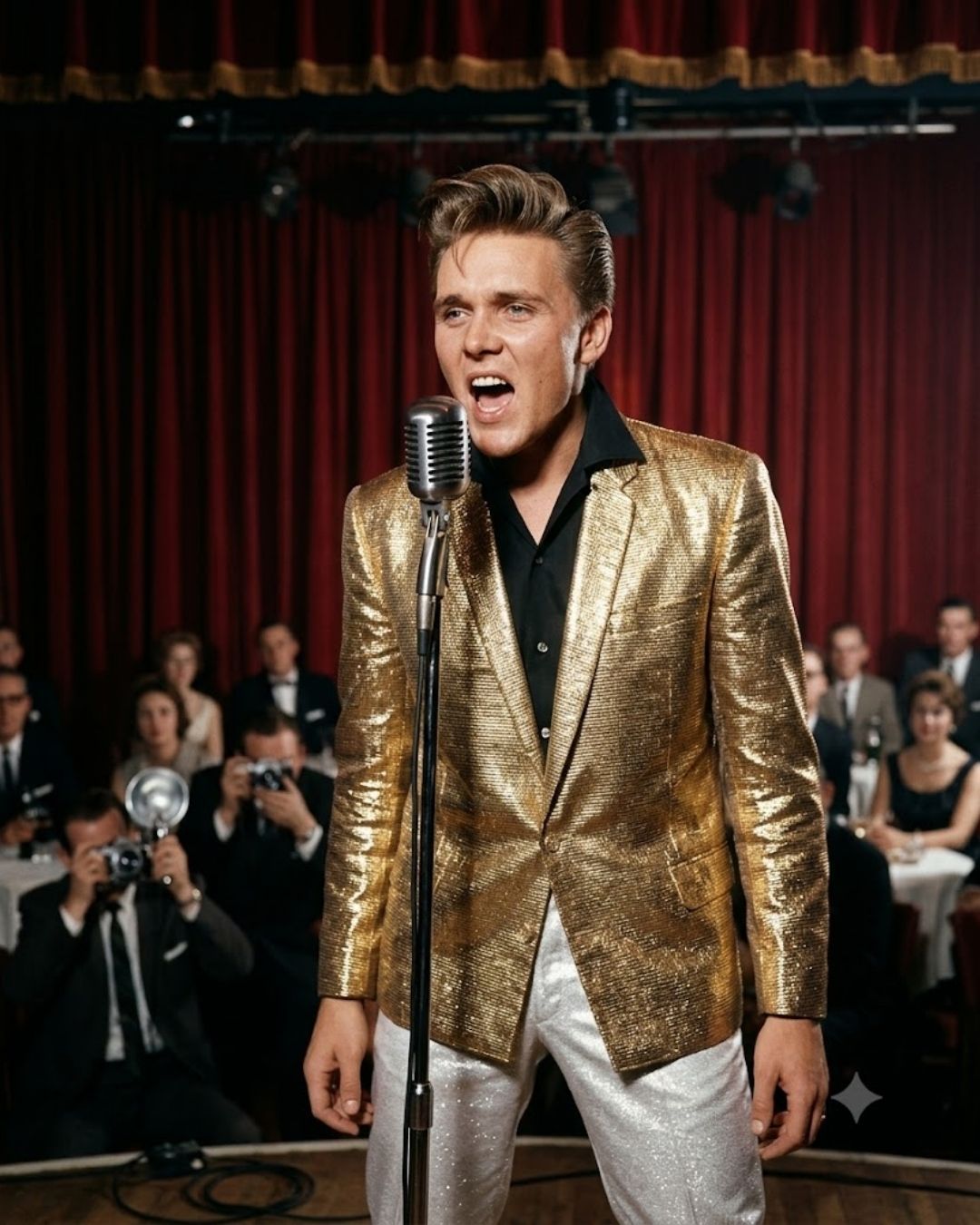
Under the blinding studio lights of London in late 1959, Ronald Wycherley—the quiet, introspective Liverpool deckhand known professionally as Billy Fury—stepped onstage wrapped in an opulent, gleaming gold lamé suit. Commissioned by impresario Larry Parnes as Britain’s direct answer to Elvis Presley’s legendary $2,500 Nudie Cohn ensemble, the outfit instantly polarized a nation still clinging to post-war austerity. To tabloid editorial boards and conservative television producers, the glittering fabric was an outrageous publicity stunt and an affront to traditional masculinity. Yet beneath the stage glare, Fury’s electrifying, unapologetic stage presence turned what could have been sheer theatrical camp into an explosion of raw rock-and-roll vitality. How did a manufactured golden uniform become the catalyst for an authentic British cultural revolution?
THE DETAILED STORY
The creation of the gold lamé suit was orchestrated by Larry Parnes, the architect of Britain’s first generation of teen idols. Seeking to replicate the visual shockwave generated by American rockabilly, Parnes invested approximately £475—a staggering sum at the time—to encase his most promising star in shimmering metallic tailoring. Parnes envisioned a sleek, commercial product designed to dominate the visual landscape of British pop. However, Billy Fury was fundamentally different from the era’s manufactured teen sensations. A gifted songwriter battling rheumatic heart disease, Fury possessed an intense, brooding sensitivity that defied cheap commercial novelty.
When Fury took the stage, the juxtaposition between the suit’s artificial shine and his visceral, hip-swiveling performance produced immediate media controversy. Television executives scrambled to frame him in close-ups above the waist, fearing his suggestive posture would corrupt young viewers, while music critics debated whether the golden attire was a dazzling badge of modern charisma or an absurd marketing gimmick. Fury himself harbored mixed feelings toward the heavy, stifling garment, often finding it uncomfortably rigid under the hot stage lanterns. Yet, rather than letting the outfit swallow his identity, he weaponized it.
Fury’s genius lay in his refusal to play the caricature Parnes had designed. Instead of delivering safe, mechanical pop, he infused his performances with melancholic blues phrasing, vulnerability, and primal energy. The suit ceased to be a corporate prop; it became an armor of defiance. By subverting the gaudy expectations of the British entertainment establishment, Fury demonstrated that real rock-and-roll power originated from an artist’s inner spirit rather than external tailoring. He permanently altered the standard of British stagecraft, proving that genuine star power could outshine even the most calculated promotional spectacle.