INTRODUCTION
THE DETAILED STORY
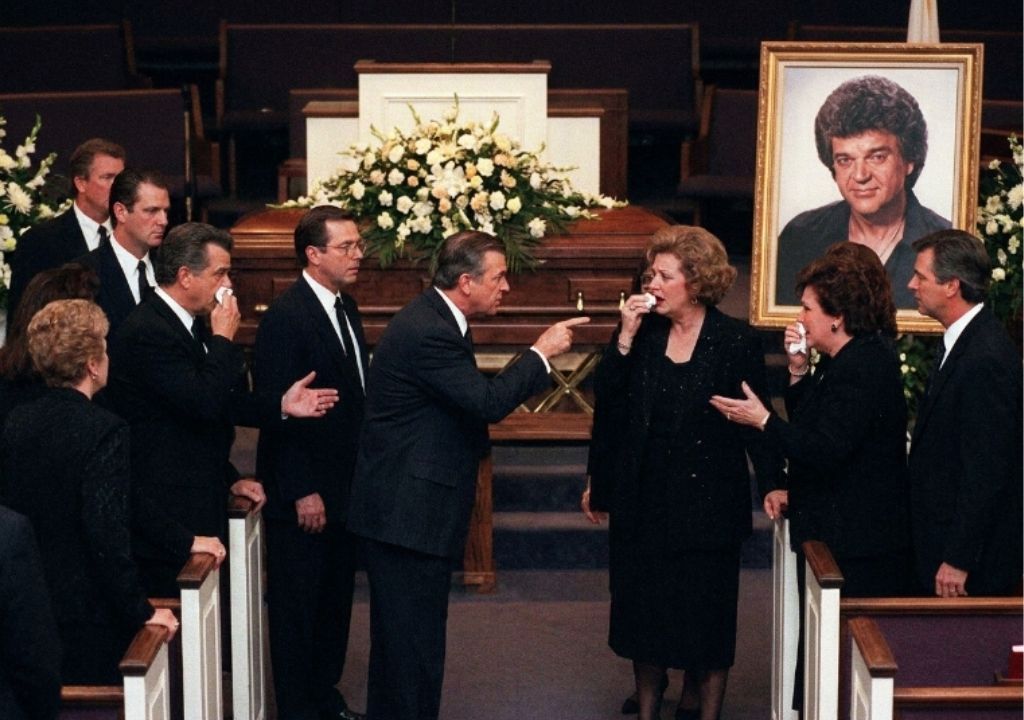
The root of the hostility lay in an archaic quirk of Tennessee estate law. Although the country superstar’s will specifically left everything to his children, state statutes allowed a surviving spouse to bypass a decedent’s written instructions by filing for an elective share. On 12/10/1993, just six months after the singer’s passing, his widow, Delores “Dee” Henry Jenkins, filed a petition to claim exactly one-third of the entire estate, effectively disrupting the inheritance promised to the four adult children. This aggressive maneuver instantly fractured the family, plunging them into a public war of attrition over intellectual property, royalties, and real estate.
As litigation intensified over the next fifteen years, the mounting legal fees and valuation disputes forced the liquidation of the singer’s physical history. Priceless personal memorabilia, stage outfits, and gold records were sold off at public auctions to satisfy financial claims. Most devastatingly, the crown jewel of his career—the multi-acre Twitty City theme park—was sold to the Trinity Broadcasting Network, wiping out the physical empire the patriarch had meticulously constructed. The internal bitterness was so profound that daughters Joni and Kathy Jenkins took their grievances directly to the Tennessee State Legislature. Their compelling testimony regarding the systematic dismantling of their father’s legacy ultimately prompted lawmakers to pass the historic “Conway Twitty Amendment” to state probate law. This new statute dynamically scaled a surviving spouse’s elective share based on the precise duration of the marriage, protecting future families from sudden asset division. Though the law was permanently changed, the decades-long conflict left the family irreconcilably fractured. It remains a stark cautionary tale of how standard estate law can override a superstar’s true intentions when a will fails to keep pace with personal life changes. Ultimately, the battle over the $15 million USD fortune proved that even the most enduring musical legacies can be completely upended by the clinical realities of the probate court.