INTRODUCTION
On the morning of 06/05/1993, the smooth, baritone voice that had anchored Billboard charts for decades fell silent at a hospital in Springfield, Missouri. The unexpected passing of Harold Lloyd Jenkins, known universally to millions of fans as Conway Twitty, sent shockwaves through the heart of Nashville. Beyond the immediate grief of an industry, a complex corporate and familial structure began to buckle. Twitty had built more than a catalog of number-one hits; he had constructed an entertainment ecosystem, anchored by the famous nine-acre tourist complex in Hendersonville, Tennessee. Yet, without a seamless transitional strategy prepared for his sudden departure, the institutional stability of this country music dynasty faced an existential threat. As the music stopped, an intricate legal machinery ground into motion, raising a profound question: what happens when an icon leaves behind a kingdom divided?
THE DETAILED STORY
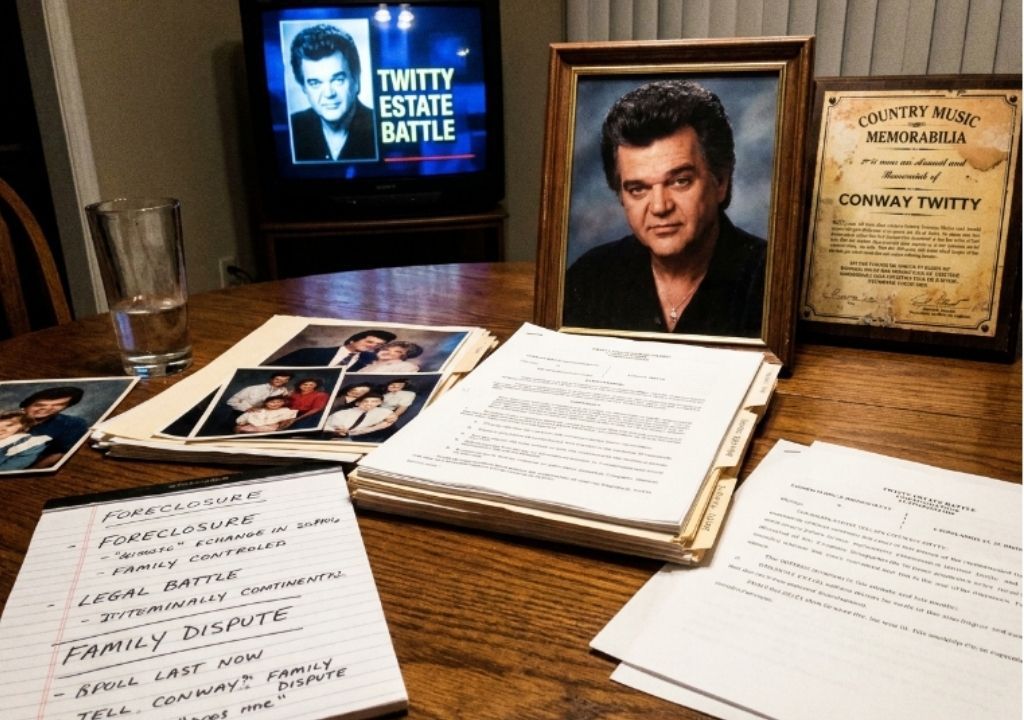
The corporate dissolution of the Twitty estate serves as a premier masterclass in the vulnerabilities of intellectual property and real estate management within the music industry. Following the tragedy, the division between the heirs and the widow quickly escalated into the public sphere, meticulously documented by The Hollywood Reporter. At the center of the dispute was a complex web of asset valuation, master recordings, and the physical crown jewel of his enterprise, the grand estate in Hendersonville, Tennessee. By 1994, the legal friction culminated when the family sold the property for $3.4 million to the Trinity Broadcasting Network, transforming a monument of country music culture into a religious broadcasting center.
This strategic liquidation was not merely a physical loss; it symbolized the scattering of a meticulously curated brand. Legal documentation revealed that the patriarch’s estate encountered severe liquidity challenges, standard when massive physical assets are caught in probate without definitive, unassailable trust structures. The four children navigated years of public scrutiny as they sought to preserve their father’s artistic lineage while balancing the pragmatic pressures of asset distribution.
Despite the structural fragmentation of the physical empire, the narrative of the Twitty family is ultimately one of artistic endurance. The institutional value of the catalog, featuring timeless anthems that defined the Billboard charts for eras, remained robust. The music itself resisted the liquidation that claimed the real estate. Over the subsequent decades, the family successfully pivoted from real estate management to modern legacy preservation, focusing on digital distribution, archival releases, and intellectual property protection. This transition highlights a sophisticated shift in American entertainment asset management: while physical dynasties can dissolve under legal strain, the core creative output possesses an indestructible architecture, ensuring that the name Conway Twitty remains permanently etched in the cultural fabric of American music.