INTRODUCTION
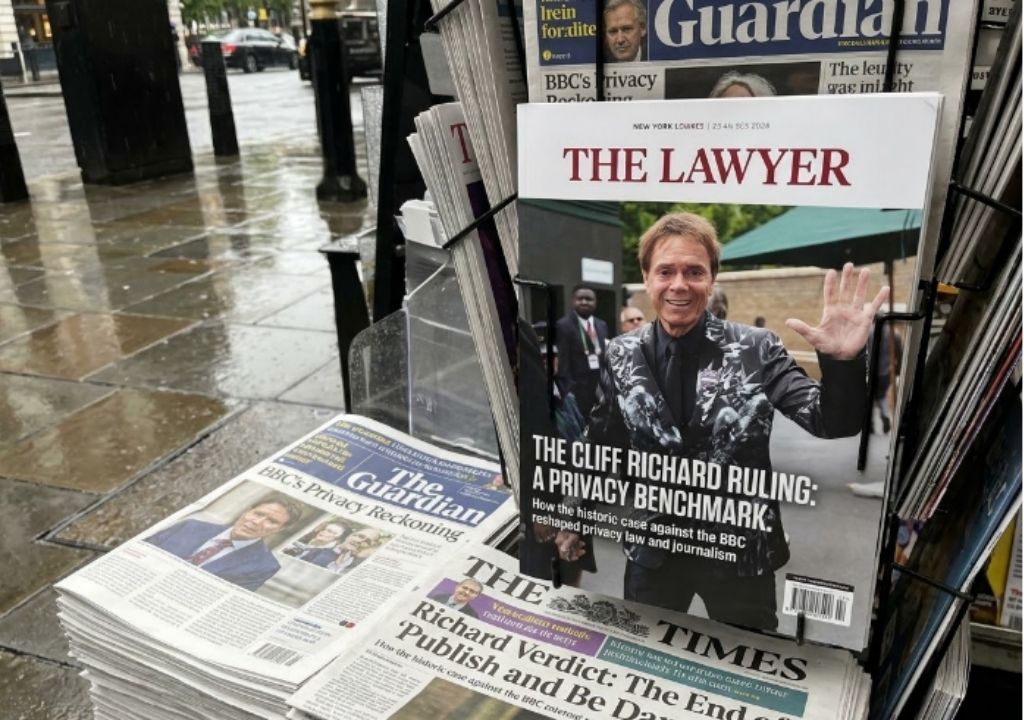
On 07/18/2018, inside courtroom 76 of London’s High Court, a single judicial declaration quietly transformed the future of international journalism and personal privacy rights. Pop legend Sir Cliff Richard stood not as a hitmaking performer, but as a resolute defender of human dignity seeking accountability after an unwarranted media intrusion. What began as an invasive broadcast by state media evolved into one of the most significant civil liberties battles in modern British jurisprudence. British legal scholars and prominent constitutional analysts now routinely cite the decision as the definitive benchmark safeguarding individual privacy against sensationalist broadcasting. This historic ruling dismantled decades of aggressive journalistic overreach, establishing that every citizen retains an inherent right to privacy prior to formal charge. How did one music icon’s uncompromising stand forever redefine the delicate balance between press freedom and personal dignity?
THE DETAILED STORY
The legal saga commenced when the BBC broadcast live footage of a law enforcement search at Richard’s Berkshire residence, complete with invasive aerial helicopter coverage, despite no formal charges or allegations ever being sustained. Recognizing the profound ethical breach and devastating personal consequences endured by unverified citizens, Sir Cliff Richard initiated a historic legal action grounded in Article 8 of the European Convention on Human Rights. Presiding Judge Mr. Justice Mann ultimately delivered a landmark judgment on 07/18/2018, ruling that a person under police investigation maintains a reasonable expectation of privacy prior to charge. The court awarded substantial damages, but the true impact was structural, offering an enduring framework that elevated individual liberties over invasive public broadcasting.
In the years following the historic decree, media lawyers, news executives, and press ethicists across the United Kingdom fundamentally restructured their reporting protocols. The ruling fortified individual constitutional rights, erecting a firm legal barrier against the premature public naming of uncharged citizens. Subsequent appellate challenges, culminating in the UK Supreme Court’s definitive Bloomberg LP v ZXC precedent, consistently reinforced the foundational principles established during Richard’s suit. Today, legal scholars across the United Kingdom feature the High Court of Justice decision as a masterclass in privacy law, highlighting it as an indispensable shield protecting both public icons and ordinary citizens from institutional overreach.
Beyond its technical jurisprudence, the crusade marked a watershed moment for ethical journalism. Richard transformed an unwarranted personal trial into a monumental victory for civil liberties, demonstrating that holding powerful institutions accountable enhances democratic discourse rather than undermining press freedom. By asserting that personal reputation is an indelible human right, his steadfast pursuit of justice dignified fundamental human privacy across modern society. The case remains a beacon of moral clarity, proving that constitutional law can successfully evolve to defend human dignity and personal honor in an increasingly complex and intrusive global media landscape.