INTRODUCTION
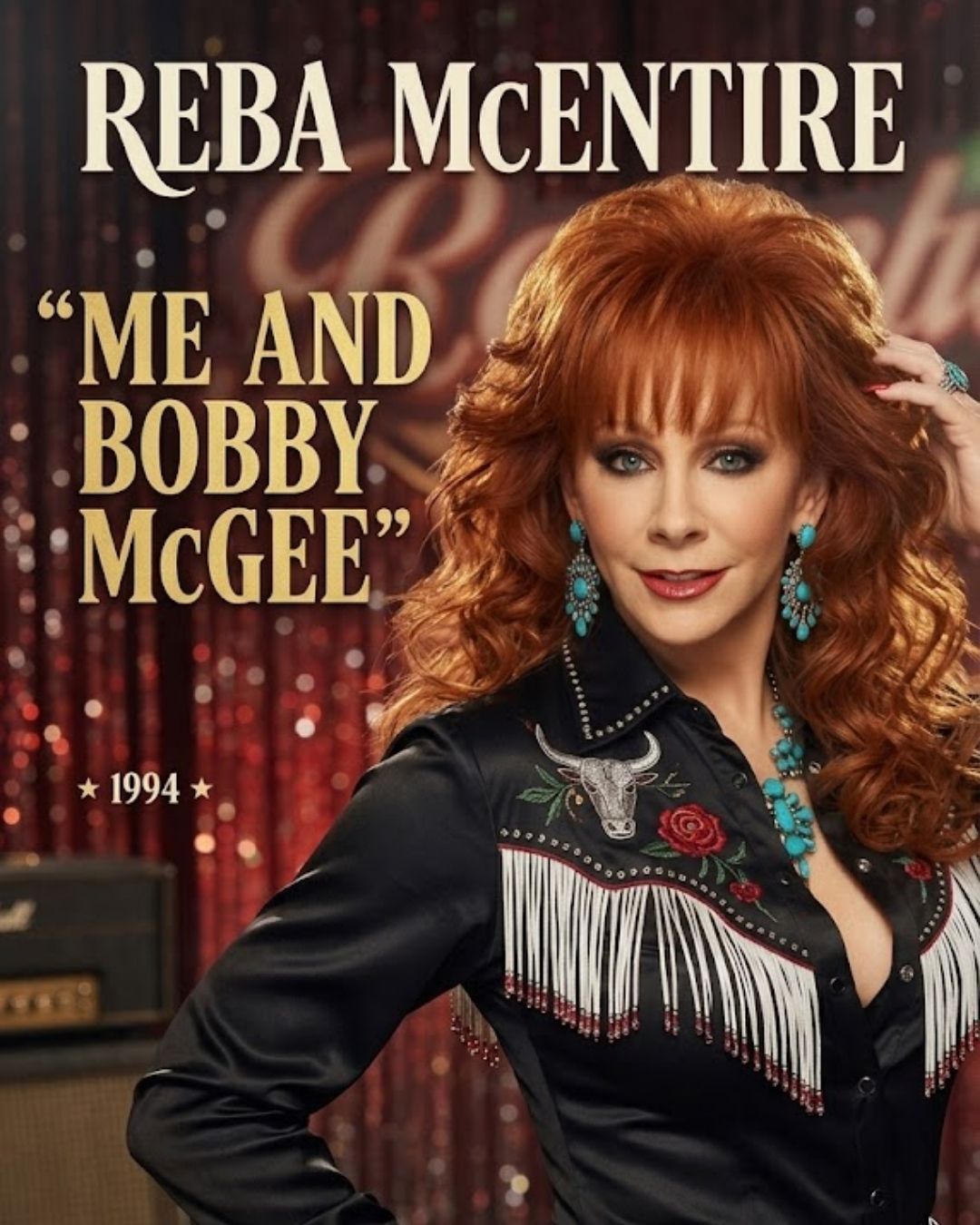
Standing under the bright lights of Nashville’s Bridgestone Arena, country music royalty Reba McEntire tore into a southern-rock cadence that immediately caught the packed house off guard. Rather than mimicking the raw, melancholic whisper of previous legendary covers, she unleashed an unstoppable force of vocals and stage charisma. But what drove this country queen to radically reinvent one of songwriting’s greatest masterpieces?
THE DETAILED STORY
Written in 1969 by Kris Kristofferson and Fred Foster, “Me and Bobby McGee” was conceived through the lens of Federico Fellini’s tragic film La Strada, distilling the bittersweet reality that total independence often demands unbearable emotional sacrifice. While Janis Joplin’s posthumous 1971 chart-topper immortalized the song as a fragile, countercultural elegy of longing, the composition possessed a narrative elasticity that few artists dared to fully test. For decades, the track was approached with reverent caution, heavy with the ghosts of its past interpreters.
Reba McEntire saw something entirely different within its wandering lines. Long declaring herself a “gypsy at heart,” the Oklahoma native recognized the song not merely as a tragic reminiscence of lost love, but as an exhilarating testament to living without boundaries. When she stepped onto the stage for the historic The Life & Songs of Kris Kristofferson concert in 2016, McEntire cast aside conventional country-folk tropes in favor of an electrifying, rhythm-and-blues-infused powerhouse arrangement.
From the opening bars, McEntire seized complete control of the narrative. Her delivery transformed the quiet hitchhiking chronicle into a pulsating, high-energy country-rock anthem driven by muscular brass, driving percussion, and searing electric guitars. Where previous versions lingered in sorrowful nostalgia, Reba leaned hard into southern grit and commanding theatrical showmanship. Her unmistakable vocal twang and seasoned dynamic range lent vivid texture to every lyrical mile marker from Baton Rouge to New Orleans, articulating each line with crisp, conversational authority before soaring effortlessly into explosive, roof-raising crescendos.
The performance reached its electrifying emotional pinnacle during the climactic final chorus. Rather than commanding the spotlight alone, McEntire joyfully gestured toward the side of the stage, beckoning Kristofferson himself to join her under the lights. Standing shoulder to shoulder, the legendary songwriter and the country queen traded verses with radiant warmth, turning an iconic ballad originally rooted in isolation into a communal celebration of survival, enduring friendship, and American music history.
Reba McEntire’s unforgettable interpretation proved that monumental songwriting contains an enduring, living spirit capable of bold reinvention. By seamlessly fusing theatrical charisma with authentic honky-tonk grit, she reminded the world that freedom on the open highway does not always have to end in despair—it can also be reclaimed as an unyielding, joyful badge of resilience.