INTRODUCTION
Behind the curtain of 1960s British rock and roll, where boisterous showmanship reigned supreme, Ronald Wycherley stood apart as a quiet anomaly. Known to millions across the United Kingdom as Billy Fury, he possessed a smoldering charisma that rivaled the biggest American icons of the era. Yet offstage, Fury avoided the spotlight, retreating into solitary pursuits like birdwatching and quiet contemplation. This profound shyness was not an aloof posture or a manufactured publicity gimmick; it was the psychological imprint of a childhood spent wrestling with severe physical vulnerability. Stricken by rheumatic fever as a six-year-old boy in Liverpool, he grew up acutely aware of his fragile mortality. How did a boy forced into deep physical isolation channel his quietest vulnerabilities into one of the most commanding and authentic careers in British music?
THE DETAILED STORY
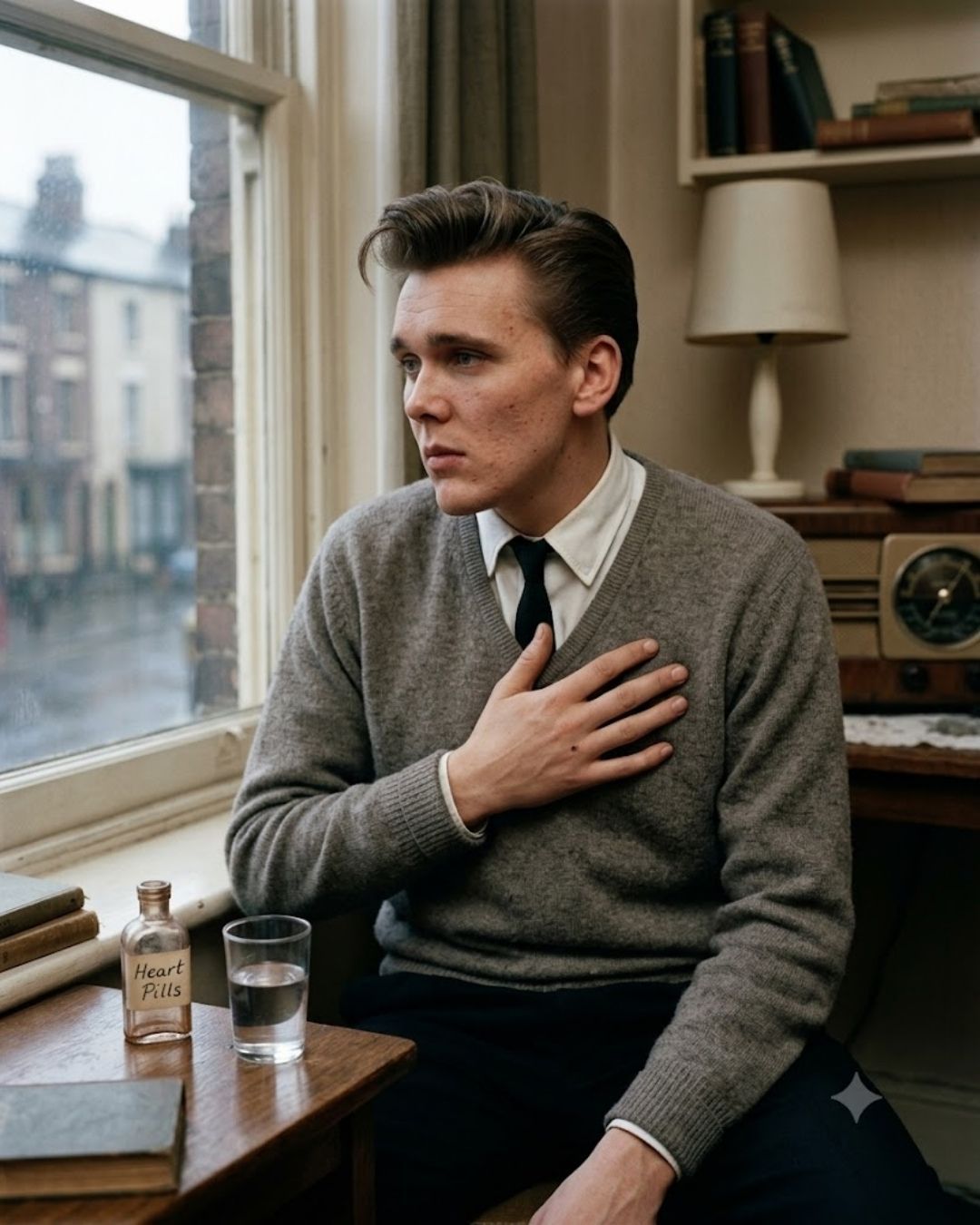
Born in the working-class Dingle district of Liverpool on April 17, 1940, Ronald Wycherley faced an early life shaped by prolonged hospital stays. His 1946 bout with rheumatic fever left him with permanently damaged heart valves, a condition that medical professionals warned could shorten his lifespan significantly. While peers engaged in vigorous street sports, young Ronald was confined to long periods of bed rest. In that enforced quiet, he developed an intense inner world, finding solace in lyricism and acoustic melodies rather than boisterous social interaction.
When impresario Larry Parnes discovered him backstage in Birkenhead in 1958 and christened him Billy Fury, the music industry expected a brash British response to American rockabilly. Yet Fury never adopted the braggadocio common among his contemporaries. His delicate physical stamina prevented him from performing relentless acrobatic stage routines; instead, he cultivated an understated, sultry poise. His vocals—characterized by trembling vibrato, hushed phrasing, and deep melancholy—turned physical limitation into an unforgettable trademark. Hits like “Halfway to Paradise,” “Maybe Tomorrow,” and “Like I’ve Never Been Gone” resonated because their sadness felt unvarnished and real.
Between 1959 and 1966, Fury equaled the chart longevity records of his era, matching The Beatles with 24 UK top-forty singles. Despite this extraordinary commercial success, he remained famously uncomfortable with idolization. He routinely declined celebrity galas, preferring the tranquility of nature reserves, bird sanctuaries, and his Welsh farm. His chronic heart condition was a constant companion, demanding conservation of energy and reinforcing his quiet, introspective demeanor.
Rather than diminishing his legacy, this profound solitude elevated Billy Fury above fleeting pop trends. His enduring artistic identity demonstrated that authentic emotional resonance often emerges from fragility rather than force. By transmuting illness and solitude into sublime musical sensitivity, Ronald Wycherley redefined what it meant to be a modern rock icon.