Introduction
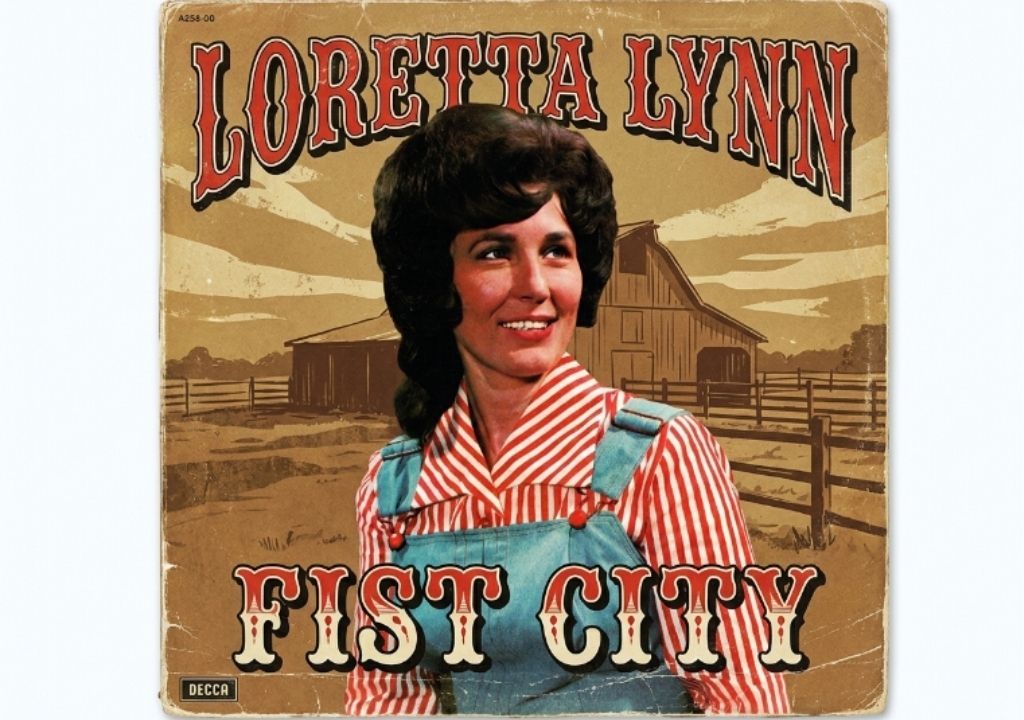
There is a distinct, smoky aroma to 1960s country music—an era where the twang of a pedal steel guitar spoke directly to the daily triumphs and heartaches of the working class. Amidst this landscape stood Loretta Lynn, a woman who didn’t just sing country music; she lived every single syllable of it. Born in the remote hills of Butcher Hollow, Kentucky, she brought an unmatched, unfiltered reality to the airwaves. In 1967, while she was out on the road grinding through endless tours to support her family, a local woman back in Tennessee began making unwelcome advances toward her husband, Oliver “Doolittle” Lynn. Instead of breaking down in tears or suffering in silence as society often expected of women at the time, Loretta channeled her righteous fury directly into her songwriting pad. The result was “Fist City,” a masterpiece of confrontational storytelling that remains one of the most delightfully fierce anthems in the history of American roots music.
Musically, “Fist City” is a masterclass in classic honky-tonk instrumentation. From the very first note, the sharp, driving rhythm hooks the listener, mimicking the steady, determined pulse of a woman pulling up her sleeves to protect what belongs to her. The sonic landscape is beautifully crisp, defined by that iconic mid-century Nashville sound where the electric guitar bites with purpose and the pedal steel wails. Yet, in this track, the steel guitar doesn’t weep out of sadness—it cries out with pure attitude. Loretta’s vocal delivery is nothing short of magnificent. She avoids shouting or over-singing; instead, she delivers her sharp warnings with a sweet, melodic Southern drawl that makes the underlying threat feel even more menacing. When she sings about showing someone what “Fist City” looks like, her voice possesses a crystalline clarity that cuts right through the smoke of any dive bar. It was this absolute lack of pretense that resonated so deeply with everyday listeners, swiftly driving the track to become her second number-one hit on the Billboard country charts.
Looking back from the vantage point of today, “Fist City” represents a pivotal cultural shift. Loretta Lynn completely revolutionized the role of women in modern music by flatly refusing to play the helpless victim. She sang directly for the housewives, the working mothers, and every individual who had ever had to fight tooth and nail to keep their world together. There is a beautiful, gritty nostalgia in revisiting this track today. It effortlessly transports us back to a gold-standard era when great songs were built on three chords and the absolute truth, captured entirely live in a studio with real musicians reacting to one another in real time. It serves as a vivid reminder of a time when music wasn’t polished to a sterile sheen, but rather left raw, honest, and delightfully human. Decades later, the fire burning within “Fist City” hasn’t dimmed in the slightest; it still stands as a towering, unforgettable monument to the fierce spirit of the Coal Miner’s Daughter.