Introduction
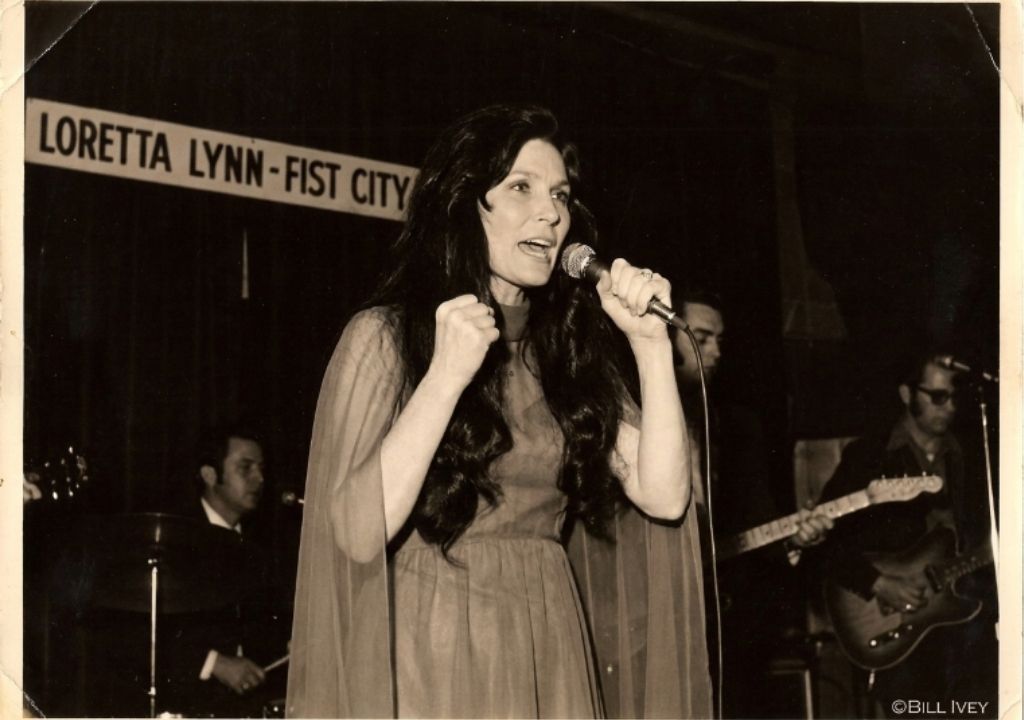
The late 1960s in Nashville was a time of shifting tectonic plates. The glossy, string-laden Nashville Sound was sweeping through the studios, trying to smooth out the rough edges of traditional country music to appeal to a broader, pop-leaning audience. Yet, while the industry executives were busy polishing the silver, a fierce force of nature from Butcher Hollow, Kentucky, was standing in the doorway of the Grand Ole Opry, refusing to let the grit of real life be swept under the rug. That force was Loretta Lynn. When she released “Fist City” in 1968, it wasn’t just a song; it was a cultural lightning bolt that struck at the very heart of polite society, proving that a country woman could be tender, domestic, and utterly dangerous all at once.
To truly understand the atmosphere of “Fist City,” one must step back into an era where women in country music were largely expected to sing about heartbreak from a position of passive suffering. They were the victims of cheating men, weeping softly into their aprons while steel guitars wailed in sympathy. Loretta shattered that archetype into a thousand pieces. Born into the deep poverty of a coal miner’s family, she carried the survival instincts of the Appalachian hills in her veins. When a local woman in Nashville began making unwelcome advances toward Loretta’s husband, Oliver “Doolittle” Lynn, while Loretta was away on tour, the singer didn’t write a tragic ballad about loneliness. Instead, she sat down with her guitar and penned a direct, unfiltered physical threat wrapped in a jaunty, uptempo honky-tonk rhythm.
The genius of the track lies in its glorious contradictions. Musically, it possesses the infectious, rhythmic bounce characteristic of the finest late-60s honky-tonk, complete with a brilliant, weeping pedal steel guitar played by the legendary Pete Drake and driving acoustic strumming. It sounds almost joyful, a melody you want to two-step to in a smoke-filled tavern. But the moment Loretta opens her mouth, the sweet innocence of the instrumentation is sharp-edged by lyrics that are pure, unadulterated fire. She sings directly to her rival, bypassing the husband entirely to address the woman trying to encroach upon her home. Lines like “I’m here to tell you gal to lay off of my man” and the titular promise to show her “Fist City” were shockingly candid for the era. It was a radical reclamation of agency, delivered with a smile and a crystalline country twang that could cut glass.
“Fist City” soared to the top of the Billboard Country charts, becoming Loretta’s second number-one hit and cementing her reputation as the definitive voice of the working-class American woman. Decades later, the track still crackles with the same electricity it possessed in 1968. It serves as a vivid cinematic window into a bygone era of country music when songs were forged from genuine lived experiences, dirt roads, and unyielding pride. Listening to it today is a deeply nostalgic journey back to a time when authenticity wasn’t a marketing buzzword, but a way of survival for a legendary artist who refused to back down from anyone.