INTRODUCTION
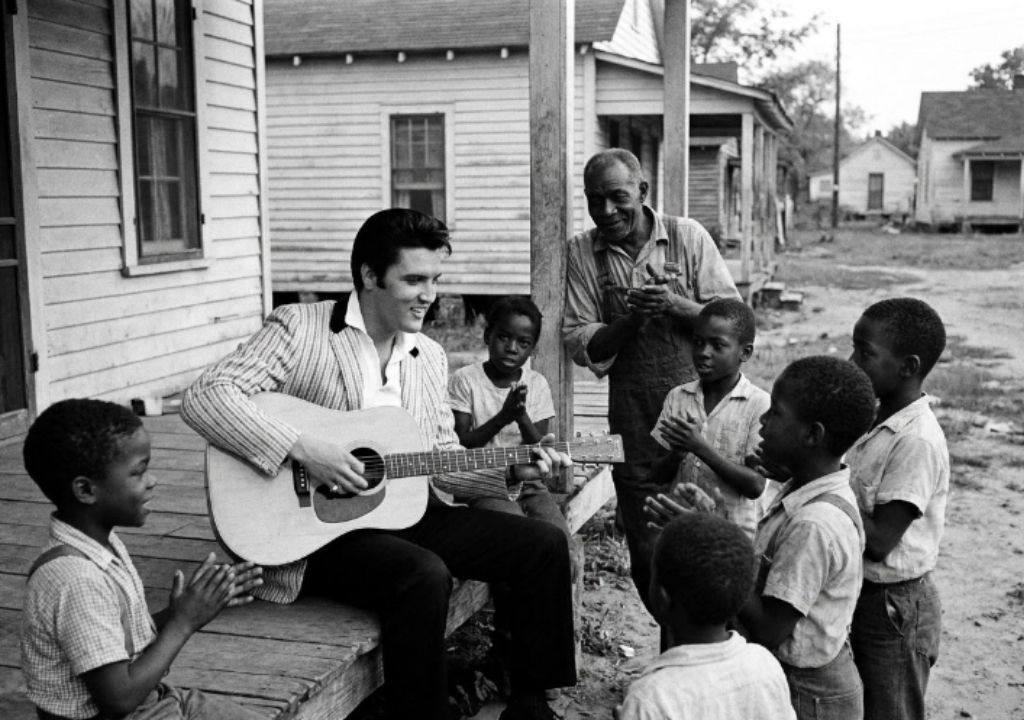
On humid summer evenings during the mid-1940s, a slender boy from East Tupelo stood quietly near the wooden steps of Sanctified church tents east of the Mobile and Ohio railway line. While most of segregated Mississippi remained sharply divided by strict social boundaries, ten-year-old Elvis Presley stood mesmerized by the exuberant hand-clapping, soaring vocal harmonies, and raw acoustic guitar blues drifting through the evening air of Shake Rag. Living in profound poverty just blocks away, the young boy found a welcoming sanctuary in the rich artistic tapestry of Tupelo’s premier African American neighborhood. Local residents often remembered the soft-spoken white youth sitting near street corners and porch gatherings, silently soaking in the passionate cadences of local bluesmen and church choir directors. How did this quiet exchange across railway tracks forge the stylistic foundation for the most iconic musical revolution of the twentieth century?
THE DETAILED STORY
Between 1943 and 1947, the commercial district of Shake Rag served as the cultural heartbeat of East Tupelo. While his father Vernon delivered wholesale groceries for L.P. McCarty & Son throughout the neighborhood, young Elvis spent countless hours walking its vibrant streets. Far from being a mere spectator, the boy immersed himself in an environment where music was a living, breathing social currency. On any given afternoon, itinerant blues guitarists such as Lonnie Williams and Tee-Toc performed on front porches, near the local fairgrounds, and outside neighborhood cafes. Rather than observing from a distance, Elvis approached these seasoned musicians with genuine reverence, learning guitar fingerpicking techniques and vocal phrasing directly from the artists who defined Delta blues traditions.
The spiritual pillar of Shake Rag resided in its Sanctified Black churches, where ecstatic worship sessions featured improvisational piano arrangements and expressive rhythm sections. Attending these revival services provided Elvis with his first exposure to unrestrained musical passion—a stark contrast to the subdued country church traditions of the era. He internalised the syncopated timing, dynamic vocal glides, and physical energy that would later captivate global audiences. Historians documented that this cross-cultural immersion was rooted in shared economic hardship and mutual artistic respect, allowing a young white boy to navigate the neighborhood with ease and warmth.
This organic musical education reached its historical fruition on 07/05/1954 at Sun Studio in Memphis, Tennessee. During a late-night recording session with producer Sam Phillips, Elvis spontaneously broke into an uptempo version of Arthur “Big Boy” Crudup’s blues classic “That’s All Right”. By fusing the uninhibited vocal passion he absorbed in Shake Rag with country instrumentation, he sparked the birth of rockabilly. Rather than imitating a style, he honored the sacred and secular Black traditions that nurtured his youth. Ultimately, the story of Shake Rag illuminates how authentic community connections across racial lines helped generate the most transformative sound in modern American popular culture.