INTRODUCTION
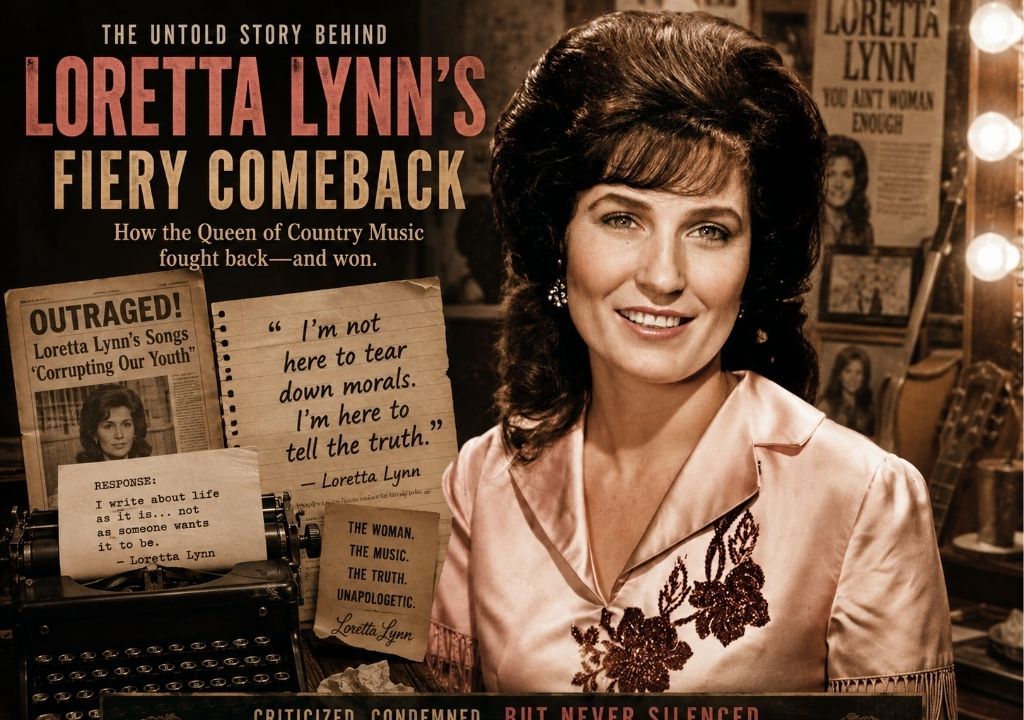
On 01/20/1975, radio programmers across rural North America began quietly pulling a newly pressed vinyl single from their broadcast turntables. The track contained no explicit language or aggressive instrumentation, yet executives feared its unapologetic lyricism threatened traditional domestic values. Country music icon Loretta Lynn had recorded a candid ode to reproductive freedom, sparking immediate outrage from conservative station owners who labeled the song a threat to public morality. Rather than offering an apology or retreating from the spotlight, the country star confronted her critics with unflinching poise and sharp wit. Her defiance turned a moral panic into a watershed cultural conversation across the music industry. What inner conviction propelled this coal miner’s daughter to challenge the rigid establishment and champion artistic authenticity?
THE DETAILED STORY
When more than 60 radio stations officially banned the record upon its release, corporate executives assumed the institutional suppression would stifle its commercial momentum. Instead, the widespread censorship created an unprecedented surge in public demand across regional record stores. While industry traditionalists accused her of undermining community values, Loretta Lynn directly exposed the underlying hypocrisy of male programmers dictating what rural women were allowed to hear. In high-profile interviews with national media outlets, she calmly articulated that women across working-class communities had endured physical exhaustion and financial hardship for generations without access to honest conversations regarding reproductive health. Medical professionals across the country even approached her at concert venues, expressing profound gratitude for her willingness to address a crucial healthcare reality that mainstream institutions had long ignored.
Rather than retreating from the intense public backlash, she insisted that authentic country songwriting must reflect genuine human experience rather than sanitized nostalgia. Her steadfast refusal to yield transformed the controversial track into a monumental victory. The single secured a top peak position at number five on the Billboard Hot Country Singles chart while surging to number 70 on the competitive Billboard Hot 100. Furthermore, retail distributors reported extraordinary physical sales in geographic territories where radio managers had explicitly forbidden airplay, proving that listeners actively sought out her message despite corporate gatekeeping.
By converting executive resistance into cultural empowerment, the legendary artist established an enduring benchmark for future generations of women in American popular music. She decisively demonstrated that art grounded in lived truth possesses far greater staying power than artificial conformity. Today, cultural historians at institutions like the Country Music Hall of Fame recognize this high-stakes standoff as a monumental turning point that expanded the narrative scope of popular music forever. Ultimately, her sharp response did not corrupt public morals—it elevated the medium by proving that unwavering integrity can permanently redefine an entire industry.