INTRODUCTION
On a sun-drenched afternoon in June 1957, inside a private dressing room on the Metro-Goldwyn-Mayer lot in Culver City, California, twenty-two-year-old Elvis Presley sat face-to-face with an inquisitor who held the power to define his legacy. Across from him sat Louie Robinson, the sharp-eyed associate editor of JET, the nation’s preeminent African American newsweekly. A venomous whisper campaign had metastasized across the American South and national periodicals, alleging that the young rock phenom had uttered a contemptuous racial slur claiming Black Americans were only fit to shine his shoes. In an era where racial fault lines were fiercely contested, the charge threatened to fracture a burgeoning cross-racial youth culture and forever stain Presley’s ascendancy. Could an intrepid Black reporter unearth the origin of the slander, or would the silence of Hollywood complicity prevail?
THE DETAILED STORY
The poisonous allegation had originated in an April 1957 article published by Sepia magazine, which amplified an unsubstantiated street rumor that Presley had made disparaging remarks during a Boston television appearance or a Texas tour stop. Recognizing the explosive stakes, John H. Johnson’s JET refused to trade in second-hand speculation. Louie Robinson launched an exhaustive nationwide inquiry, later describing the pursuit of the phantom source as “like running a gopher to earth—no matter what hole it dived back in, it popped out of another one.”
Securing rare access to the closed set of Jailhouse Rock at 11:30 AM PT, Robinson bypassed Hollywood publicists and confronted the singer directly. Presley offered no evasions. “I never said anything like that, and people who know me know that I wouldn’t have said it,” Presley stated with quiet conviction. He then candidly dismantled the myth of his own supremacy: “A lot of people seem to think I started this business, but rock ’n’ roll was here a long time before I came along. Nobody can sing that kind of music like colored people. Let’s face it: I can’t sing like Fats Domino can. I know that.”
Refusing to rely solely on the star’s testimony, Robinson expanded his journalistic net. He interviewed Black collaborators and community leaders who knew Presley intimately. Los Angeles session pianist Dudley Brooks testified that Presley treated every musician on equal footing in the studio. In Tupelo, Mississippi, respected physician Dr. W.A. Zuber corroborated Presley’s childhood roots attending Black sanctified church revivals, noting his innate humility.
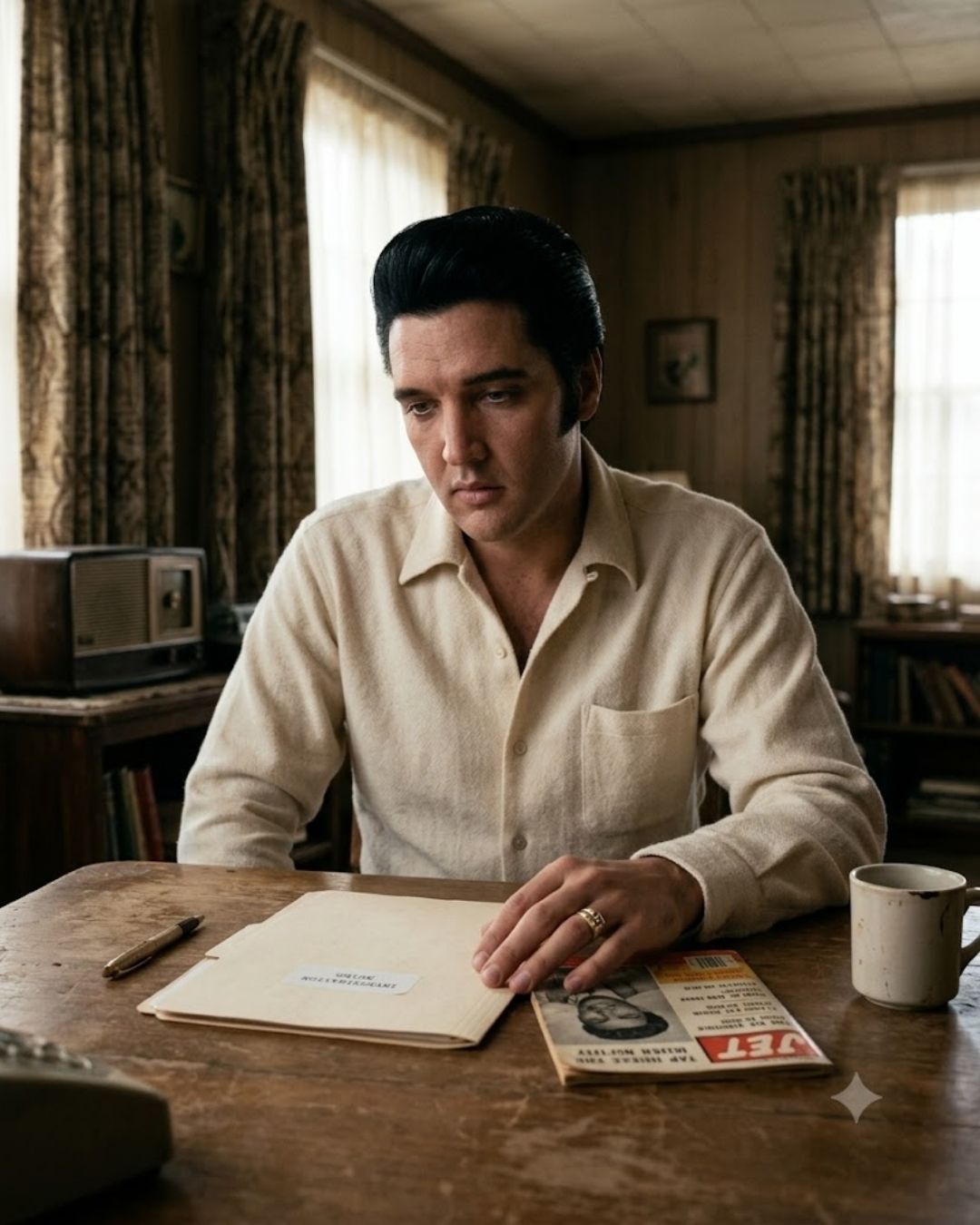
Published on 08/01/1957 under the definitive headline “The Truth About That Elvis Presley Rumor,” Robinson’s investigative feature completely exonerated the artist. The report established that the slur was entirely fabricated by opportunistic agitators. In his final assessment, Robinson affirmed that for Presley, humanity transcended racial boundaries: to him, people were simply people, regardless of race, color, or creed.