INTRODUCTION
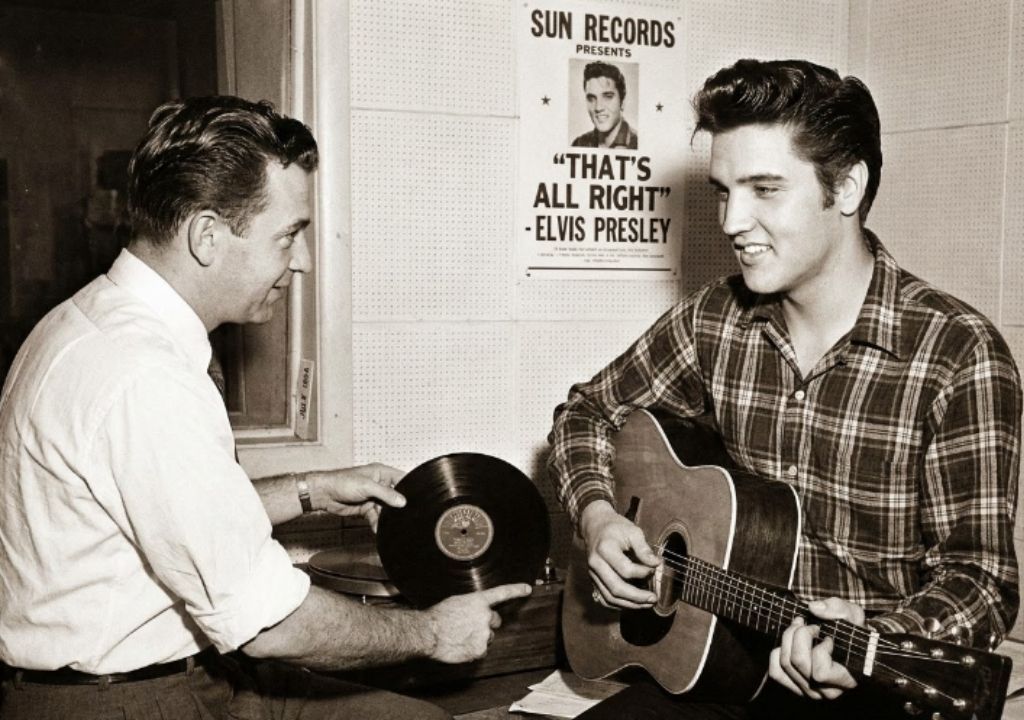
At 09:00 PM ET on 07/05/1954, inside the cramped tracking room at 706 Union Avenue, a nineteen-year-old truck driver sat quietly with an acoustic guitar. Hours of standard country ballads had yielded unremarkable takes, and producer Sam Phillips was preparing to pack up the equipment. Then, during an informal break, Elvis Presley began frantically strumming Arthur Crudup’s 1946 rhythm and blues track That’s All Right. Upright bassist Bill Black grabbed his instrument and began slapping the strings in rhythmic syncopation, while guitarist Scotty Moore joined with sharp, syncopated lead fills. What began as a playful moment of creative relief quickly transformed into a high-energy recording that captured unmatched raw vitality. How did this unscheduled burst of musical improvisation ultimately break down regional radio barriers and shatter conventional broadcast programming across the American South?
THE DETAILED STORY
Recognizing the explosive commercial potential of the raw track, Sam Phillips immediately pressed an acetate disc and delivered it to disc jockey Dewey Phillips at station WHBQ on 07/08/1954. During his evening show “Red, Hot & Blue,” Dewey played the record at 09:30 PM ET. The reaction from listeners was instantaneous. The radio station switchboard was overwhelmed with phone calls from listeners demanding to hear the song again. Over the next two hours, the station broadcast the acetate fourteen consecutive times, signaling a monumental cultural shift.
Dewey Phillips summoned Elvis to the studio for an impromptu live interview. During the broadcast, the host casually asked Elvis which high school he had attended—a calculated question designed to inform listeners that the singer was white, as his soulful vocal delivery had led many to believe he was an African American artist. This pivotal broadcasting moment bridged deeply divided racial audiences across Memphis, demonstrating how music could transcend traditional societal boundaries.
On 07/19/1954, Sun Studio officially released the 7-inch single paired with “Blue Moon of Kentucky.” Local record stores quickly sold out of their initial pressings, ordering thousands of additional copies to meet overwhelming consumer demand. By fusing blues, country, and gospel elements with an energetic rhythm section, Elvis upended Memphis radio history forever, creating a brand-new sonic template that music executives quickly scrambled to replicate.
The immediate commercial success of the single launched Elvis on regional tours, where his kinetic stage presence drew standing-room-only crowds. Within two years, RCA Victor purchased his recording contract for an unprecedented $35,000 USD, establishing the financial infrastructure for modern rock and roll. Billboard and Variety documented how this single recording transformed the economics of the record industry, turning independent regional releases into national commercial juggernauts. Ultimately, that spontaneous foot-tapping session inside a modest studio gave birth to a global cultural phenomenon that forever redefined modern popular music.