INTRODUCTION
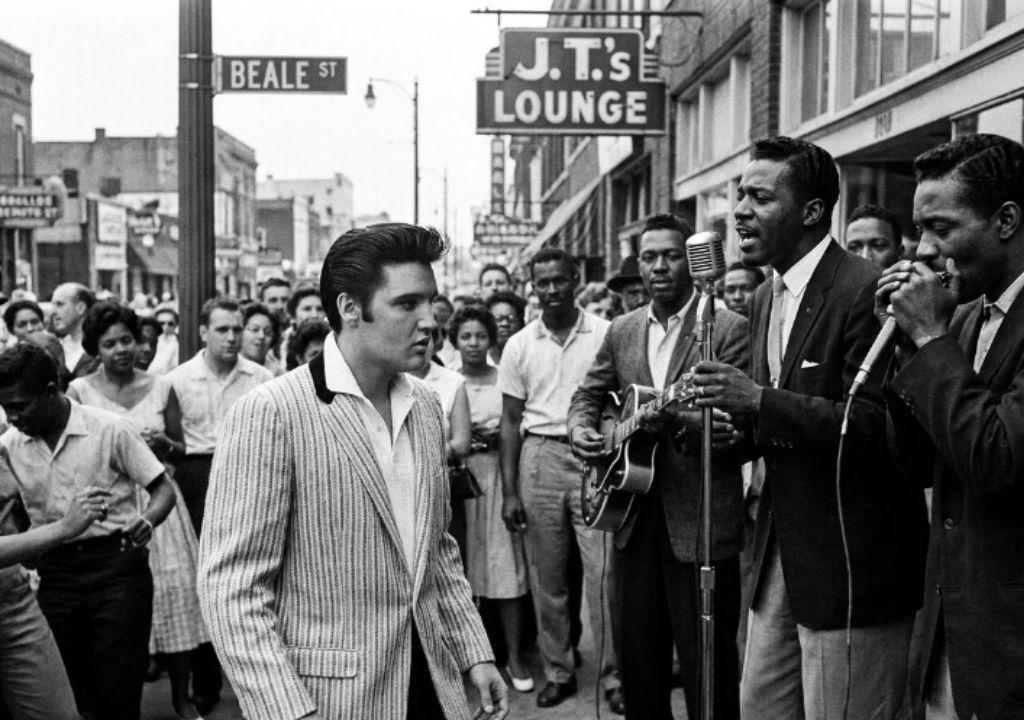
On a sweltering Tuesday afternoon in May 1951, while algebra teachers at L.C. Humes High School took attendance, one desk near the back remained conspicuously empty. Miles away from his structured classroom in North Memphis, sixteen-year-old Elvis Presley navigated the crowded sidewalks of Beale Street. He leaned against the brick facade of the Palace Theatre, mesmerized by the powerful electric guitar riffs pouring from open doorway rehearsals. Amidst the vibrant commerce of segregation-era Memphis, this historic thoroughfare served as the beating heart of African American musical innovation. While his classmates focused on textbook equations, the quiet teenager stood quietly in the shadows, absorbing raw blues arrangements performed by masters like B.B. King and Rufus Thomas. He was not merely skipping school; he was discovering his life’s true calling. How did a shy teenager’s unauthorized afternoon excursions along these storied blocks spark the most dramatic cultural shift in modern American history?
THE DETAILED STORY
Between 1950 and 1953, the bustling corridor of Beale Street functioned as an incubator for modern American rhythm and blues. Stationed at the center of this musical universe was radio station WDIA, which began broadcasting an all-Black program format that reached millions across the Mid-South. For young Elvis, the allure of this vibrant soundscape proved far more compelling than standard academic lectures. Escaping his routine at Humes High, he spent afternoon hours wandering near Handy Park, where improvisational jam sessions flourished. He watched intently as performers executed intricate rhythm patterns and emotional vocal phrasing, absorbing artistic nuances that no formal music academy could teach.
His frequent visits were not limited to outdoor parks. Elvis spent considerable time inside Lansky Brothers at 126 Beale Street, a men’s clothing store catering to prominent Black entertainers. Proprietor Bernard Lansky recalled the young student gazing at high-collared shirts and flashy velvet suits displayed in the shop window. When the shopkeeper encouraged him to come inside, Elvis promised he would buy out the store once he became famous. More importantly, his presence at the legendary Midnight Rambler shows at the Palace Theatre allowed him to witness electrifying performances by Arthur “Big Boy” Crudup, Howlin’ Wolf, and Junior Parker.
By standing quietly in balcony sections, Elvis internalised the kinetic energy and gospel-infused phrasing of Southern Black artists. When he entered Sun Studio on 07/05/1954 to record “That’s All Right,” those illicit high school afternoons bore immediate artistic fruit. By seamlessly synthesizing country twang with the explosive rhythm and blues he discovered on his secret trips, he sparked a global musical explosion that shattered existing genre barriers. The commercial music industry was forever altered, yielding unprecedented record sales and establishing a multi-billion-dollar rock and roll market valued in excess of $500,000,000 USD by the late 1950s. Ultimately, those skipped high school classes served as the quiet foundation for an artistic evolution that redefined modern global culture.