INTRODUCTION
When producer Owen Bradley queued the tape at Bradley’s Barn in Mount Juliet, Tennessee, the studio fell into an uneasy silence. Country radio in early 1971 operated under unwritten conservative codes, where songs of domestic decay rarely received prime rotation. Yet Conway Twitty stood before the microphone alongside Loretta Lynn, preparing to deliver L.E. White’s unsparing lyrics about two lovers seeking solace away from cold hearths. The narrative did not celebrate clandestine desire; it mourned the devastating quiet of marriages that had simply run out of warmth. For an artist already dominating solo charts, releasing such a somber examination of quiet desperation was a calculated artistic gamble that risked alienating a devoted traditional audience. What compelled Conway Twitty to risk his soaring reputation on a song that laid bare the most uncomfortable realities of domestic life?
THE DETAILED STORY
By 1970, Conway Twitty had firmly established himself as a titan of country music, having successfully reinvented his career after his initial rock-and-roll triumphs. With signature hits like “Hello Darlin’,” Twitty possessed an uncanny ability to vocalize romantic longing with baritone resonance and emotional nuance. However, when songwriter L.E. White presented “After the Fire Is Gone,” Twitty recognized an opportunity to push past conventional sentimentalism into uncharted psychological territory. The composition did not rely on the melodramatic tropes typical of cheating songs. Instead, it examined the tragic vacuum left when marital affection fades into cold companionate habit, leaving two lonely souls to seek solace in each other’s company.
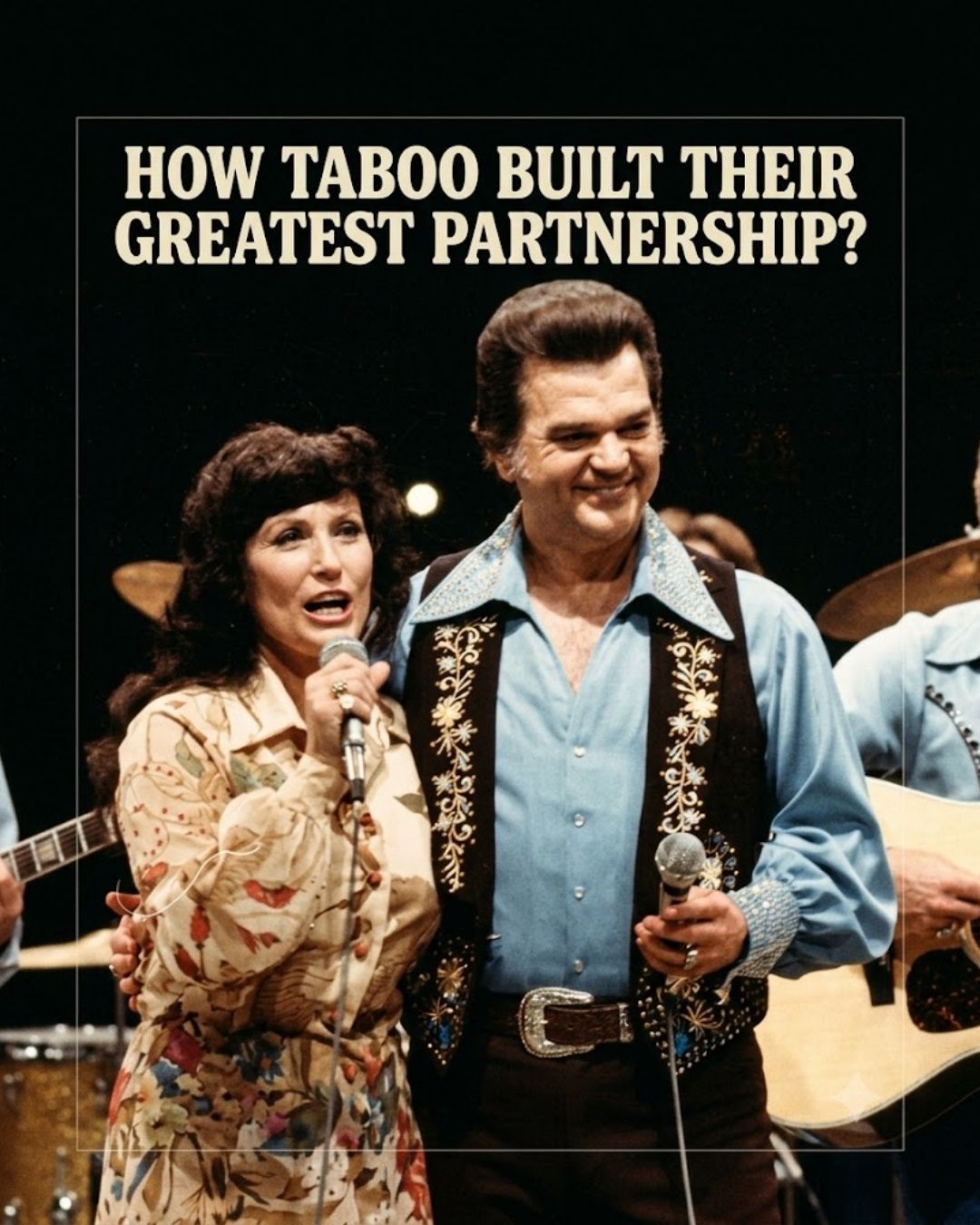
Twitty understood that the song required an artistic counterweight—a partner whose emotional authenticity matched his own restraint. Enlisting Loretta Lynn, already a celebrated pioneer of candid working-class anthems, Twitty created a musical dialogue anchored in adult empathy rather than moral judgment. When Decca Records released the single in January 1971, industry executives braced for potential backlash over its frank portrayal of an extramarital bond. Yet listeners recognized the honesty embedded in their understated harmonies. Rather than sounding brazen, Twitty’s delivery sounded profoundly remorseful, capturing the universal tragedy of good people trapped inside hollow covenants.
The cultural reception proved staggering. In March 1971, “After the Fire Is Gone” ascended to Number One on the Billboard Hot Country Singles chart, remaining atop the rankings for two consecutive weeks. The critical establishment followed suit; at the 14th Annual Grammy Awards in 1972, the recording earned Twitty and Lynn the Grammy for Best Country Performance by a Duo or Group with Vocal. More significantly, the single established a precedent. It proved that commercial country audiences possessed an appetite for complex emotional realism, transforming Twitty from a dependable hitmaker into a sophisticated chronicler of the human condition whose artistic courage forever redefined Nashville’s narrative boundaries.