INTRODUCTION
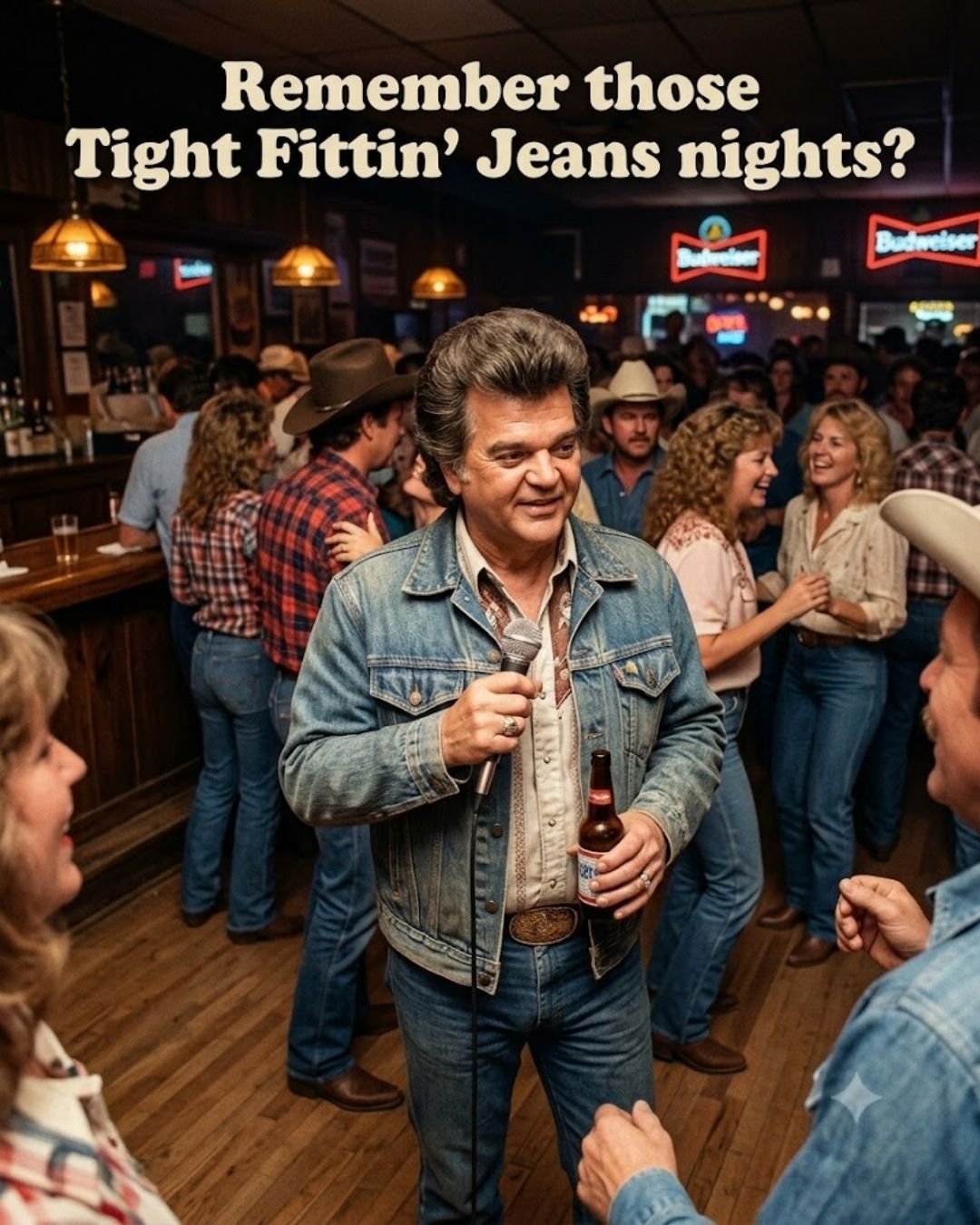
In the dim glow of a smoke-filled roadside tavern during the summer of 1981, the unmistakable voice of Conway Twitty drifted from the jukebox, painting a scene both intimately familiar and culturally subversive. Country music had long celebrated the unadorned life of the American laborer, but Twitty’s narrative offered an arresting inversion: an affluent woman slipping quietly away from manicured lawns and marble foyers to seek refuge in a dimly lit honky-tonk, enveloped in denim. Beneath the infectious shuffle of the rhythm section lay a profound testament to democratic escapism, where diamond rings and bank accounts yielded to the magnetic pull of a two-step. Yet, as the track raced toward commercial radio across North America, how did an unapologetically seductive barroom tale manage to disarm critics and capture the heart of the national conscience?
THE DETAILED STORY
When songwriter Michael Huffman brought “Tight Fittin’ Jeans” to Conway Twitty, the composition could have easily faltered in less capable hands. In lesser arrangements, the premise—a wealthy socialite quietly abandoning high society for a night of abandon in a roadside honky-tonk—risked descending into cheap novelty or salacious exploitation. Instead, under the joint production of Twitty and Ron Chancey for MCA Records, the recording emerged as a masterclass in narrative discretion, empathy, and working-class dignity.
Released in June 1981 as the lead single from Twitty’s forty-third studio album, Mr. T, the track arrived during the cultural crest of the Urban Cowboy movement. Yet while contemporary radio often favored polished commercial gloss, Twitty preserved the raw, communal pulse of the dance floor. His vocal delivery remained understated, measured, and courtly. When the protagonist acknowledges the profound economic gulf between himself and the woman stepping out of her gated reality, he refuses to objectify her. His signature restraint—crystallized in his insistence that she remains a lady in his mind—imbued the fleeting encounter with mutual respect rather than crude conquest.
The response across American radio was immediate and decisive. On 09/26/1981, the single officially topped the Billboard country chart, securing Twitty his twenty-sixth solo number-one hit and reinforcing a legendary trajectory that ultimately yielded forty Billboard country chart-toppers. Beyond commercial validation, the song resonated because it captured an essential social truth. In an era marked by shifting cultural tides, the honky-tonk operated as the ultimate democratic space—a sanctuary where blue jeans erased the boundaries of bank accounts, prestige, and pedigree.
By transforming an ephemeral barroom two-step into an enduring study of human connection, Twitty crafted far more than another disposable hit record. He captured the enduring spirit of classic American storytelling, affirming a timeless truth: that beneath the rigid barriers of social standing, the yearning for unpretentious affection and genuine human dignity remains universal across every dance floor.