INTRODUCTION
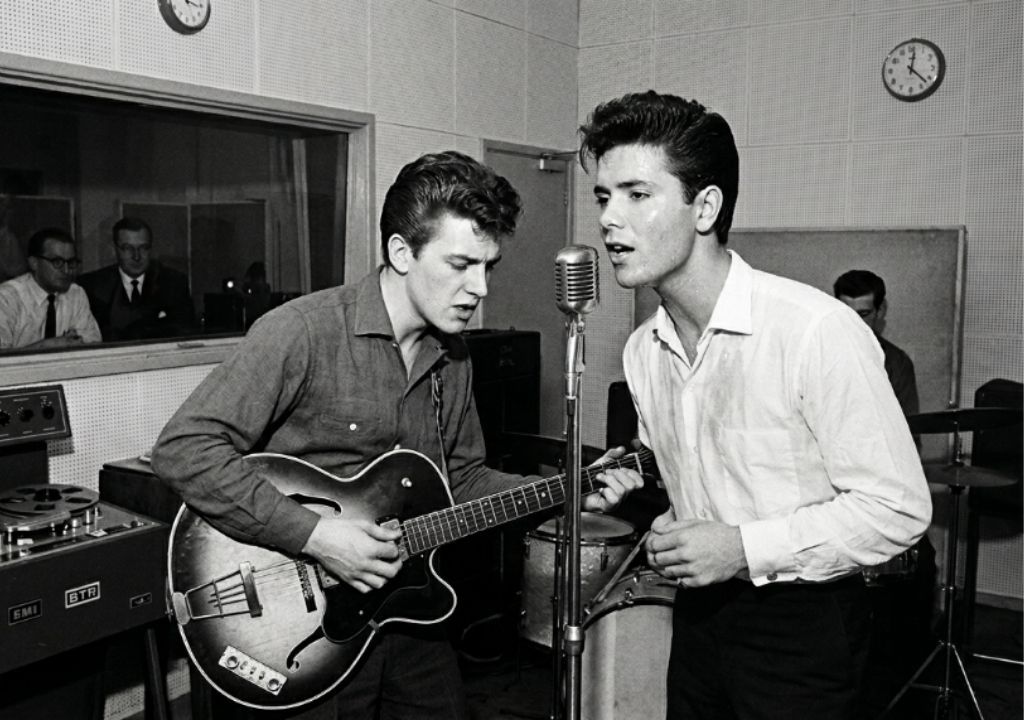
On the afternoon of 07/24/1958, inside the cavernous, sterile confines of EMI’s Abbey Road Studio Two, a tectonic shift in global music culture occurred without warning. A nineteen-year-old singer named Cliff Richard stepped up to a single microphone, backed by an unheralded group called The Drifters. Outside, the London streets remained entrenched in post-war austerity and polite, brass-heavy jazz standards. Inside, however, the atmosphere grew instantly electric. There were no calculated marketing strategies or glossy production overlays present in the room. Instead, a stripped-back, urgent desperation took hold as the tape began to spin. What emerged from that singular, unvarnished session was not merely a B-side track, but a sonic lightning bolt that permanently fractured the safe, predictable landscape of the mid-century British entertainment establishment, establishing a brand-new cultural epoch.
THE DETAILED STORY
The historical significance of “Move It” lies within its unapologetic, organic construction. Before this watershed moment, British attempts at rock ‘n’ roll were largely derivative, theatrical imitations of American icons, sanitised by conservative record executives who favored polite orchestration over genuine rebellion. Cliff Richard dismantled this paradigm entirely through a raw, mechanical synergy that relied on instinct rather than industry formulas.
At the absolute core of this sonic breakthrough was the menacing, metallic string-scraping of guitarist Ian Samwell. Recorded completely live to capture the authentic, visceral energy of the performance, Samwell’s electric guitar work bypassed the soft, cushioned acoustics of traditional pop recordings. The track utilized an aggressive, driving rhythm that felt dangerous, unpredictable, and entirely authentic to the restless youth culture of the late 1950s era. By deliberately eschewing the standard multi-tracked sheen and complex vocal harmonies common in American productions, the Abbey Road session preserved a coarse, unpolished edge that allowed the instrumentation to breathe with fierce intensity.
This deliberate rejection of contemporary glossy standards created a masterpiece of pure minimalist architecture. The interplay between Richard’s confident, sultry delivery and the propulsive acoustic-electric foundation generated a palpable tension, effectively birthing the foundational blueprint for the entire British Rock ‘n’ roll movement. Furthermore, it proved to a highly skeptical industry that homegrown UK talent could produce a sound equally as potent and culturally explosive as anything arriving from across the Atlantic.
Decades later, authoritative archival reviews from major American trade publications like Billboard and Variety continuously point to this specific 1958 session as the exact moment British popular music discovered its own independent, rebellious voice. “Move It” was not just an overnight commercial triumph; it was a profound, enduring declaration of cultural independence that successfully laid the structural groundwork for the subsequent global British Invasion, forever altering the trajectory of musical history through the sheer power of direct, uncompromised artistic expression.