INTRODUCTION
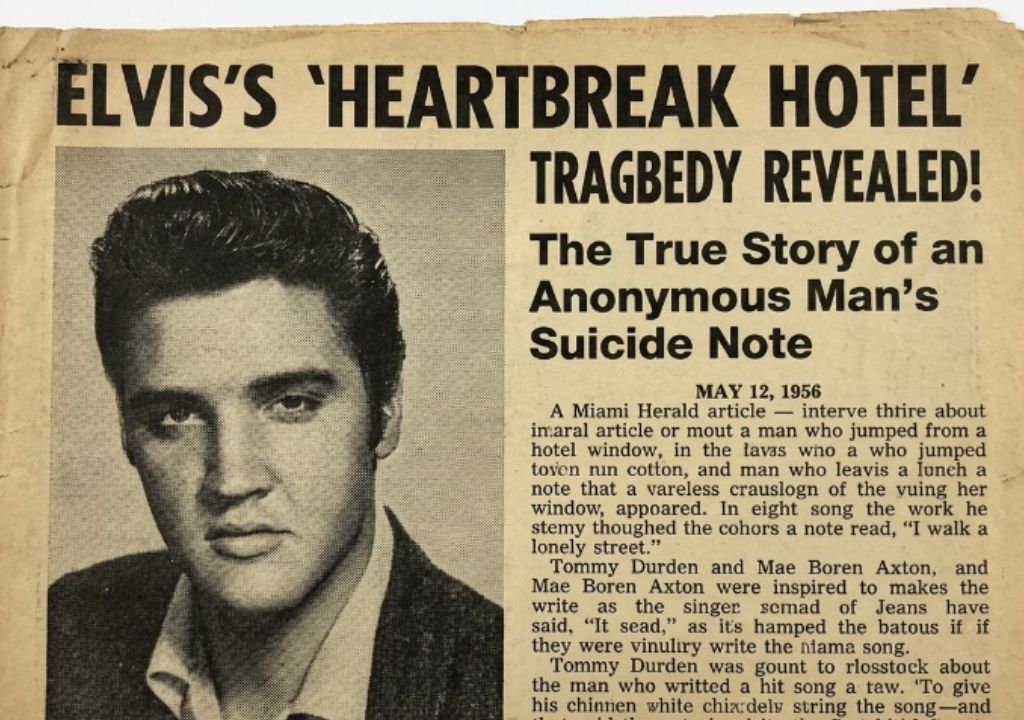
In late 1955, steel guitarist Tommy Durden stumbled across a brief, unsettling report in a local newspaper about an unidentified man who had erased his identity papers and stepped off a hotel balcony to his death. He left behind a heartbreaking four-word line: “I walk a lonely street.” Struck by the stark melancholy of those words, Durden brought the clipping to songwriter Mae Boren Axton. Together, in a swift burst of creative empathy, they decided to place a haven for the brokenhearted at the end of that isolated path. When RCA Victor executives later heard the resulting demo, they dismissed its echoing, somber tone as a morbid mistake. Yet one ambitious twenty-one-year-old artist immediately recognized the haunting truth embedded within those melancholic bars. How did a nameless tragedy transform into the definitive catalyst for rock and roll history?
THE DETAILED STORY
On 01/10/1956, inside RCA Victor’s studio in Nashville, Tennessee, Elvis Presley stepped up to the microphone for his inaugural recording session with his new record label. Fresh off a landmark $35,000 contract buyout organized by his manager, Colonel Tom Parker, the young performer selected “Heartbreak Hotel” despite significant hesitation from corporate executives. Producer Steve Sholes ingeniously recreated the cavernous, slapback echo of Sun Studio by routing the audio through a concrete hallway, amplifying the track’s desolate blues cadence. Driven by Chet Atkins’ subtle guitar accents and Floyd Cramer’s mournful piano accompaniment, Presley abandoned conventional country phrasing, delivering a vocal performance that masterfully fluctuated between raw desperation and quiet isolation.
Released on 01/27/1956, the single initially faced skepticism from radio programmers who considered its somber, funereal atmosphere unsuited for mainstream pop rotation. However, groundbreaking national television broadcasts on CBS’s Stage Show quickly shifted public momentum. By 03/03/1956, the track breached the Billboard Top 100, rapidly ascending the national charts across pop, country, and rhythm and blues categories simultaneously. By late April 1956, the single topped the chart for seven weeks at the No. 1 position, ultimately selling over one million copies in under two months and generating substantial commercial revenue for the label.
The song’s origin remains one of music journalism’s most captivating investigative mysteries. While folklore long tied the inspiration to an untraceable Miami newspaper story, subsequent archival research suggests the haunting lyric echoed the tragic life of Alvin Krolik, a troubled writer whose unpublished memoirs contained the poignant phrase before his death in 1955. Regardless of the exact historical paper trail, songwriters Mae Boren Axton and Tommy Durden captured an undeniable emotional resonance that reached millions. The track reshaped American popular culture, earning an official induction into the Grammy Hall of Fame in 1995. What began as a forgotten headline transformed into an enduring anthem of youth alienation, proving that from the deepest personal shadows, masterful art can forge an immortal cultural legacy.