INTRODUCTION
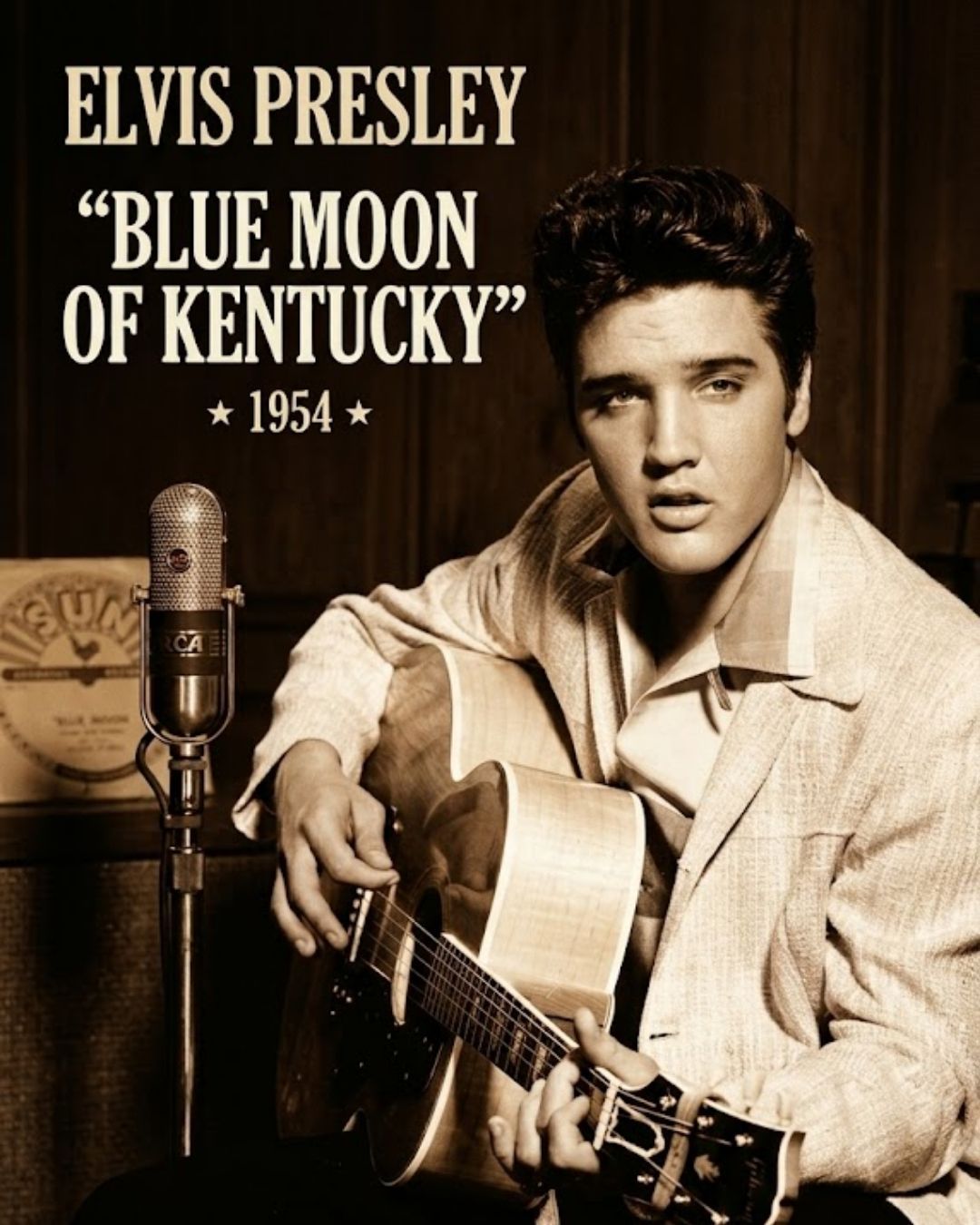
Late on a humid evening in July 1954, musician Bill Black set down his upright bass at Memphis’s Sun Studio, playfully mimicking a hillbilly tune at breakneck speed. Elvis Presley immediately picked up his acoustic guitar and joined in, unaware that tape was already rolling. How did an impromptu parody of a traditional waltz accidentally ignite a cultural revolution?
THE DETAILED STORY
When nineteen-year-old Elvis Presley, guitarist Scotty Moore, and bassist Bill Black entered Sun Studio in July 1954, producer Sam Phillips was searching for lightning in a bottle. Having just cut the blues track “That’s All Right,” Phillips faced a critical dilemma: he needed a contrasting B-side capable of winning over skeptical country disc jockeys across the American South. The solution arrived not through calculated marketing, but through exhausted studio playfulness.
During a break between takes, Bill Black grabbed his double bass and began slapping out a frantic, exaggerated rendition of Bill Monroe’s 1946 bluegrass standard “Blue Moon of Kentucky.” Originally penned as a mournful waltz in 3/4 time, Monroe’s composition had long stood as a revered pillar of traditional Appalachian music. Hearing Black’s comedic mockery, Elvis seized his acoustic guitar, jumped into the rhythm, and began singing Monroe’s lyrics with startling speed, vocal inflections, and youthful swagger. Scotty Moore joined the fray with sharp, stinging electric guitar riffs.
Sam Phillips instantly halted the trio from behind the control room glass, recognizing that their casual goofing around was pure gold. By collapsing Monroe’s solemn three-four time signature into an unstoppable four-four rockabilly drive, they had dismantled the rigid boundaries separating traditional country, Delta blues, and modern pop. Black’s percussive slap-bass technique replaced the need for drums, while Elvis’s syncopated vocal phrasing turned a song of heartbreak into a celebration of raw kinetic energy.
Released on July 19, 1954, as Sun Record 209, “Blue Moon of Kentucky” quickly captivated regional airwaves alongside its historic A-side. Legendary radio host Dewey Phillips spun the disc repeatedly across Memphis, prompting immediate listener calls from teenagers eager to discover the mysterious new sound. While some conservative purists initially balked at the radical reinterpretation, Bill Monroe himself offered heartfelt, generous praise. In fact, Monroe was so impressed by the reinvention that he soon altered his own live performances on the Grand Ole Opry, famously beginning the song as a slow waltz before joyfully accelerating into Elvis’s blistering tempo.
Ultimately, “Blue Moon of Kentucky” proved that musical genres were not sacred museum exhibits, but living, malleable art forms. By audaciously transforming an Appalachian waltz into high-speed rockabilly, Elvis Presley did not merely record a memorable B-side; he laid the rhythmic cornerstone for the global rock and roll explosion.