INTRODUCTION
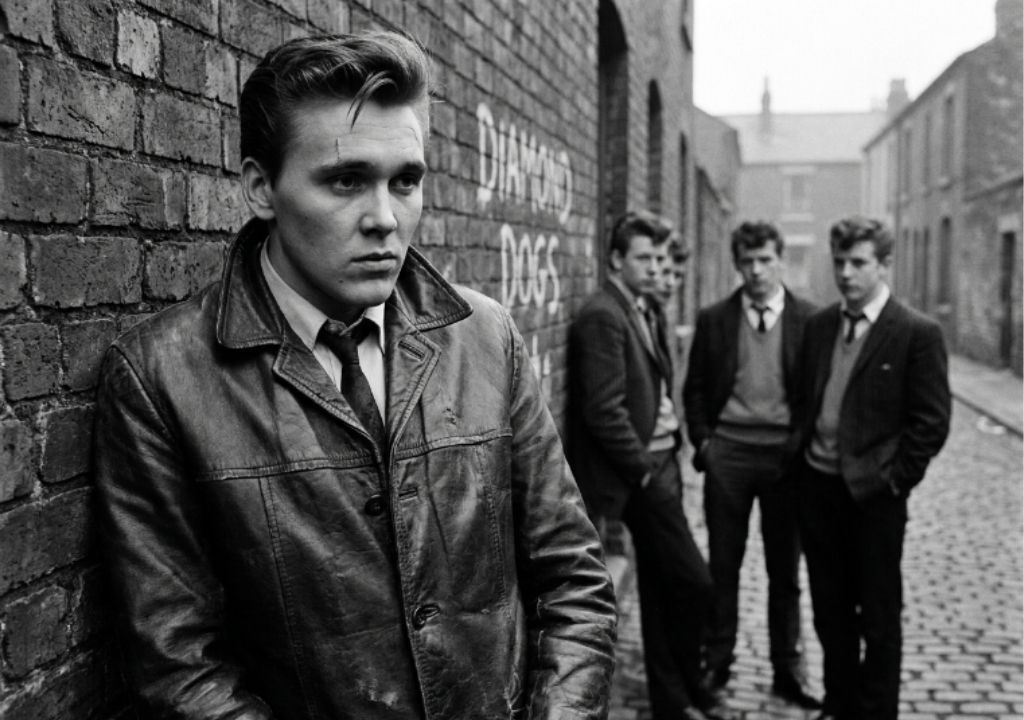
Long before he wore the shimmering lamé suits of a British pop icon, Ronald Wycherley walked the smog-choked, post-WWII docks of the Dingle area in Liverpool. Born on 04/17/1940, the future Billy Fury grew up in a rugged, working-class neighborhood where survival required an iron will. The true defining battle of his youth was not fought against rival street factions, but within his own body. At just six years old, a devastating bout of rheumatic fever left him with profound, permanent heart valve damage. This invisible physical scar shaped his entire demeanor, casting a shadow of fragility over a boy navigating one of England’s toughest port cities. Amidst the rough-and-tumble energy of the Mersey waterfront, young Wycherley channeled his isolation into a deep, soulful connection with American country and rock and roll music.
THE DETAILED STORY
Life in post-war Liverpool was defined by grit and industrial hustle. To earn a living, the young Wycherley took on demanding physical labor, working as a deckhand on a Mersey tugboat and hauling heavy loads at a local coal yard. These grueling environments exposed him daily to the fierce, uncompromising atmosphere of the city’s working docks. Yet, while the streets around him were often loud and combative, Wycherley retreated into songwriting, finding solace in composing melancholic melodies on a simple guitar. This stark contrast between his rugged external environment and his fragile internal health forged the unique artistic identity that would soon captivate the world.
The grand turning point arrived on 10/01/1958, at the Essoldo Theatre in Birkenhead. Armed with a handful of original songs, the shy youth caught the attention of influential music impresario Larry Parnes. Recognizing an undeniable, magnetic star quality beneath the quiet exterior, Parnes immediately signed him and christened him Billy Fury. This moniker perfectly captured the dual nature of his appeal: a fierce, intense rock and roll exterior backed by an authentic, heartfelt vulnerability born from his difficult upbringing.
When Fury burst onto the British music scene with his 1960 landmark album The Sound of Fury, critics and fans instantly recognized something entirely new. Unlike the manufactured pop stars of the era, Fury delivered his lyrics with a genuine, haunting intensity. His performance style was deeply physical yet laced with a poignant tenderness, a direct reflection of a young man who understood the precarious nature of life. By blending the raw, masculine energy of the Liverpool docks with the delicate emotional depth necessitated by his childhood illness, Fury secured an astonishing run of twenty-six Top 40 hits throughout the 1960s. He proved that true strength did not come from street violence, but from the courage to display absolute emotional honesty on stage, cementing his legacy as a pioneer of British rock.