Introduction
The late 1970s marked a profound golden age for country rock and Americana, a period when the traditional, dust-covered roots of country music beautifully collided with the poetic, free-spirited energy of the singer-songwriter movement. At the absolute center of this musical renaissance stood a woman whose voice possessed the ethereal purity of a mountain stream and the devastating ache of a midnight train whistle. Emmylou Harris did not just sing songs; she lived inside them, painting vivid landscapes of heartbreak, resilience, and longing with every breath she took. Released in 1977 on her seminal album Luxury Liner, “Tulsa Queen” remains one of the most hauntingly beautiful showcases of her artistic genius, a track co-written with the brilliant Rodney Crowell that perfectly captures the bittersweet essence of a bygone era.
To truly understand “Tulsa Queen,” one must immerse themselves in the distinct atmospheric texture of the recording. The song opens not with a grand gesture, but with a slow, creeping sense of melancholy, anchored by the weeping twang of a pedal steel guitar and the steady, rhythmic pulse that mimics the relentless movement of a locomotive cutting through the dark Oklahoma night. The train song is a foundational pillar of American roots music, traditionally serving as a metaphor for freedom, escape, or impending doom. However, Harris elevates this trope into something deeply intimate and cinematic. The Tulsa Queen isn’t just a physical train rolling down the tracks; it is a vessel carrying away a lifetime of unspoken words, broken promises, and the heavy ghost of a love that could not endure the passage of time.
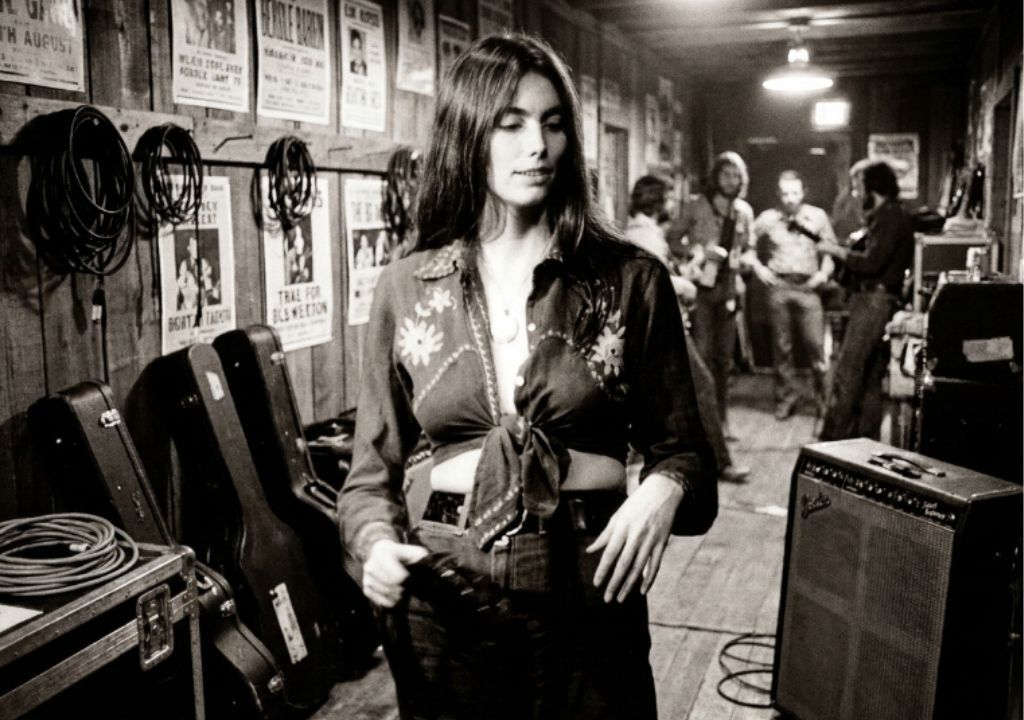
Emmylou’s vocal performance on this track is nothing short of transcendent. She possesses a rare ability to infuse a melody with a vulnerable, fragile quality while maintaining an undercurrent of immense vocal strength. When she sings of the train leaving the station, her voice floats above the instrumentation like morning mist over a hollow, filled with a deep, lived-in sorrow that feels entirely authentic. She is backed by the legendary Hot Band, a collection of unparalleled musicians who knew exactly how to breathe life into her vision. The interplay between the weeping fiddle, the crisp acoustic strumming, and the driving rhythm section creates a rich, analog tapestry that feels incredibly warm and immediate. It is the kind of sonic craftsmanship that can only be achieved when musicians sit in a room together, sharing a singular emotional wavelength.
Decades later, “Tulsa Queen” continues to resonate with anyone who has ever watched something precious slip away into the distance. It is a song that belongs to the quiet hours of the night, when the noise of the modern world fades and the memories of the past grow vivid. For those who grew up listening to the warm vinyl records of the seventies, this track is a nostalgic journey back to a time when music was defined by raw emotion and poetic storytelling. It stands as a timeless testament to Emmylou Harris’s enduring legacy as the high priestess of Americana, a song that still has the power to break your heart and heal it all at once.