INTRODUCTION
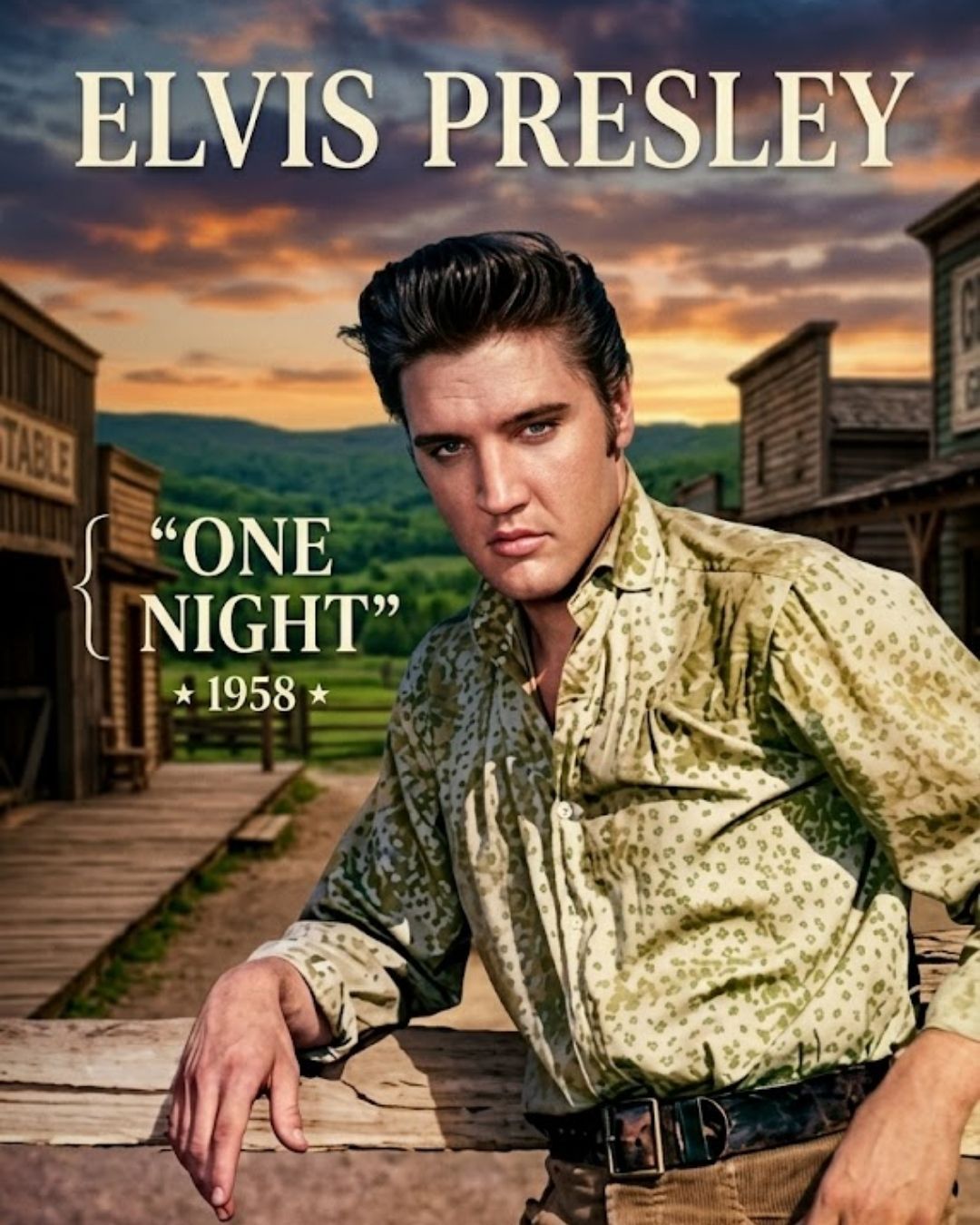
Inside Radio Recorders in Hollywood on a quiet February evening in 1957, Elvis Presley held a lyric sheet he had personally revised. The King was wrestling with a song so overtly sensual that record executives feared a national radio boycott. Why did a chart-topping superstar risk his reputation to fight for a controversial New Orleans blues melody that nearly remained hidden in the vault?
THE DETAILED STORY
The genesis of the song traces back to 1956, when New Orleans rhythm-and-blues pioneer Smiley Lewis released “One Night of Sin,” written by the celebrated Crescent City hitmakers Dave Bartholomew and Pearl King. That original recording was an unapologetic, gritty tale of nocturnal vice, heavy drinking, and subsequent morning-after regret. Elvis Presley, a devoted student of earthy Delta blues and southern gospel, became utterly enamored by the song’s swinging tempo and intoxicating emotional grit. On January 18, 1957, Elvis cut an electrifying, unedited take of the original composition at Radio Recorders in Hollywood. However, the track’s overt lyrical references to sinful nightlife alarmed executives at RCA Victor and his cautious management team, who feared an immediate nationwide radio boycott and public backlash.
Refusing to let the extraordinary arrangement vanish into the archives, Elvis returned to the studio on February 23, 1957, determined to rescue the track. The controversial opening line “One night of sin is what I’m now paying for” was deftly modified into the earnest, spiritual devotion of “One night with you is what I’m now praying for.” This subtle lyrical pivot elevated the piece from a tavern confession into an impassioned declaration of romantic redemption without stripping away its raw intensity. Anchored by Scotty Moore’s biting guitar licks, Bill Black’s pulsating stand-up bass, D.J. Fontana’s syncopated drum beats, Dudley Brooks’ fluid blues piano chords, and the soaring vocal harmonies of The Jordanaires, Elvis delivered one of his most riveting vocal performances. He pushed his baritone to its physical limits, blending gospel fervor with electric rock swagger.
RCA Victor withheld the completed master for over twenty months before finally releasing it in October 1958 as a double A-side single alongside “I Got Stung.” At the time of its release, Elvis was stationed abroad serving in the United States Army in West Germany. Even in his physical absence from the American promotional circuit, the record exploded on global charts. It climbed swiftly to number four on the US Billboard Hot 100 and conquered the number one position on the UK Singles Chart in early 1959. “One Night” stands today as a timeless testament to Presley’s musical authenticity, illustrating how masterfully he honored Black rhythm and blues roots while reshaping the contours of mid-century popular music.