INTRODUCTION
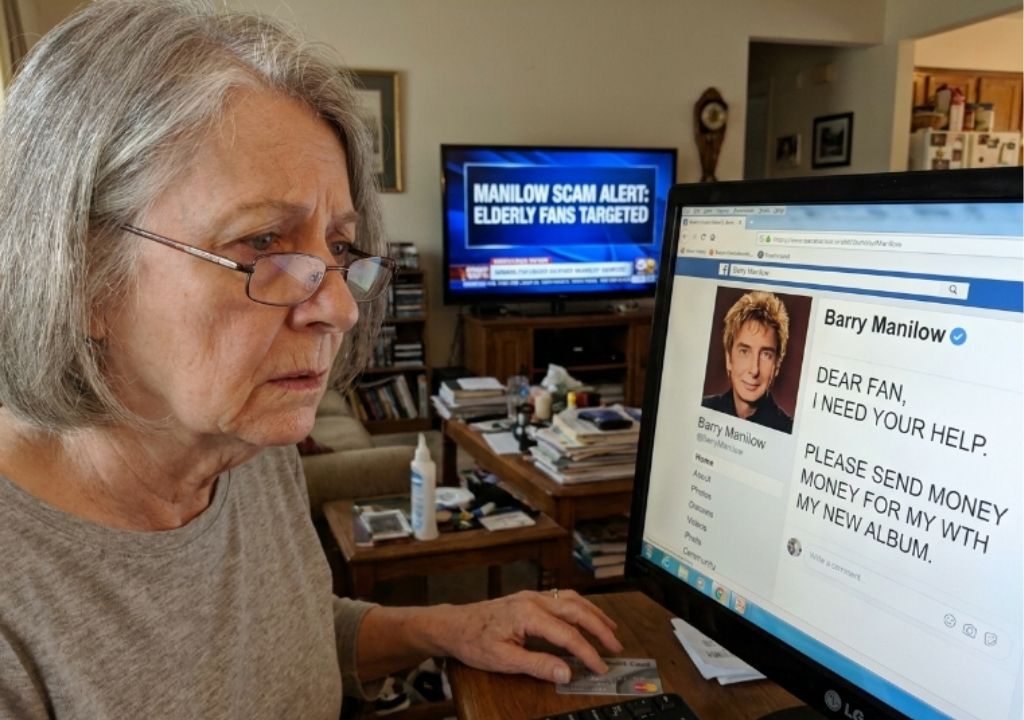
In the quiet rhythm of a Palm Beach living room, a 72-year-old widow received an unexpected digital message that felt like a miracle. The profile bore the unmistakable smile of Barry Manilow, the legendary showman whose ballads had soundtracked her youth. What began as an apparent fan acknowledgment quickly devolved into an intimate, months-long correspondence. The digital stranger, claiming to be the singer operating from a “private, unverified profile,” spoke of isolation, demanding management contracts, and blocked international bank accounts. It was a flawless psychological trap. By the time federal investigators intervened, the retiree’s life savings had vanished into a web of untraceable wire transfers. This devastating incident is not isolated; it marks the vanguard of an aggressive cybercrime wave targeting an aging, vulnerable demographic through the weaponization of musical nostalgia.
THE DETAILED STORY
The mechanics of this multi-million-dollar illicit industry rely heavily on social engineering and emotional architecture. According to data from the Federal Trade Commission and the AARP Fraud Watch Network, celebrity impersonation schemes have escalated exponentially, with imposter fraud accounting for nearly $2.95 billion in annual losses. Sophisticated criminal syndicates deploy automated digital scraping tools to monitor official social media pages, identifying older fans who frequently leave affectionate comments or expressions of loneliness. Once a target is selected, perpetrators initialize contact using highly detailed “persona kits” that combine deepfake voice memos, manipulated behind-the-scenes imagery, and stolen footage to fabricate an intense aura of authenticity.
The narrative arc of the deception follows a calculated script designed by psychologists within these networks. The faux icon builds a deep emotional dependency over months, creating an illusion of an exclusive, secret romance hidden away from the prying eyes of the public and traditional media. When the bond is secure, the structural trap closes. The imposter presents a fictional financial crisis—such as a sudden corporate audit, a non-disclosure penalty, or an emergency legal fee tied to a high-profile tour. Because the victims are deeply invested in protecting the reputation and livelihood of their idol, they bypass traditional security warnings. Funds are systematically extracted via cryptocurrency, wire transfers, and retail gift cards, leaving families financially ruined and victims carrying profound psychological trauma.
Entertainment attorneys and digital security experts emphasize that real artists do not privately solicit capital from their audience. While legal institutions and advocacy groups push social media conglomerates to implement stricter identification protocols and automated fraud detection algorithms, the proliferation of generative artificial intelligence continues to accelerate the threat. The exploitation of the singer’s identity highlights a chilling reality where the pure affection of a dedicated fanbase is inverted into a lucrative vector for global financial extraction, forcing the industry to re-evaluate the boundaries of digital security.