INTRODUCTION
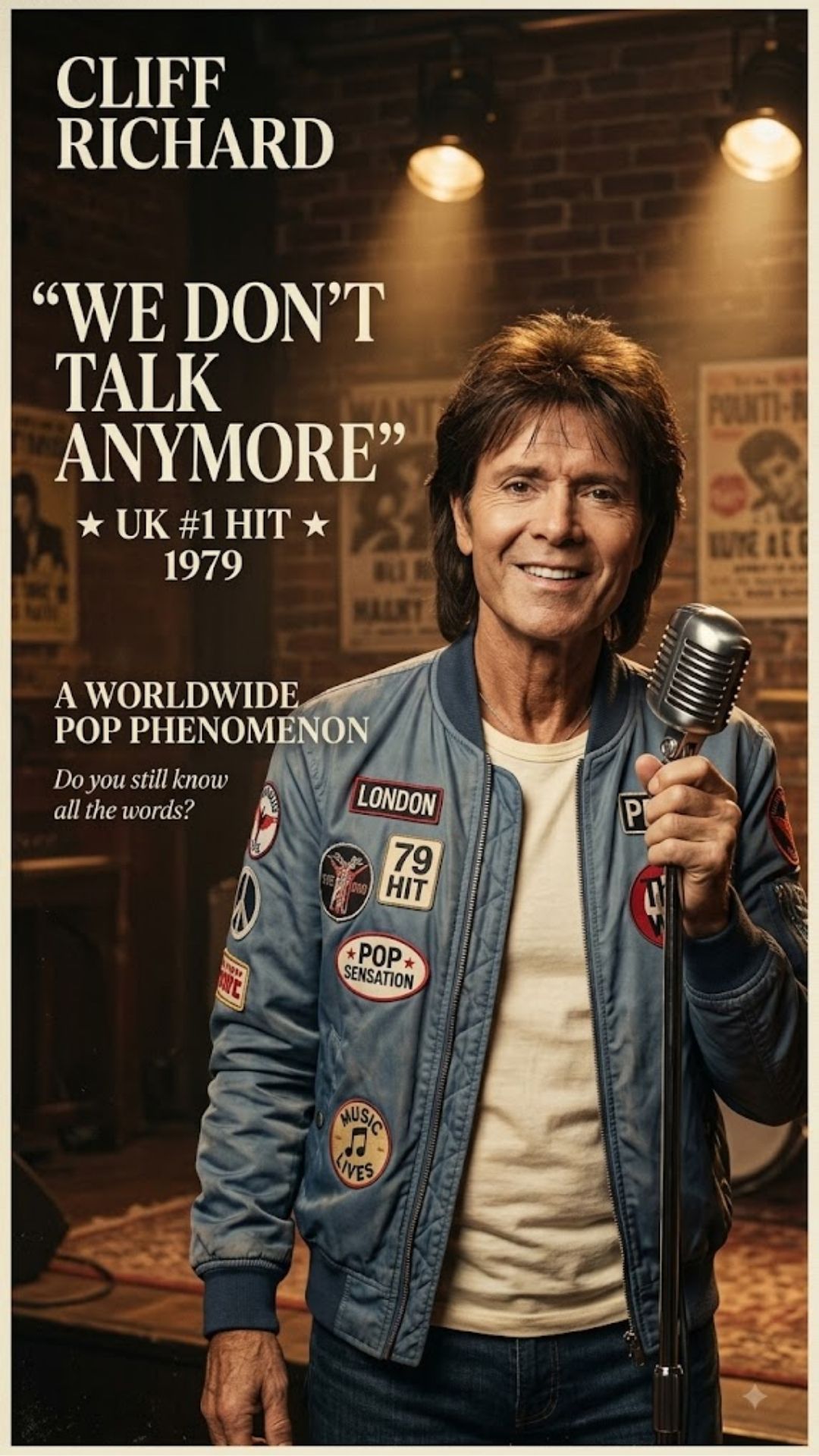
In early 1979, veteran pop icon Cliff Richard stepped into London’s Abbey Road Studios searching for a sound to reinvent his four-decade career. Many dismissed him as yesterday’s star, yet songwriter Alan Tarney handed him a sleek, rhythm-driven demo that defied every expectation. How did an understated breakup song unexpectedly propel an aging British idol back to the absolute summit of global pop music?
THE DETAILED STORY
By the close of the 1970s, the global landscape of popular music had dramatically shifted under the colliding cultural waves of disco, punk, and emerging new wave. For Cliff Richard, who had enjoyed legendary pop status since his explosive rock debut in the late 1950s, staying commercially relevant seemed like an insurmountable challenge. His creative partnership with former bandmate producer Bruce Welch and multi-instrumentalist songwriter Alan Tarney became the catalyst for one of the greatest career resurrections in British music history. Tarney crafted an immaculate arrangement blending soft rock sophistication with a subtle, driving post-disco pulse, meticulously playing almost every instrument on the final master tape.
When issued in July 1979, the single struck an immediate chord with listeners across generations. Unlike the raw teenage rock ‘n’ roll of his early youth or the lush orchestral ballads of his mid-career, the track fully embraced sleek modern production. Its infectious rhythm, crisp acoustic guitar strums, atmospheric synthesizers, and walking bassline provided an effortlessly breezy foundation for Richard’s remarkably restrained, mature vocal delivery. The lyrics captured the quiet ache of two former lovers drifting into emotional estrangement, trading dramatic confrontation for the relatable, bittersweet reality of lingering silence.
The public response was swift and overwhelming. The song soared to number one in the UK, holding the top position for four consecutive weeks and triumphantly ending an eleven-year chart-topping drought for the veteran singer. It marked Richard’s milestone tenth UK number-one single, revitalizing his commercial standing and proving his remarkable artistic adaptability. Across the Atlantic, the single achieved rare crossover acclaim, climbing to number seven on Billboard Hot 100 and eventually selling over four million copies worldwide, establishing itself as his most successful American solo release.
The enduring legacy of the track extended well into the modern video era. It solidified Richard’s historic achievement as the first artist to score UK number-one hits across four consecutive decades. Furthermore, when the groundbreaking music network MTV launched on American television in August 1981, its stylish promotional clip was proudly featured among the channel’s earliest broadcast selections. Decades later, the song stands as a masterclass in pop craft, proving that true musical longevity belongs to artists who fearlessly embrace reinvention without compromising emotional resonance.