Long before British rock conquered the world, a shy Liverpool tugboat worker stepped into the spotlight with an aching heartbreak ballad. Recorded in late 1958, this haunting debut introduced Billy Fury to music history. Do you remember when this tender vulnerability first redefined the sound of British rock and roll?
INTRODUCTION
On an autumn evening in October 1958, an eighteen-year-old docker named Ronald Wycherley stood backstage at the Essoldo Theatre in Birkenhead with a cheap acoustic guitar. He only wanted to sell his self-penned songs to established pop stars. How did a brief backstage audition transform an insecure youth into rock icon Billy Fury in a single night?
THE DETAILED STORY
Before he became a sensation, Ronald Wycherley was a frail deckhand working the cold docks of the River Mersey. Weakened by severe childhood rheumatic fever, he channeled his quiet isolation into songwriting, crafting melancholic melodies on an acoustic guitar. When impresario Larry Parnes arrived in Birkenhead with his touring package, the shy teenager sought an audience, hoping pop idol Marty Wilde might record his original compositions. Unmoved by mere demo submissions, Parnes demanded a live audition in the dressing room. Mesmerized by the boy’s raw vulnerability, Parnes did not just take the songs; he pushed the trembling youth directly onto the stage that very evening. Within minutes, the stunned Liverpool worker was christened Billy Fury.
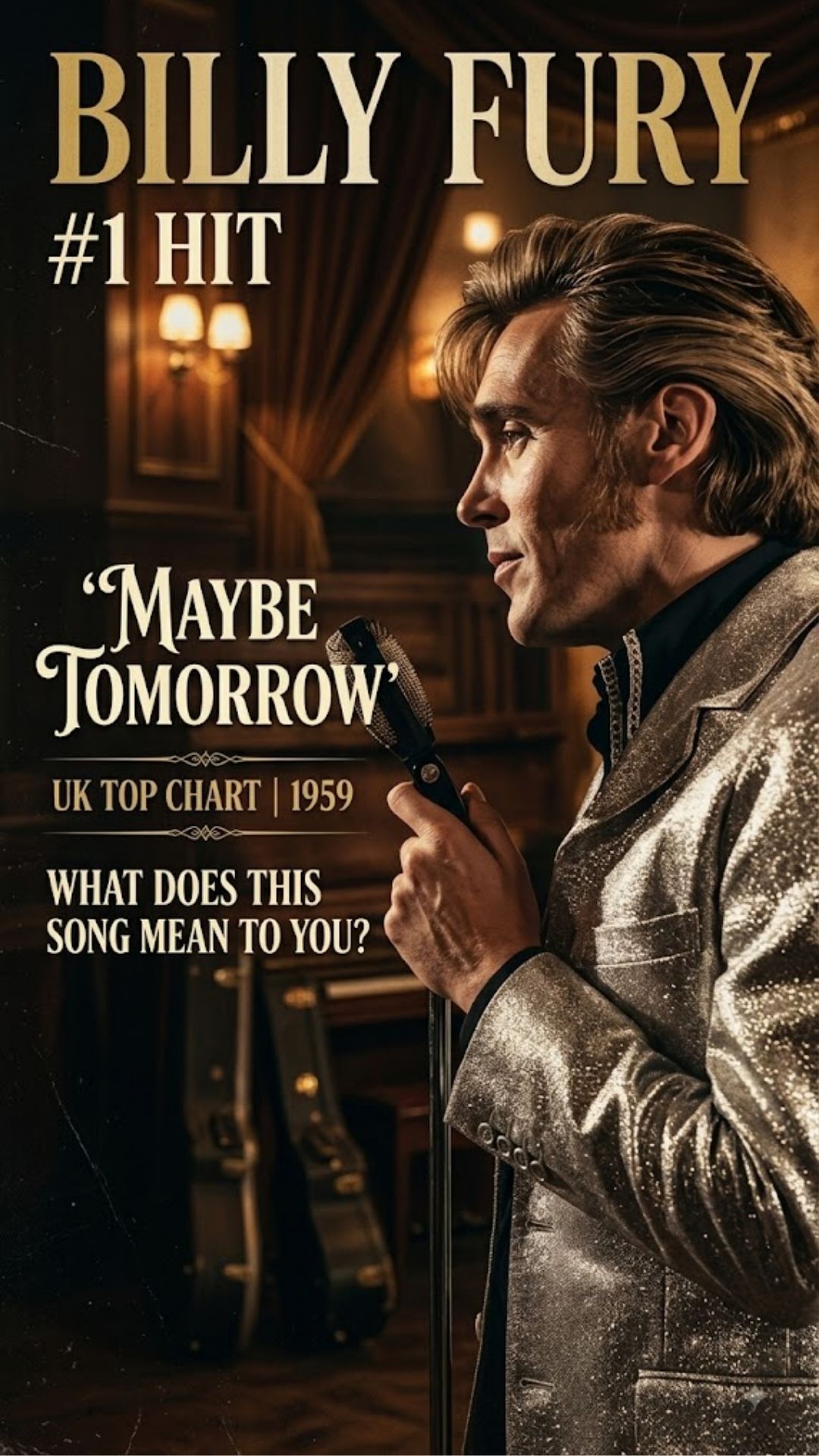
On November 26, 1958, Fury entered London’s Decca Studios to cut his debut single, Maybe Tomorrow. While early British rock was dominated by frantic American imitations, Fury delivered something strikingly original. Directed by musical arranger Harry Robinson, the track unfolded as a slow, haunting ballad defined by steady mid-tempo percussion, atmospheric backing harmonies, and Fury’s smoldering, tremulous phrasing. Rather than shouting, he whispered his heartache, bringing an unprecedented level of emotional intimacy to the British rock landscape.
Lyrically, the song captured the desperate pangs of teenage longing and unresolved heartache. Lines tracing morning loneliness and nocturnal prayers offered an intensely personal reflection of youth navigating romantic vulnerability in the late 1950s. Musically, Fury possessed an intuitive phrasing that merged the sensual swagger of Elvis Presley with a delicate English tenderness. Robinson’s arrangement elevated the recording by pairing a steady acoustic rhythm with subtle choral undertones, allowing Fury’s trembling vibrato to occupy the absolute center of the mix.
Released on January 16, 1959, the self-penned single steadily climbed to number 18 on the NME chart, proving that homegrown British artists could write and perform compelling original material. Unlike many contemporaries who relied on American cover versions, Fury established himself as a legitimate singer-songwriter from his very first release. Maybe Tomorrow did not merely launch a chart-topping career that would rival the most prolific hitmakers of the sixties; it permanently reshaped British pop by proving that authentic vulnerability was the most powerful force in rock and roll.