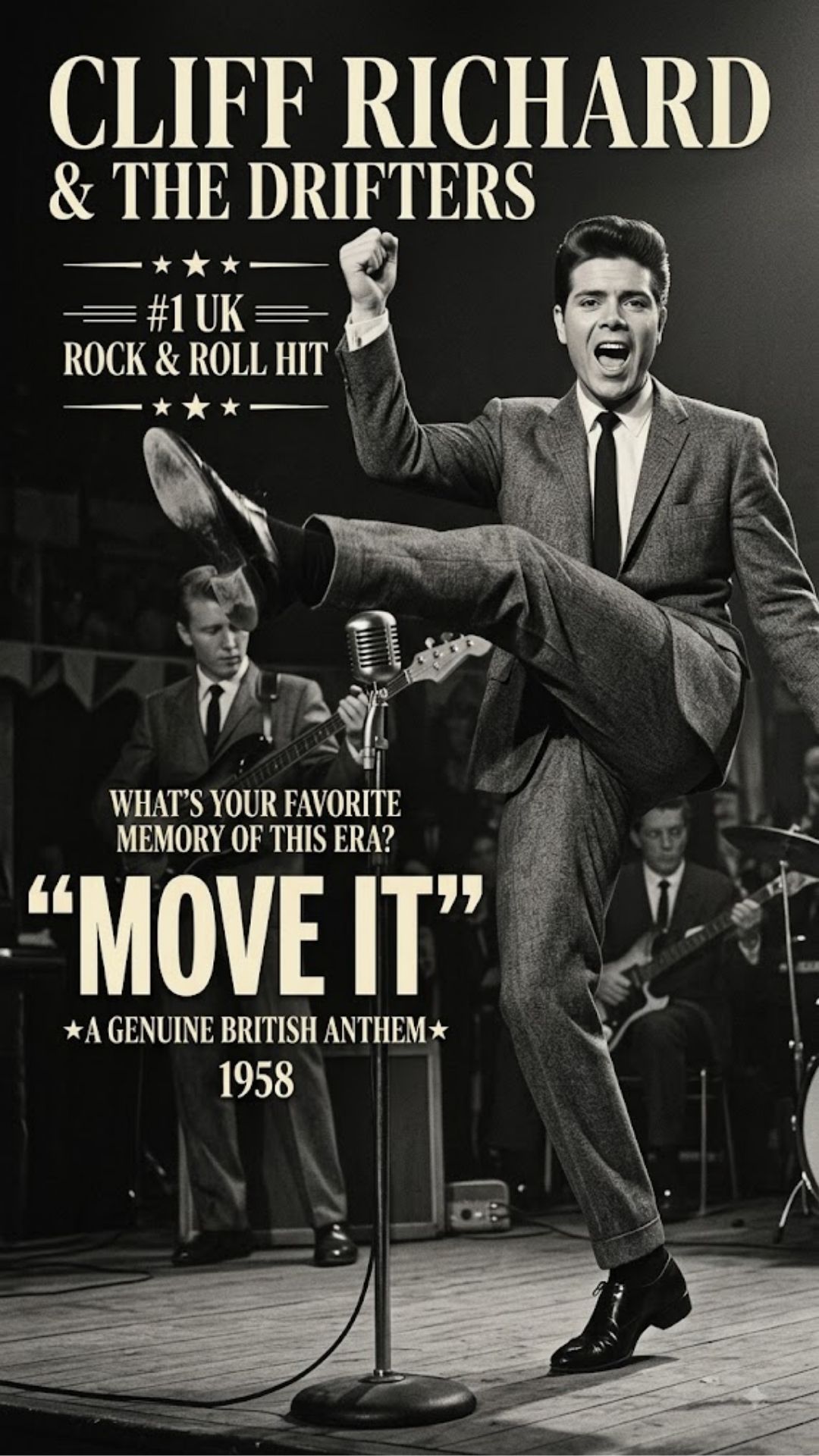
Do you remember the thrilling spark when authentic rock and roll first arrived? Conceived on a London commuter bus, Move It by Cliff Richard and his band ignited British music in 1958, forever transforming youth culture. Did you know this groundbreaking anthem was originally buried away as an overlooked B-side?
INTRODUCTION
On a rainy summer afternoon in 1958, young rhythm guitarist Ian Samwell jotted down ferocious lyrics aboard a London bus travelling toward band rehearsal. When the teenage combo entered Abbey Road Studios, nobody anticipated an explosive cultural revolution. Yet within minutes, they recorded a track that shattered the nation’s polite musical landscape. How did an accidental recording session forge British rock history?
THE DETAILED STORY
Before the late 1950s, British popular music was largely dominated by sanitized skiffle, polite orchestral pop, and mild crooners imitating American records without capturing their dangerous spirit. That conservative landscape dissolved when Harry Webb, soon known as Cliff Richard, formed his energetic backing outfit, The Drifters. Desperate for original material that suited their youthful swagger, rhythm guitarist Ian Samwell jotted down the rebellious lyrics during a bus ride on route 715. Built upon raw teenage restlessness, the composition discarded traditional showband conventions in favor of unvarnished urgency, boldly demanding that listeners get up and dance.
Producer Norrie Paramor booked EMI Studio Two on July 24, 1958, intending to record an innocent American pop tune titled Schoolboy Crush as the primary commercial single. However, the studio atmosphere changed instantly when the teenagers launched into Samwell’s rhythmically charged original. Because Samwell had not yet mastered complex lead guitar work, seasoned session musician Ernie Shear was recruited, brandishing a massive hollow body guitar to deliver the song’s biting, syncopated opening riff. Propelled by Terry Smart’s driving drums and Frank Clark’s upright bass, Richard delivered an astonishingly confident vocal performance, merging Elvis inspired charisma with authentic working class British attitude.
The definitive turning point arrived when television producer Jack Good heard the studio acetate. Recognizing its raw commercial electricity, Good made a daring ultimatum: he refused to feature the young singer unless they performed this fiery secondary track on his groundbreaking live show Oh Boy!. That single televised performance ignited an instant national craze among teenage viewers who had long craved an authentic homegrown sound. Overwhelmed by sudden retail demand, EMI inverted the record, and the thrilling track peaked at number two on the UK Singles Chart during the autumn of 1958.
This landmark release proved that British artists could create genuine rock and roll rather than derivative transatlantic imitations. Decades later, John Lennon famously remarked that before this single, there had been nothing truly worth hearing in British pop music. By channeling authentic adolescent defiance into three minutes of electrifying sound, the song dismantled old industry traditions and established the foundational cornerstone for the legendary British Invasion that soon conquered the world.