Introduction
Step back into the crisp autumn of 1958. British youth culture was undergoing a dramatic, irreversible transformation. For decades, the UK’s airwaves had been dominated by conservative big bands, polite crooners, and sanitized radio variety programs designed for an older generation still recovering from post-war austerity. But on Saturday nights, a revolutionary television show called Oh Boy!, masterminded by producer Jack Good, hijacked television screens across the nation. Good understood something fundamental about the youth: they did not want polite orchestra music; they wanted sweat, volume, movement, and unadulterated rebellion. On November 15, 1958, Oh Boy! broadcast an unforgettable live performance that solidified the arrival of Britain’s very first home-grown rock ‘n’ roll sensation: Cliff Richard and his backing band, The Drifters.
Fresh off the explosive success of their groundbreaking debut single “Move It” released just months earlier, Cliff Richard & The Drifters returned to the studio stage with “High Class Baby.” Written by Ian Samwell—the gifted rhythm guitarist of The Drifters who had also penned “Move It”—the track was crafted to capture that same electrifying lightning in a bottle. “High Class Baby” leaned heavily into the raw, swinging cadence of American rockabilly, reminiscent of Elvis Presley’s early Sun Records sessions and the infectious boogie-woogie grooves of Little Richard. With its driving rhythm, playful lyrics about an uptown girl out of reach, and snappy guitar chops, the song served as the ultimate vehicle for a young Cliff Richard to unleash his natural star power.
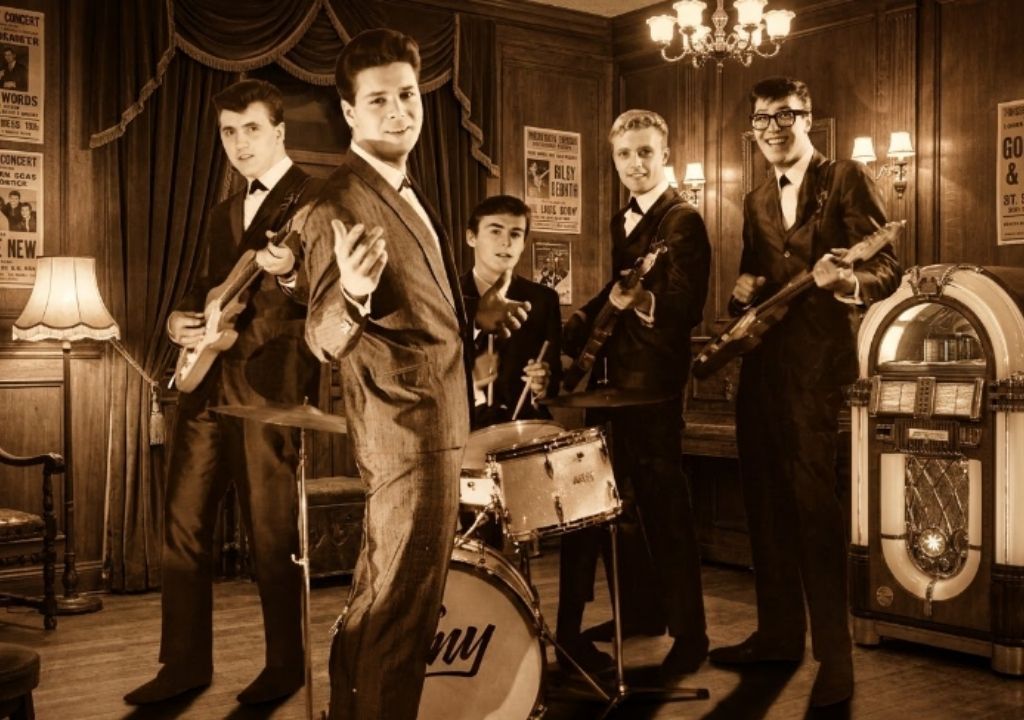
When you watch that November 1958 broadcast today, you are witnessing rock history in its purest, most unpolished form. Clad in stylish attire with hair styled into a bold quiff, eighteen-year-old Cliff Richard commanded the camera with an effortless, sultry swagger that drove teenage studio audiences wild. His vocal delivery on “High Class Baby” was raspy, confident, and drenched in youthful bravado. Backing him were The Drifters—featuring Ian Samwell on rhythm guitar, session star Ernie Shear handling lead duties, bassist Jet Harris, and drummer Terry Smart—who provided a tight, energetic wall of sound proving that British musicians could play with genuine swing and bite. The kinetic energy in the TV studio was palpable; every frame of the performance crackled with the electric thrill of a brand-new musical era being born in real time.
Looking back across the decades, “High Class Baby” stands as a vital cornerstone in the lineage of vintage British rock. Before The Beatles and The Rolling Stones conquered the globe in the 1960s, it was Cliff Richard & The Drifters who laid down the blueprint, demonstrating that British teenagers could create their own vibrant soundtrack. Listening to “High Class Baby” now transports us straight back to the jukebox cafes, neon-lit milk bars, and crowded dance halls of late-1950s Britain. It remains a timeless, joy-filled artifact of musical liberation—a nostalgic reminder of a golden era when three simple chords and a microphone were all it took to change world pop culture forever.