Introduction
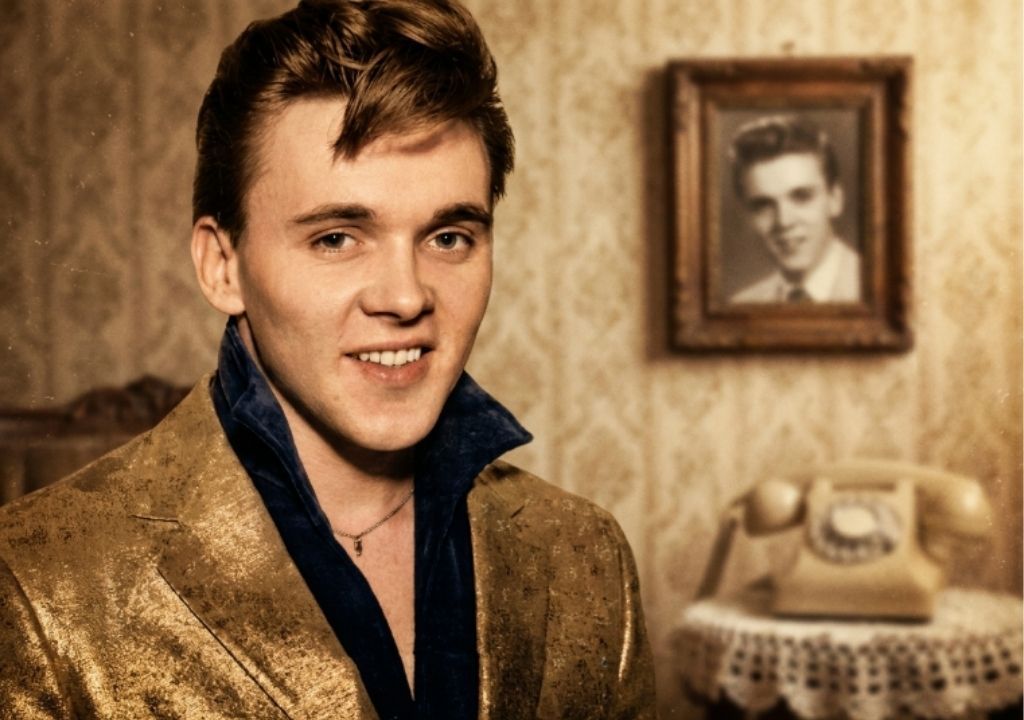
When observing early promotional materials and archival releases from this transformative period, the visual imagery speaks volumes. You can see the stark contrast between his striking, coiffed rock-and-roll hair and the deeply sensitive, almost pleading expression in his eyes as he holds his guitar. This image encapsulates the exact sonic atmosphere of his debut single on the Decca label, “Maybe Tomorrow,” which remains an absolute masterpiece of mid-century British pop and rock-and-roll balladry. Released in January 1959, this track proved that Fury was a genuine singer-songwriter far ahead of his time. Unlike many of his contemporaries who relied heavily on professional Brill Building songwriters, he wrote this piece out of sheer, unadulterated teenage angst and personal loneliness. He captured a mood so deeply intimate that it felt as though he were singing directly into the listener’s ear in a dimly lit room, baring his soul to the world.
The track functions as a slow, beating ballad, perfectly anchored by the plaintive, haunting arrangement directed by Harry Robinson. As the needle drops, the listener is enveloped by a wall of high-flying girl choruses that waft through the background like ghostly memories, providing an ethereal counterpoint to Fury’s remarkably mature vocal delivery. What truly sets “Maybe Tomorrow” apart from the standard teen pop of the era is the palpable sense of isolation that breathes through every single note. Fury’s voice possessed a unique, fragile velvet quality—a mixture of smoldering passion and profound desolation that earned him a reputation as the UK’s most credible and charismatic performer. When he utters the iconic refrain, pleading for a lost love to return, the emotion is entirely unmanufactured. The song does not offer a grand, triumphant resolution; instead, it lingers in the painful, uncertain limbo of waiting. It is the sound of a rainy British winter night, captured forever on wax.
Looking back across the decades, this debut single did much more than just peak at number 18 on the national charts; it laid the emotional blueprint for the rest of Billy Fury’s illustrious career. It proved that British youth culture could produce something deeply authentic, moving away from mere imitation toward true artistic expression. For those of us who still cherish the warm crackle of old vinyl records, “Maybe Tomorrow” is not just a vintage track from a bygone era; it is a time capsule that immediately transports us back to an age of neon jukeboxes, leather jackets, and the timeless ache of young love. It stands as a monument to a beautiful, fragile soul who lived and breathed every lyric he ever sang.