INTRODUCTION
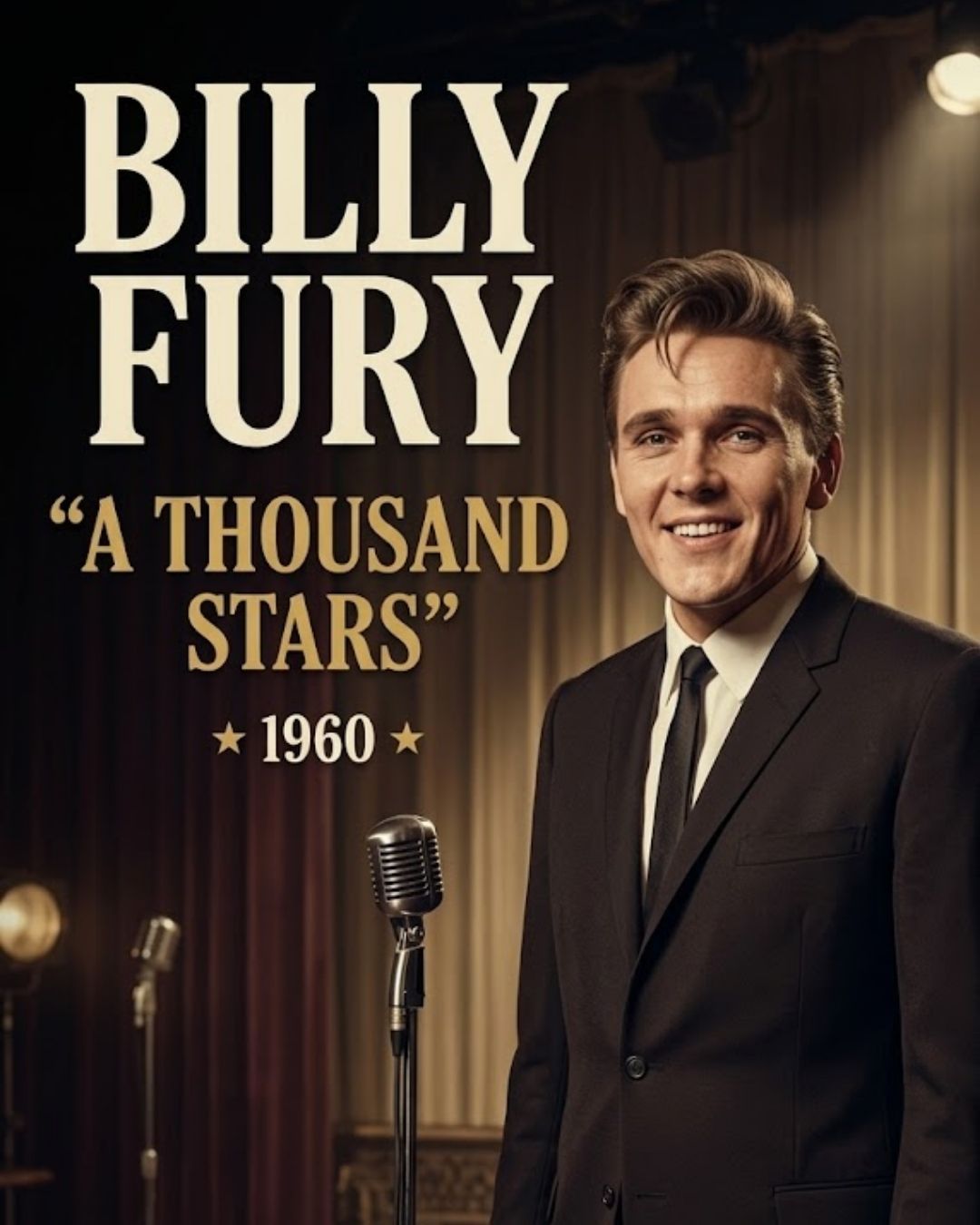
In late 1960, amidst the echo chambers of Decca Studios in West Hampstead, twenty-year-old Ronald Wycherley stood before the ribbon microphone. Known to the British public as the brooding rocker Billy Fury, he traded ferocious rockabilly energy for an unvarnished, shimmering doo-wop lament. How did a fragile American ballad become the defining testament to his enduring vocal genius?
THE DETAILED STORY
Originally penned in 1954 by sixteen-year-old Eugene Pearson for his Harlem vocal group The Rivileers, “A Thousand Stars” quickly established itself as a doo-wop benchmark before gaining renewed transatlantic popularity through Kathy Young’s gentle 1960 rendition. While impresario Larry Parnes originally packaged Billy Fury as Britain’s rebellious answer to American rock pioneers, Fury harbored an instinctive artistic sensitivity that set him entirely apart from his contemporaries. Fresh off the artistic triumph of his self-penned 1960 masterwork The Sound of Fury—a record universally acknowledged as the pinnacle of early British rockabilly—the Liverpool-born vocalist deliberately sought to broaden his musical palette by embracing nuanced, heartfelt romantic ballads that demanded genuine vocal control and expressive depth.
Stepping into Decca Studios in West Hampstead alongside music director Ivor Raymonde, Fury approached the recording session with quiet emotional focus. Rather than leaning on overt American vocal affectations or exaggerated rock bravado, he treated the delicate melody with remarkable intimacy. Backed by subtle, cascading vocal harmonies and a gentle, syncopated rhythm section, Fury employed his signature breathy cadence and trademark trembling vibrato. His seamless shifts into high falsetto conveyed an honest, aching vulnerability that few male vocalists of his generation dared to express. Unbeknownst to the legions of screaming fans who packed his theatre concerts, Fury lived under the lifelong shadow of rheumatic heart disease, a poignant physical fragility that unconsciously deepened the emotional resonance of every lyric he delivered.
Released in January 1961 as Decca single F 11333 featuring “Push Push” on the flip side, the recording steadily climbed the national listings, reaching Number 14 on the UK Singles Chart in March 1961. The track firmly established Fury as a versatile, mature interpreter capable of transforming standard American pop compositions into deeply moving personal statements. Positioned at the pivotal crossroads between the golden age of 1950s rock and roll and the imminent British Invasion led by his fellow Liverpudlians The Beatles, Fury’s performance proved that raw sincerity possessed an enduring power all its own. Decades later, the song remains an essential testament to an artist whose brilliance lay in tender, understated elegance.