INTRODUCTION
Before neon marquees bore his name across the globe, Elvis Presley was merely a shy nineteen-year-old maneuvering a Crown Electric delivery truck through the sweltering streets of Memphis, Tennessee. Nursing an unspoken ambition to sing professionally, the young driver gathered his courage in early 1954 to audition for local country music outfits, hoping for a modest breakthrough. Instead of encouragement, he encountered cold indifference and outright disdain from established musicians who failed to grasp his unconventional blend of gospel, country, and rhythm and blues. Following a particularly disheartening audition, a prominent local bandleader delivered a brutal assessment that seemed destined to extinguish his musical dreams before they could even begin. How did a crushing verdict meant to send a working-class teenager back to manual labor become the quiet prelude to a cultural revolution?
THE DETAILED STORY
In the spring of 1954, Memphis was a crucible of musical tradition, governed by strict genre boundaries and veteran gatekeepers who favored polished predictability over raw experimentation. When Elvis Presley auditioned for local bandleader Eddie Bond at the Hi-Hat Club, his nervous energy, idiosyncratic vibrato, and unclassifiable vocal styling baffled the band. Bond’s verdict was swift, blunt, and devastating: he advised the young hopeful to stick to driving a truck for Crown Electric, declaring he would never succeed as a professional singer. For a working-class youth earning modest wages to support his parents, the remark was designed to permanently close the door on his artistic aspirations.
Yet the failure of that audition revealed more about the limitations of mid-century musical conservatism than it did about Presley’s talent. The local music scene was ill-equipped to evaluate a performer whose aesthetic drew simultaneously from the sacred fervor of Black gospel, the kinetic vitality of Delta blues, and the melodic storytelling of country music. Instead of retreating into defeat or altering his vocal identity to satisfy orthodox tastes, Presley preserved his singular artistic instincts.
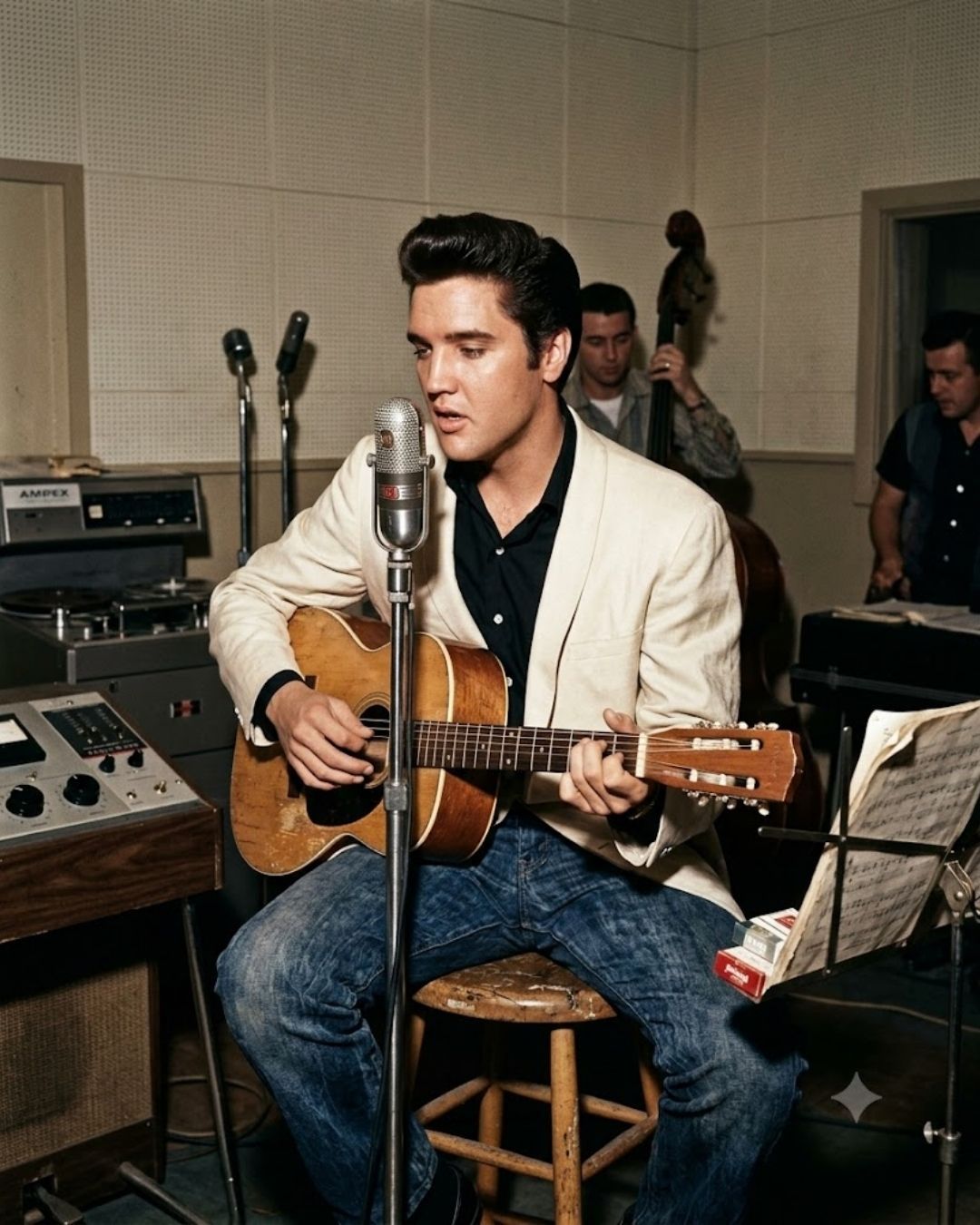
Just months later, in July 1954, that unyielding persistence led him into Sun Studio alongside producer Sam Phillips, guitarist Scotty Moore, and bassist Bill Black. During an informal break between takes, Presley launched into an exuberant, uptempo rendition of Arthur Crudup’s “That’s All Right.” The resulting recording shattered established commercial paradigms, igniting a cultural phenomenon that reshaped 20th-century entertainment.
The dismissive advice from Eddie Bond stands today as one of the most famous misjudgments in music history. It underscores a profound reality of artistic innovation: transformative talent rarely conforms to the standards of its era. By refusing to let a harsh critique define his destiny, Presley proved that genuine artistic breakthroughs often require confronting rejection before forever changing the world.