INTRODUCTION
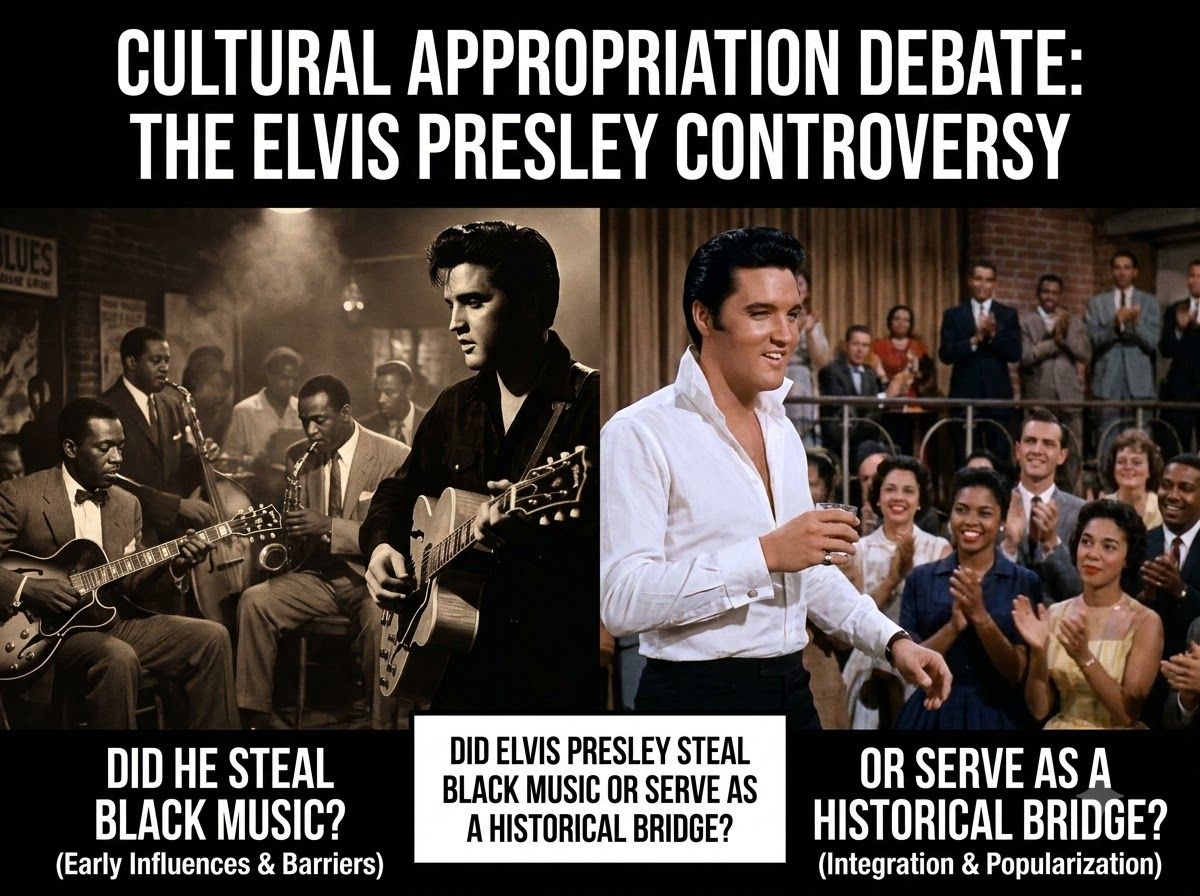
On 07/05/1954, nineteen-year-old truck driver Elvis Presley stepped into Memphis’s Sun Studio and launched into an impromptu, uptempo rendition of Arthur “Big Boy” Crudup’s blues track “That’s All Right.” Captured on tape by producer Sam Phillips, the session blended gospel, country, and Delta blues into a thrilling new hybrid that shattered regional sound barriers. Yet as Presley exploded into an unprecedented cultural phenomenon, industry critics began debating whether his rapid ascent represented genuine artistic homage or systemic racial exploitation. While radio airwaves were heavily segregated, Presley consistently cited Black architects like Little Richard, Mahalia Jackson, and B.B. King as his true foundational influences. How did an unsophisticated Southern youth navigate this deep cultural friction to ultimately serve as a catalyst for musical integration across America?
THE DETAILED STORY
The mid-1950s music industry was defined by rigid racial lines. Mainstream networks routinely withheld airplay from original Black recordings, leaving iconic artists isolated from profitable national markets. When Elvis Presley debuted on Billboard charts with “Heartbreak Hotel” in 1956, his electric performances synthesized urban rhythm-and-blues with Appalachian country traditions, instantly magnetizing teenage audiences nationwide. Rather than obscuring his musical debts, Presley used high-profile media appearances to honor his predecessors. Following his legendary 09/09/1956 performance on The Ed Sullivan Show, which drew 60 million viewers, Presley explicitly declared to reporters that Black musicians in Memphis had crafted the rock style long before he popularized it.
Historical analysis reveals that Presley’s commercial dominance generated unprecedented financial opportunities for Black songwriters. Masterpieces like “Don’t Be Cruel” and “All Shook Up” were written by African American composer Otis Blackwell, generating millions in publishing royalties during an era when Black creators were routinely denied compensation. Furthermore, Black luminaries themselves vigorously defended Presley against accusations of appropriation. Blues titan B.B. King famously noted that Presley did not steal the music, but rather opened doors that allowed Black artists to finally break into mainstream American living rooms. Little Richard echoed this sentiment, crediting Presley as a racial integrator who normalized interracial youth culture during the height of the Civil Rights movement.
Presley’s artistry was not a mechanical copy, but a soulful, respectful synthesis of his environment. By integrating Southern gospel, rhythm, and raw blues into mainstream consciousness, he unlocked multi-million dollar publishing royalties for Black songwriters and permanently dismantled rigid radio formats. Through unwavering reverence for his influences and an innate ability to translate raw rhythm into universal emotion, Presley operated not as an oppressor, but as a crucial historical bridge that united a divided American soundscape.