INTRODUCTION
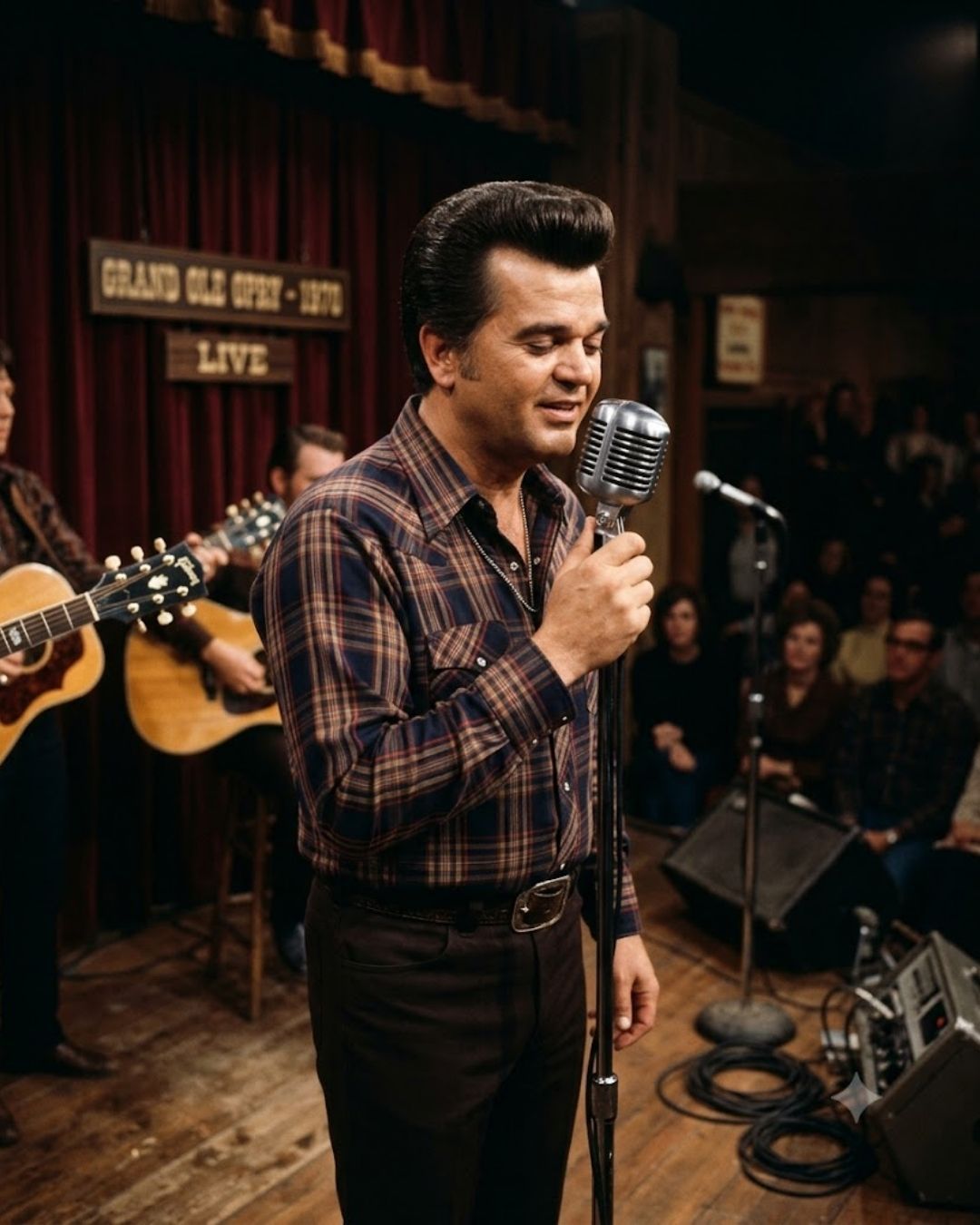
In the quiet interior of Bradley’s Barn studio outside Nashville, Conway Twitty stepped up to the microphone and did something that defied mid-century country convention. He did not belt a melodic refrain or lean on an aggressive honky-tonk tempo. Instead, Twitty waited past the opening guitar measures, closed his eyes, and exhaled two words directly into the capsule: “Hello, darlin’.” The delivery was hushed, velvet, and almost conspiratorially tender—less a studio vocal than a private admission caught on tape. When Decca Records pressed the track in early 1970, industry executives wondered whether listeners across rural America would embrace a record built around a murmur. Yet behind that gentle confession lay a masterclass in psychological tension that would transfix millions of motorists tuning their dials at dusk. How did a whispered salutation conquer national airwaves and permanently transform Twitty’s legacy?
THE DETAILED STORY
By 1970, Conway Twitty had already accomplished the rarest feat in American popular music: successfully transitioning from a 1950s rock-and-roll sensation into a legitimate country heavyweight. Working alongside legendary producer Owen Bradley at his Mt. Juliet studio, Twitty spent years writing “Hello Darlin’,” searching for an arrangement that captured the delicate sting of encountering an old flame. The breakthrough came not in the musical notation, but in how he approached the opening stanza. Country traditions had long incorporated recitations, yet those passages were often moralizing, melancholic, or theatrical. Twitty stripped away the theatricality entirely, leaning intimately into the microphone to deliver a greeting that sounded like an overheard telephone conversation.
The strategic restraint paid off immediately across radio markets. Decca Records shipped the single in March 1970, and by that summer, the record soared to the summit of Billboard’s Hot Country Singles chart, reigning at number one for four consecutive weeks. Billboard subsequently recognized “Hello Darlin’” as the overall number-one country single of 1970. Programmers reported an extraordinary listener response; the introductory whisper created an acoustic intimacy that pierced through static car speakers and living rooms, pulling audiences directly into an uncomfortably honest emotional drama.
Beyond its commercial milestones, the record fundamentally altered the psychological landscape of country music. Twitty demonstrated that modern Nashville balladeering did not require explosive volume to convey profound heartbreak. Instead, deliberate phrasing, breath control, and unvarnished vulnerability could command the airwaves. “Hello Darlin’” became Twitty’s lifelong concert signature, opening virtually every live appearance to thunderous applause for the next twenty-three years. In 1975, the song even crossed the Iron Curtain into orbit when Apollo astronauts transmitted a Russian-language recording to Soviet cosmonauts, cementing its status as an enduring cultural ambassador. What began as a soft, two-word greeting ultimately established Conway Twitty as Nashville’s undisputed master of intimate, adult storytelling, forever redefining twentieth-century radio performance.