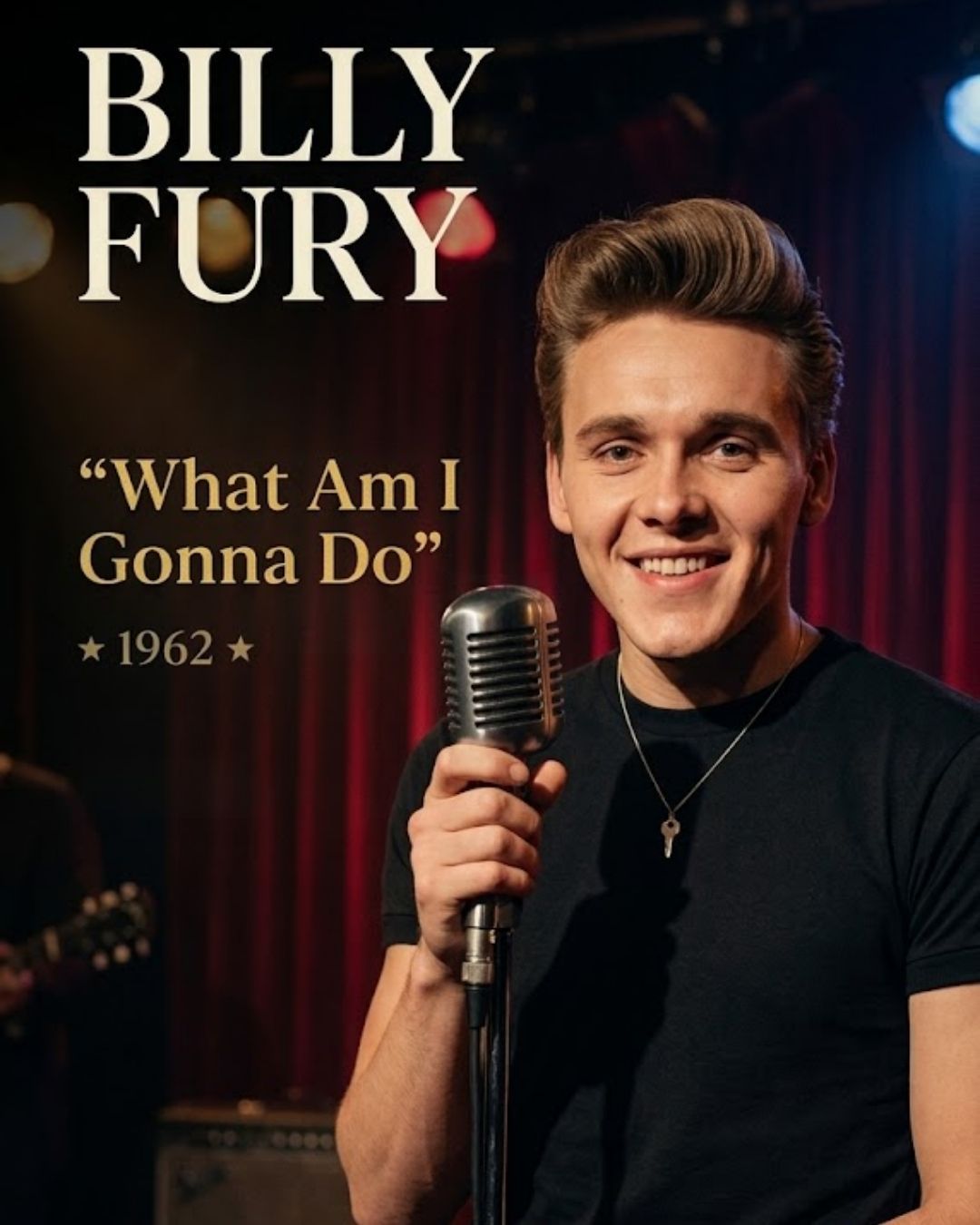
INTRODUCTION
On a chilly afternoon in late 1963, Ronald Wycherley, known to millions as Billy Fury, stood before a microphone at Decca Studios in West Hampstead. While the British music landscape was shifting beneath the thunder of Merseybeat guitar bands, Fury chose a path of exquisite restraint. But why did one of his finest recordings end up tucked away on a 45 RPM flip side?
THE DETAILED STORY
By the winter of 1963, the British music industry was undergoing a massive cultural transformation. Beat groups were dominating the national charts, yet Liverpool’s original rock and roll pioneer, Billy Fury, possessed a timeless vocal elegance that set him far apart from fleeting musical trends. When he entered the studio to cut “What Am I Gonna Do,” he was not simply chasing transient chart success; he was demonstrating the remarkable emotional maturity of his craft. It revealed a vocalist who could balance raw charisma with profound, introspective tenderness.
The song originated from the prolific American songwriting partnership of Neil Sedaka and Howard Greenfield, master craftsmen of early sixties pop sophistication. Under the guidance of musical director Bill Shepherd, the recording was arranged to accentuate Fury’s unique stylistic strengths. Rather than cluttering the mix with heavy instrumentation, the production provided ample space for his expressive phrasing to breathe, allowing every subtle vocal nuance to resonate clearly against gentle rhythmic accents and orchestral shading.
Fury brought a distinctive melancholic grace to the lyrical narrative. While other vocalists might have delivered the melody with conventional teen-pop exuberance, Fury leaned into its underlying heartache and quiet despair. His interpretation relied on delicate dynamic contrasts—a tender, breathy delivery in the opening verses that blossomed into an aching resonance across the chorus. Every inflection carried genuine emotional weight, turning the central plea of the title into a poignant reflection on romantic uncertainty. His voice retained the dark velvet warmth that had defined earlier triumphs like “Halfway to Paradise,” but here it possessed an even greater sense of quiet intimacy.
Issued on December 13, 1963, as the B-side to “Do You Really Love Me Too (Fool’s Errand)” on Decca Records under catalog number F 11792, the track was initially overshadowed by the A-side’s climb to number 13 on the UK Singles Chart. Yet over time, collectors and music historians have celebrated this flip side as an essential highlight in his catalog. “What Am I Gonna Do” stands as enduring proof that beneath the screaming concert halls and teen idol fame, Billy Fury was a master interpreter capable of transforming understated pop compositions into deeply resonant, timeless works of art.