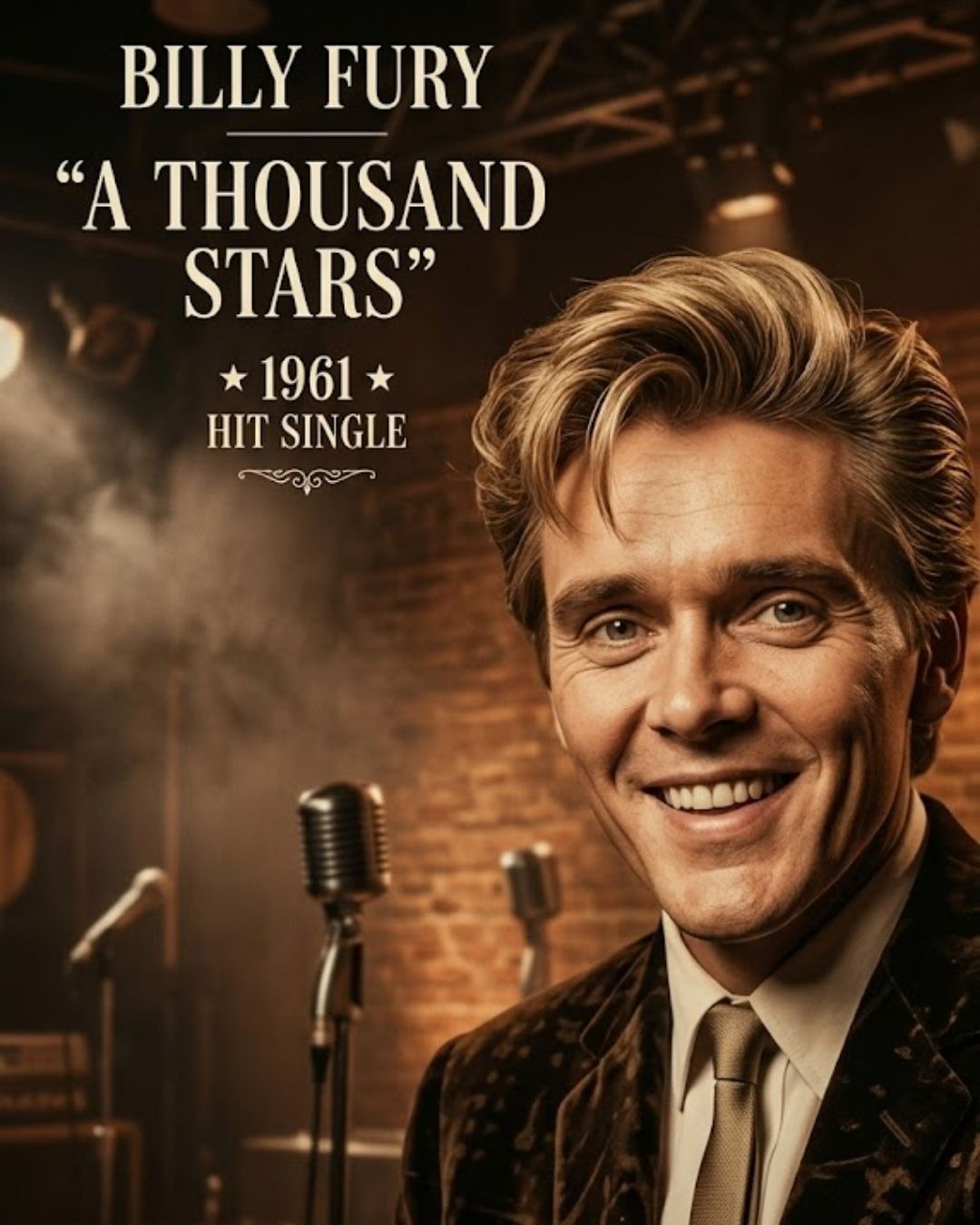
INTRODUCTION
In late 1960, inside London’s legendary Decca Studios, a young Liverpool singer with slicked hair and a fragile heart stepped up to the microphone. Ronald Wycherley, known to millions as Billy Fury, was about to soften his explosive rockabilly persona into pure velvet romance. But why did this particular American doo-wop melody unlock the deepest soul of Britain’s first genuine teen idol?
THE DETAILED STORY
Before the British Invasion swept across the Atlantic, Billy Fury stood as one of the few UK artists who possessed both authentic rock swagger and a haunting, operatic vulnerability. Written in 1954 by Eugene Pearson and originally recorded by the Harlem doo-wop outfit The Rivileers, “A Thousand Stars” had already captured teenage heartbreak across the ocean before Kathy Young turned it into a massive radio sensation. When Fury approached the track for Decca Records in late 1960, he chose not to mimic American bravado. Instead, he infused the arrangement with an intimate, melancholic yearning that set him entirely apart from his contemporaries.
Backed by lush orchestral swells and subtle choral harmonies, Fury’s vocal delivery floats between delicate whisper and passionate plea. His phrasing elevates a simple teenage confession of devotion into something profound and timeless. Unlike the raucous rockabilly tracks that launched his career, this ballad demanded restraint, highlighting the emotional depth of a young man who lived under the constant shadow of childhood rheumatic fever. Every high note carries a quiet urgency, as though Fury knew intimately that beauty and youth were fleeting treasures.
The song’s impact resonated far beyond its initial chart run in early 1961. Over a decade later, in 1973, Fury stepped onto the silver screen in the acclaimed drama That’ll Be the Day, playing the disillusioned rock singer Stormy Tempest. Performing a re-recorded version of “A Thousand Stars” under the neon lights of a seaside holiday camp, he provided the film with its emotional center. For audiences watching in the 1970s and beyond, the performance was a poignant reminder of rock’s lost innocence, captured by a pioneer whose life mirrored the bittersweet narrative of early rock and roll.
Today, “A Thousand Stars” endures as a shining testament to Billy Fury’s artistic versatility. It bridged the raw energy of early British rock with the polished grandeur of classic pop crooning, proving that emotional honesty always outlasts fleeting trends. His heartfelt delivery remains a masterclass in vocal nuance, illustrating how sincere vulnerability resonates across generations. Beneath the shimmer of celestial imagery lies the authentic beating heart of an artist who gave everything to his music, ensuring that his starlight would never fade from the archives of pop history.