INTRODUCTION
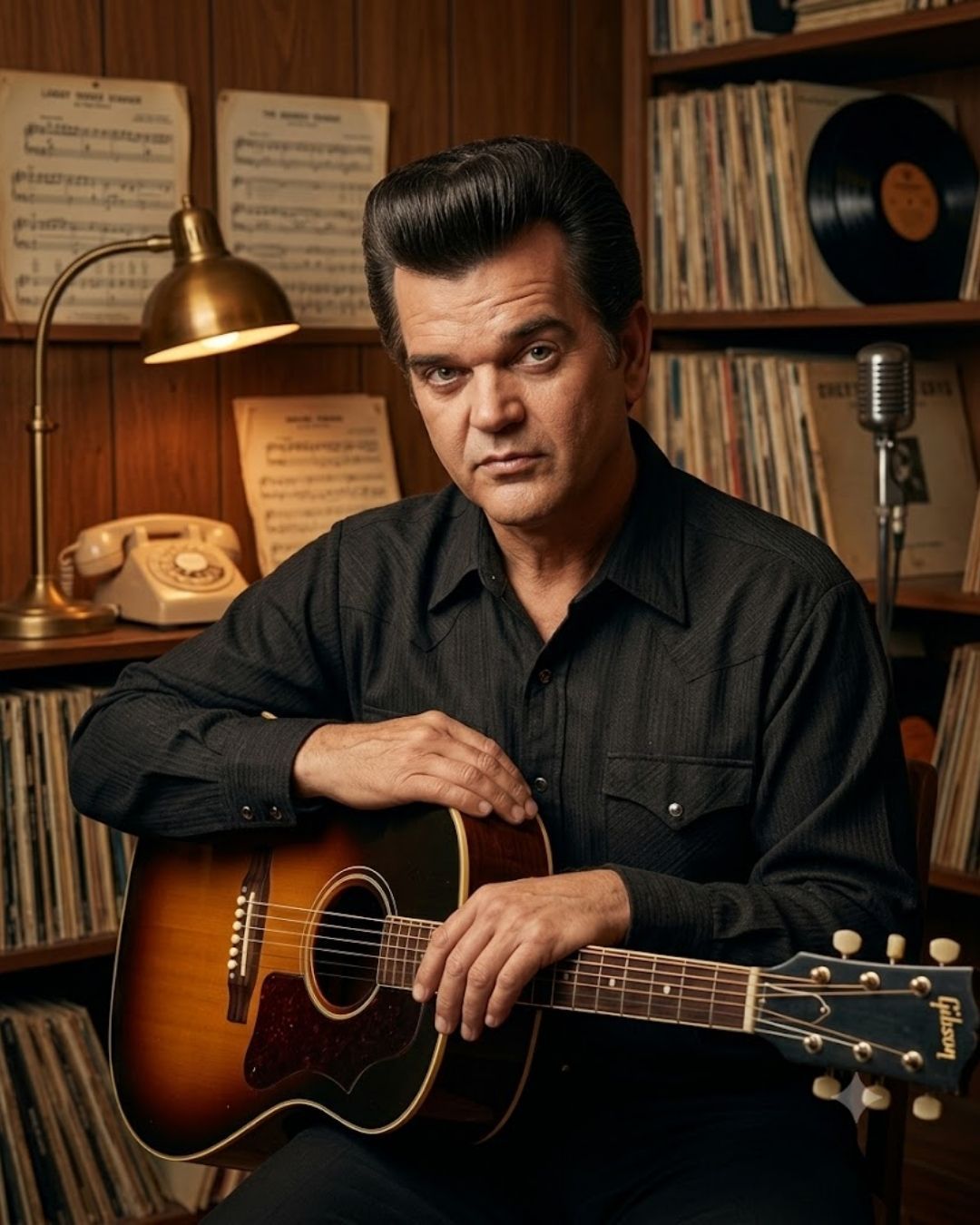
In the working-class town of Helena, Arkansas, during the early 1940s, life moved to the relentless rhythm of Mississippi River ferryboats. Ten-year-old Harold Jenkins—decades before adopting the marquee moniker Conway Twitty—spent his afternoons listening to delta bluesmen and gospel broadcasts drifting across the water. Money was scarce in the Jenkins household, where every coin earned from river pilot wages went toward bare essentials. Yet, his mother, Velma Jenkins, noticed something extraordinary in the boy’s quiet fascination with melody. Without uttering a word of complaint, she carefully set aside household pennies for months, harboring a private determination. In 1943, that quiet savings yielded exactly seven dollars—a modest sum that would permanently redirect the trajectory of American roots music. How did an inexpensive catalog instrument ignite one of the most prolific careers in entertainment history?
THE DETAILED STORY
When Velma presented the secondhand catalog guitar to her son on his tenth birthday in 1943, it was far more than a simple childhood plaything; it represented an enormous emotional and financial commitment. In a riverfront community where seven dollars could purchase weeks of essential groceries, the modest instrument stood as a tangible vote of confidence in young Harold’s budding creative soul. The boy did not merely practice; he consumed the craft. Within months, he taught himself basic open chords, absorbing rhythm and slide techniques from local blues musicians along the Mississippi ferry docks while eagerly studying Grand Ole Opry radio broadcasts every Saturday night.
By age twelve, Harold had already formed his first band, The Phillips County Ramblers, performing live on regional radio station KFFA. While his extraordinary athletic talent nearly steered him into professional baseball with the Philadelphia Phillies, the deep musical instinct forged on that small acoustic never loosened its hold. When he relocated to Memphis and permanently adopted the stage name Conway Twitty in the late 1950s, he channeled those raw delta roots into explosive early rockabilly before finding his true artistic calling in traditional country music.
Across the next four decades, Twitty built a towering catalog, ultimately achieving fifty-five Billboard number-one country hits—an unprecedented industry benchmark that remained unbroken for generations. His signature baritone delivery on timeless classics like “Hello Darlin'” resonated precisely because of the deep emotional sincerity he cultivated during those lean Arkansas beginnings.
Modern critics often dissect commercial records and chart statistics, but Twitty’s entire musical empire traces directly back to a mother’s kitchen-table sacrifice. Velma’s unwavering faith provided the irreplaceable spark for an artist who would redefine the emotional architecture of American country music. That seven-dollar guitar did not merely teach Harold Jenkins how to play; it proved that legendary legacies are often born from quiet acts of maternal devotion.