INTRODUCTION
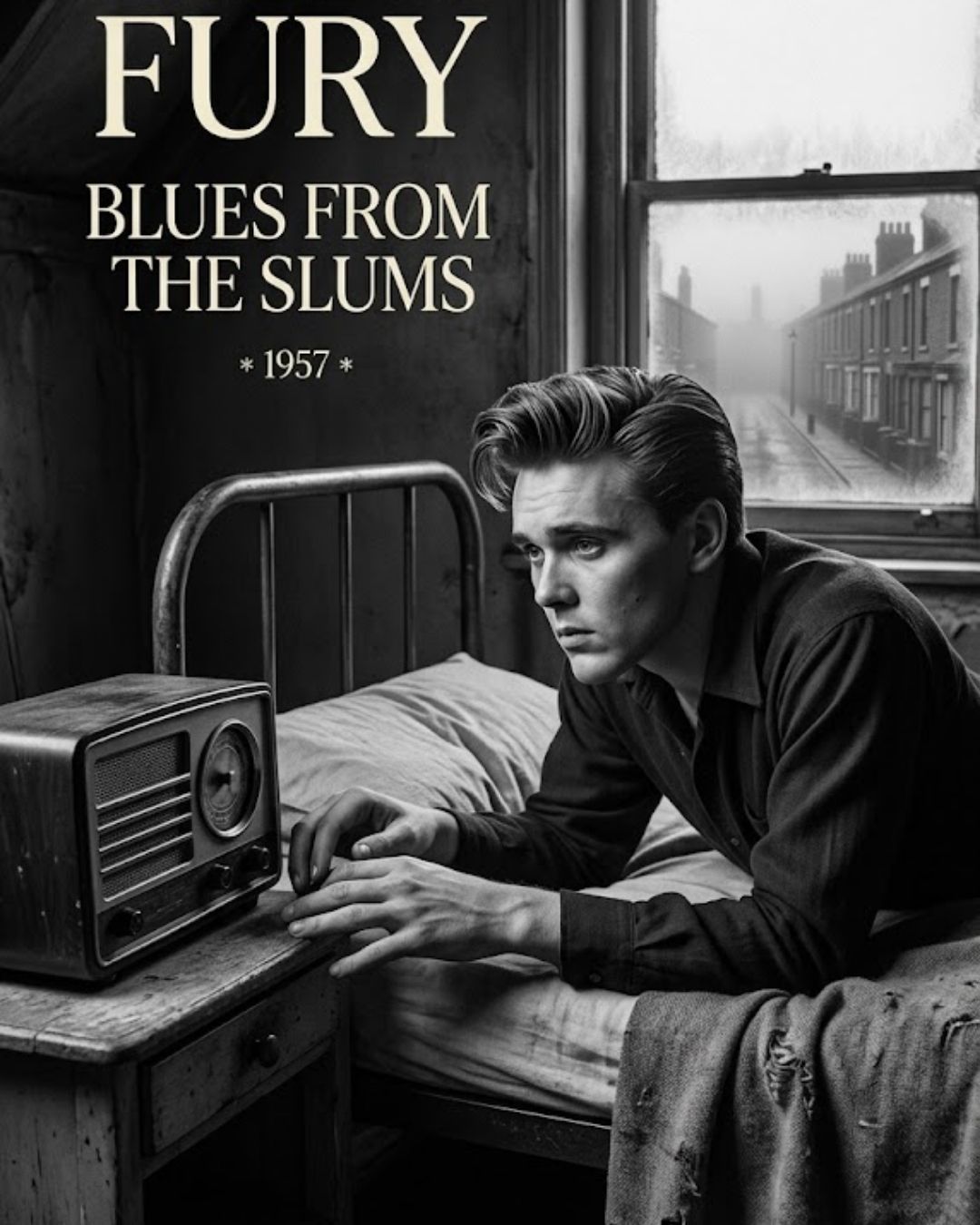
In the fog-laden docklands of post-war Dingle, Liverpool, a small terraced bedroom on Haliburton Street became both a sanctuary and an exile. Confined to clean sheets and compulsory quiet after a devastating bout of rheumatic fever in 1946, young Ronald Wycherley spent months listening to the world move on without him. While other working-class boys roamed the Mersey docks, Ronald’s universe narrowed to the hum of a glowing valve radio receiver. Through static frequencies late at night, foreign sounds began to pierce the Merseyside chill—the mournful cadences of American blues and country ballads drifting across the Atlantic. It was an involuntary solitude that would permanently damage his heart, yet quietly forge his artistic destiny. How did years of childhood infirmity transform an introverted Liverpool boy into Britain’s most emotionally raw rock pioneer?
THE DETAILED STORY
The medical diagnosis handed to Ronald Wycherley in the late 1940s was devastating: a severe case of rheumatic fever had left his heart valves permanently damaged, casting a shadow of physical frailty over his entire youth. Extended hospitalizations and recurring months confined to his bed isolated him from the vigorous dockside culture of working-class Liverpool. Deprived of normal boyhood play and sports, the young Ronald developed an intense, solitary inner life anchored almost entirely by sound.
Beside his mattress, an old valve radio receiver became his private gateway to the world. Tuning late at night into the crackling transmissions of Radio Luxembourg and the American Forces Network, Ronald absorbed authentic American roots music with obsessive precision. He listened repeatedly to the lonesome country ache of Hank Williams, the raw yearning of Southern delta blues, and early rhythm-and-blues 78s brought into port by Liverpool sailors known as the “Cunard Yanks.” By age eleven, he had acquired a battered acoustic guitar, teaching himself chords not to entertain neighborhood crowds, but to accompany the quiet, melancholic melodies forming in his mind.
Unlike his British contemporaries who later adopted rock ’n’ roll merely as a vehicle for loud adolescent swagger, Ronald discovered in American blues a language for his own physical suffering and existential solitude. He sang with an innate, tremulous vulnerability because he was already intimately acquainted with his own mortality.
When impresario Larry Parnes famously discovered him backstage at Birkenhead’s Essoldo Theatre in 1958 and rechristened him Billy Fury, it was those self-penned sickbed compositions that stunned industry veterans. His breakthrough debut single, “Maybe Tomorrow,” written during those quiet hours of isolation, introduced a brooding, poetic depth that British pop had never previously witnessed. The enforced stillness of a Liverpool bedroom had quietly forged the soulful architecture of rock’s most heartfelt British pioneer.