INTRODUCTION
In the autumn of 1958, a young artist named Harold Jenkins stood at the pinnacle of international pop music under the moniker Conway Twitty. His breakout single, “It’s Only Make Believe,” conquered the Billboard Hot 100 and sold millions of copies worldwide, drawing endless comparisons to Elvis Presley. To the casual observer, he was a superstar living the American dream. Behind the polished vinyl and television appearances, however, lay a stifling financial reality. Rigid contracts and predatory management structures bound him to a sanitized teen-idol persona, siphoning the profits of his labor while locking his authentic musical instincts away. The industry saw a lucrative product to exploit until the trend faded, but Jenkins envisioned a far deeper artistic destiny. How did an artist trapped in one of early rock’s most confining corporate machines risk everything to stage music’s greatest self-reinvention?
THE DETAILED STORY
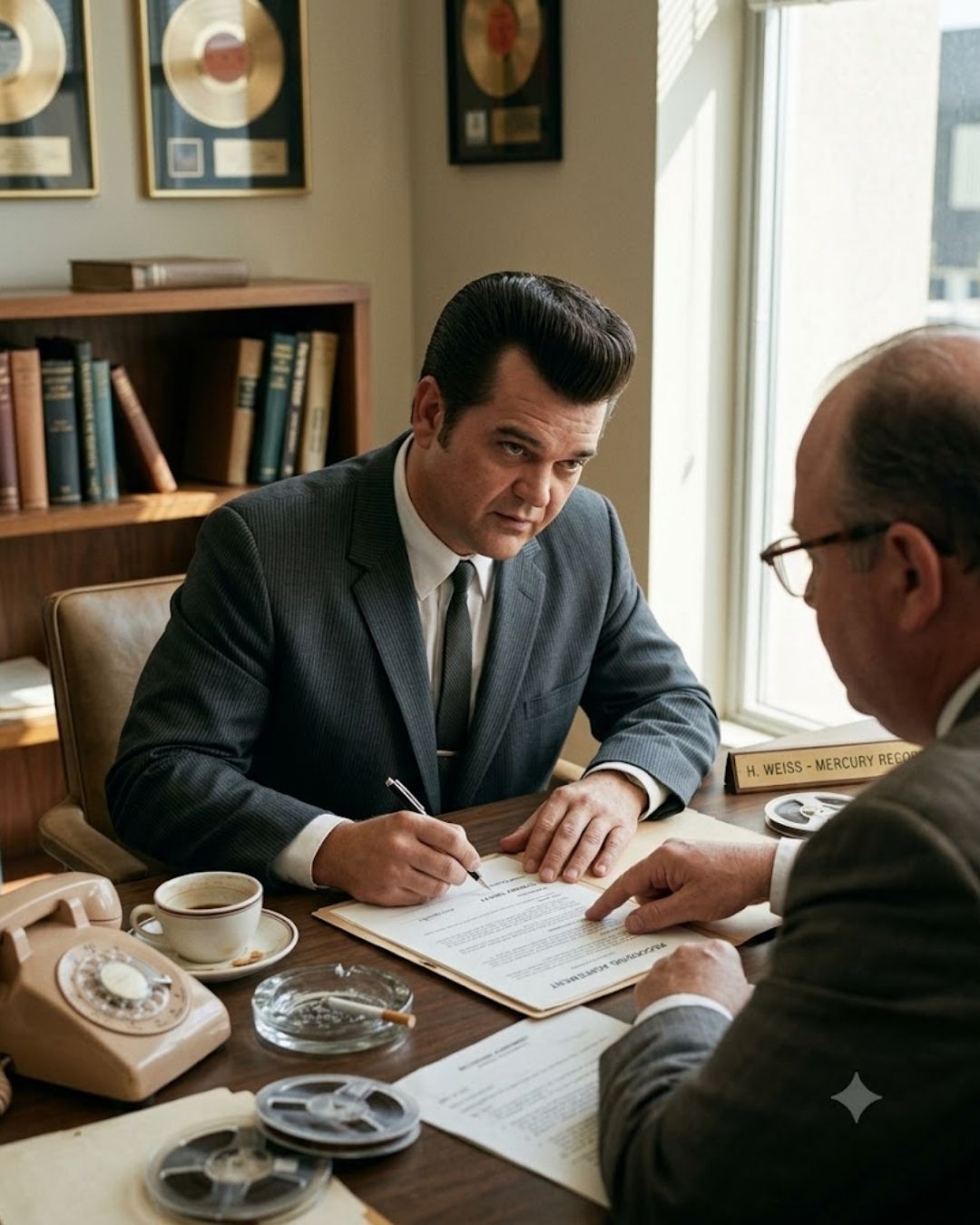
During the late 1950s and early 1960s, the American record industry routinely subjected young talent to one-sided agreements that transferred master rights and royalty shares to corporate entities while offering minimal creative autonomy. After signing with MGM Records, Conway Twitty found himself marketed strictly as a rockabilly teen idol. While singles like “Danny Boy” and “Lonely Blue Boy” maintained his commercial presence, the institutional framework left him with negligible financial leverage and zero say over his repertoire. Record executives demanded carbon-copy pop tracks, treating his vocal talent as a disposable commodity in an era of rapid teen-market turnover.
By mid-1965, the creative and financial pressures reached an unsustainable breaking point. Rather than remaining permanently shackled to an exhausting pop formula under predatory contractual obligations, Twitty made an audacious, high-stakes decision: he walked away from rock and roll entirely. The move was widely dismissed by industry insiders as professional suicide, particularly because Nashville’s country establishment was notoriously skeptical of crossover pop figures.
Refusing to compromise, Twitty signed with Decca Records in 1965, aligning with legendary producer Owen Bradley. Bradley recognized Twitty’s baritone authority and granted him the creative freedom his previous label had suppressed. Stripping away the manufactured pop veneer, Twitty began writing and recording unvarnished country narratives that resonated deeply with working-class listeners. The transformation culminated in 1970 with “Hello Darlin’,” an iconic recording that topped the Billboard Hot Country Singles chart for four consecutive weeks and established him as a master of intimate balladry.
Twitty’s defiance fundamentally reshaped artist sovereignty in Nashville. Over the next two decades, he amassed an astonishing 55 career No. 1 singles across major charts, setting an industry benchmark that stood for decades. By escaping the early contractual traps that almost consumed his gifts, he proved that true longevity belongs to artists who command their own artistic truth.