INTRODUCTION
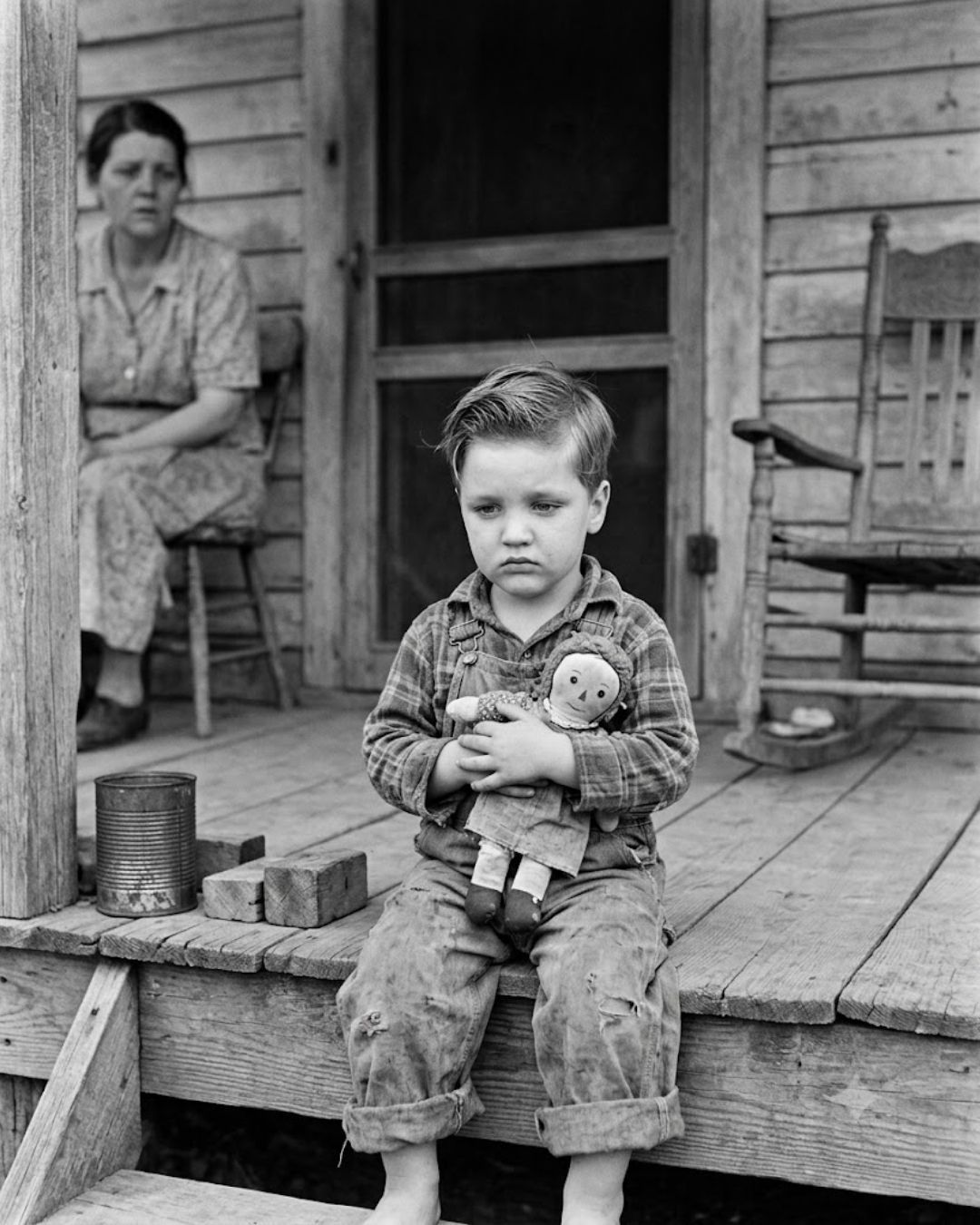
On a sweltering morning in May 1938, a small wooden frame house in East Tupelo, Mississippi fell unusually silent. Three-year-old Elvis Aron Presley stood beside his mother, Gladys, as local authorities intervened in their modest household. Vernon Presley, struggling to provide basic necessities during the depths of economic hardship, had altered a four-dollar check for the sale of a hog, an act that resulted in a three-year sentence at the Mississippi State Penitentiary at Parchman. Overnight, the family lost their primary provider and the roof over their heads. For a sensitive child, the sudden, unexplained disappearance of a father figure created an indelible void, setting off an intense survival dynamic between mother and son. What happens to an artist’s inner architecture when the world collapses before they are old enough to understand why?
THE DETAILED STORY
The trauma of Vernon’s incarceration on 05/25/1938 fundamentally reordered the domestic universe of young Elvis. Stripped of their home, Gladys and her young son were forced to live with relatives and depend on neighborly charity. During those grueling eight months before Vernon received an early conditional release, Gladys channeled her anxiety into an all-encompassing, protective bond with Elvis. The fear that security could vanish in an instant became the central organizing reality of the household.
This formative instability manifested as a lifelong dread of abandonment. Biographers have long documented how Elvis clung to familiar social circles, ultimately surrounding himself with the Memphis Mafia as an adult to recreate a fortress of unconditional loyalty. He rarely spent nights alone and went to extraordinary lengths to ensure that his inner circle remained permanently housed, paid, and nearby. The grand acquisition of Graceland in 1957 for $102,500 was not merely a symbol of unprecedented commercial triumph; it was a physical fortress designed to guarantee that his family would never again face eviction or dispersal.
Musically, this psychological imprint yielded something revolutionary. While many rock-and-roll pioneers projected unblemished bravado, Presley infused his performances with an authentic, haunting pathos. The tremolo in his voice and the visceral emotional pleading on records like “Heartbreak Hotel” and “Don’t Be Cruel” resonated precisely because they were grounded in genuine childhood panic and isolation. His interpretations carried the weight of someone who knew the exact cost of loss.
Rather than hardening him into cynicism, the early precarity fueled an intense, almost desperate generosity. Elvis spent his career showering friends, family, and complete strangers with cars, homes, and financial gifts—a constant unconscious effort to bind people to him and rewrite the helplessness of 1938. In examining the King of Rock and Roll, one discovers that his transcendent cultural power did not emerge in spite of his early vulnerability, but directly because of it.