INTRODUCTION
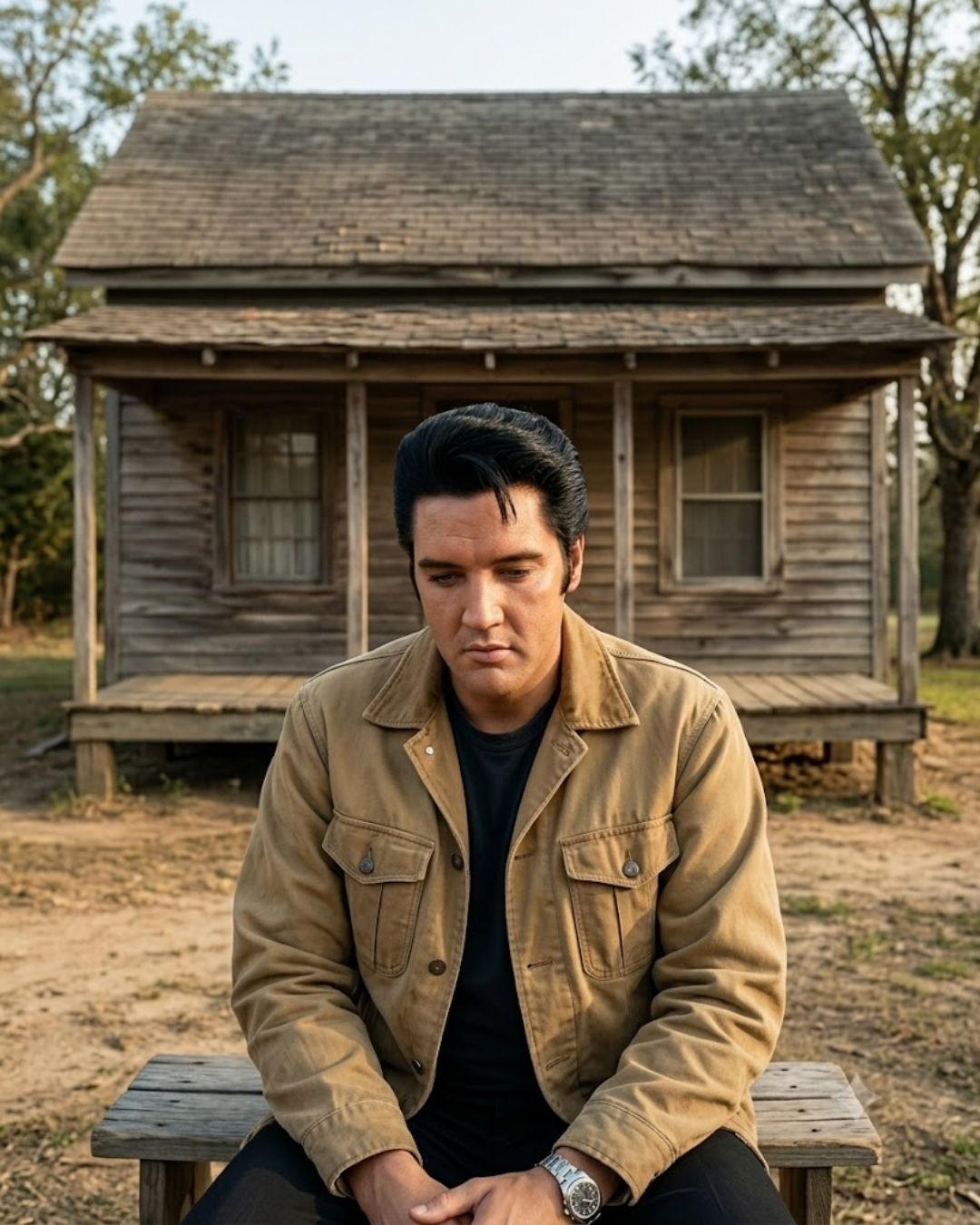
On the freezing morning of 01/08/1935, inside an uninsulated two-room wooden shack without electricity or indoor plumbing, Gladys Presley gave birth to identical twins. The first, Jesse Garon, was stillborn; the second survived to become the defining cultural titan of the twentieth century. Constructed with rough-sawn lumber and financed by a modest $180 loan from a local dairy owner, the tiny shotgun house at 306 Elvis Presley Drive in Tupelo, Mississippi, measured barely 450 square feet. It was an environment of stark, agrarian poverty—a world where survival was precarious and luxury was unimaginable. Yet today, this modest timber shelter anchors a bustling 15-acre historical park that generates millions of dollars annually in tourism revenue. How did one of the most fragile structures of the Great Depression evolve into a sacred, highly profitable shrine of American mythology?
THE DETAILED STORY
The architecture of the shotgun house is intrinsically tied to working-class Southern survival. Vernon Presley, alongside his brother Vester and father Jessie, erected the dwelling with rudimentary framing, designing a straight hallway from front to back to maximize airflow during sweltering Mississippi summers. The family’s tenure there was brief and fraught; by 1938, Vernon was incarcerated for altering a check, forcing Gladys and young Elvis to forfeit the property. For years, the house passed through obscure hands, deteriorating into near-oblivion while the family relocated to public housing and eventually departed for Memphis in 1948.
The turning point arrived on 09/26/1956. Returning to his hometown at the absolute zenith of his early fame, Elvis performed a historic benefit concert at the Mississippi-Alabama Fair and Dairy Show. He dedicated the proceeds—surpassing $10,000—to purchase the original property and surrounding acreage, intending to create a municipal park for underprivileged youth. That single act of civic reinvestment laid the foundation for an unprecedented preservation initiative.
Following Elvis’s death in 1977, the City of Tupelo and the Elvis Presley Memorial Foundation methodically restored the house to its 1935 state, sourcing period-authentic Depression-era furnishings and relocating the actual First Assembly of God church building where Elvis first absorbed Pentecostal gospel harmonies. Today, the complex spans 15 manicured acres, drawing more than 50,000 international pilgrims annually and generating an estimated tens of millions in regional economic impact.
What makes the Tupelo estate exceptional among American celebrity landmarks is its lack of commercial pretension. Unlike Graceland’s opulent spectacle, the shotgun house remains a solemn monument to economic vulnerability. It serves as tangible evidence that American popular music was not engineered in corporate boardrooms, but forged within the desperate, sacred austerity of the rural South.